“Going Native”: The Unusual Case of George Cram Cook
Posted: August 1, 2013 Filed under: Archaeology, Philhellenism | Tags: American School of Classical Studies at Athens, Angelos Sikelianos, Delphi, Dorothy Burr Thompson, Elias Venezis, Eva Palmer, George Cram Cook, John Anton, Kostis Kourelis, Leandros Palamas, Susan Glaspell 3 Comments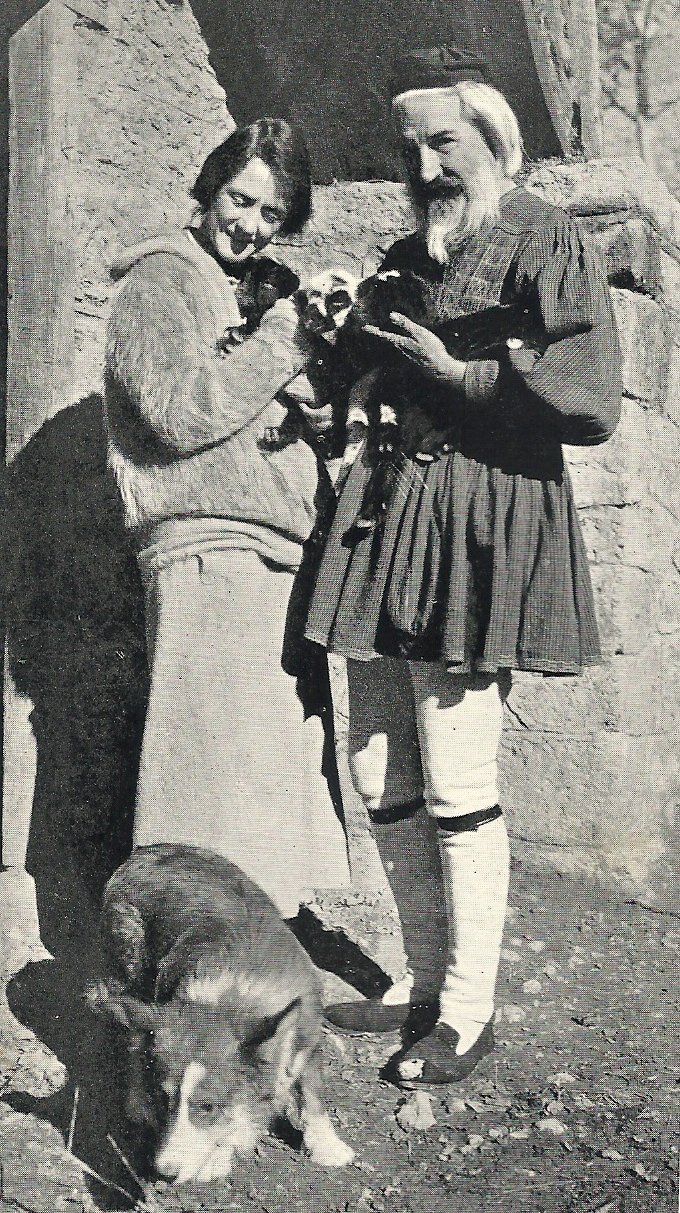
Susan Glaspell and George Cram Cook with their fatal puppy dog at Delphi, 1923.
In The Road to Temple, a biography of George Cram Cook, his wife, author Susan Glaspell wrote: “He liked the shepherd’s clothes, worn also by the peasants. A grey or black tunic, white tights of beautiful wool from the sheep of Parnassos, spun and woven by the women, heavy half-shoes crowned with poms-poms, and a little black skull cap.” Cook had adopted this attire when he decided to move to Greece in 1922 and make Delphi and Mount Parnassus his new home. By January 1924, Cook had died of glanders (contracted from his pet dog) and was buried at Delphi, a column drum from the Temple of Apollo marking his grave. Glaspell published The Road to Temple only two years later.
I did not know who George Cram Cook (nicknamed “Jig”) was until a few years ago. While reading the diaries of archaeologist Dorothy Burr Thompson, I discovered by happenstance the following entry for October 15, 1923: “At supper G. Cram Cook, husband of Susan Glaspell, appeared in Greek costume in the restaurant –looking handsome and ridiculous. He is writing four plays on modern Greece…” There is one more entry in Thompson’s diary about Cook. On January 16, 1924 she mentions his death: “G. Cram Cook died of hydrophobia in Delphi – poor man, his four plays unfinished.” One senses some slight sarcasm in her remark. Read the rest of this entry »
The Not-So-Shallow Waves of Cold War Cultural Diplomacy
Posted: July 16, 2013 Filed under: Archaeology, History | Tags: American Mission for Aid in Greece, American School of Classical Studies at Athens, Carl W. Blegen, Cultural Diplomacy, Evanthis Hatzivassiliou, John L. Caskey, Marshall plan and Greece, Stoa of Attalos 1 Comment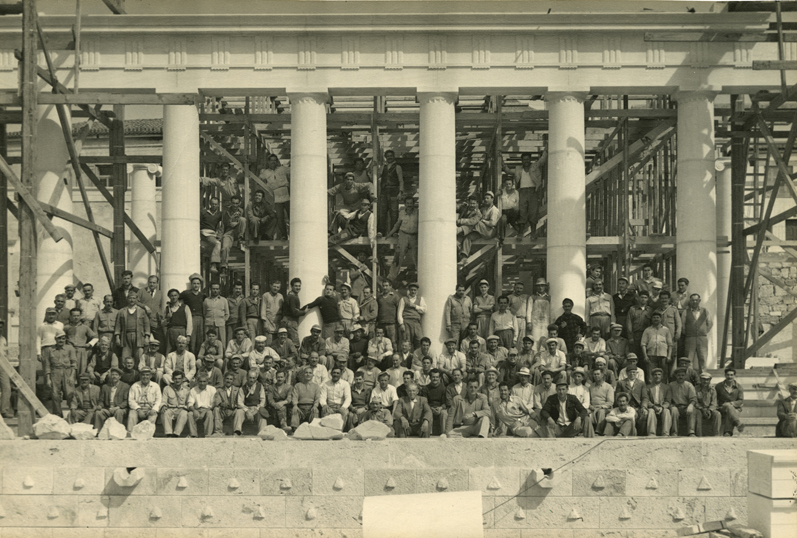
The marble carvers, carpenters, and workers who participated in the reconstruction of the Stoa of Attalos, 1955.
“Often one senses the feeling – and I have occasionally heard it put into words- that since Greece has culture and America money, each should contribute its own commodity to the collaborative enterprise. It is a European outlook, of course; not limited to Greece.”
The excerpt above was written in 1958 from the pen of John (Jack) Caskey, Director of the American School of Classical Studies at Athens (1949-1959). It epitomizes the perception that most Europeans had of America even after European culture had entered into its American phase. It is also a passage quoted in a brilliant review of the development of the Greek-American relationships from 1947 to 1961, published with the title “Shallow Waves and Deeper Currents: The U.S. Experience of Greece, 1947-1961. Policies, Historicity, and the Cultural Dimension,” by Evanthis Hatzivassiliou in Diplomatic History, vol. 37 (2013), pp. 1-28. Read the rest of this entry »
One Portrait, Three Institutions: Anders Zorn’s Portrait of William Amory Gardner
Posted: July 14, 2013 Filed under: Archaeology, Art History, Biography, Exhibits, History of Archaeology | Tags: American School of Classical Studies at Athens, Anders Zorn, Isabella Stewart Gardner Museum, The Groton School, William Amory Gardner 4 Comments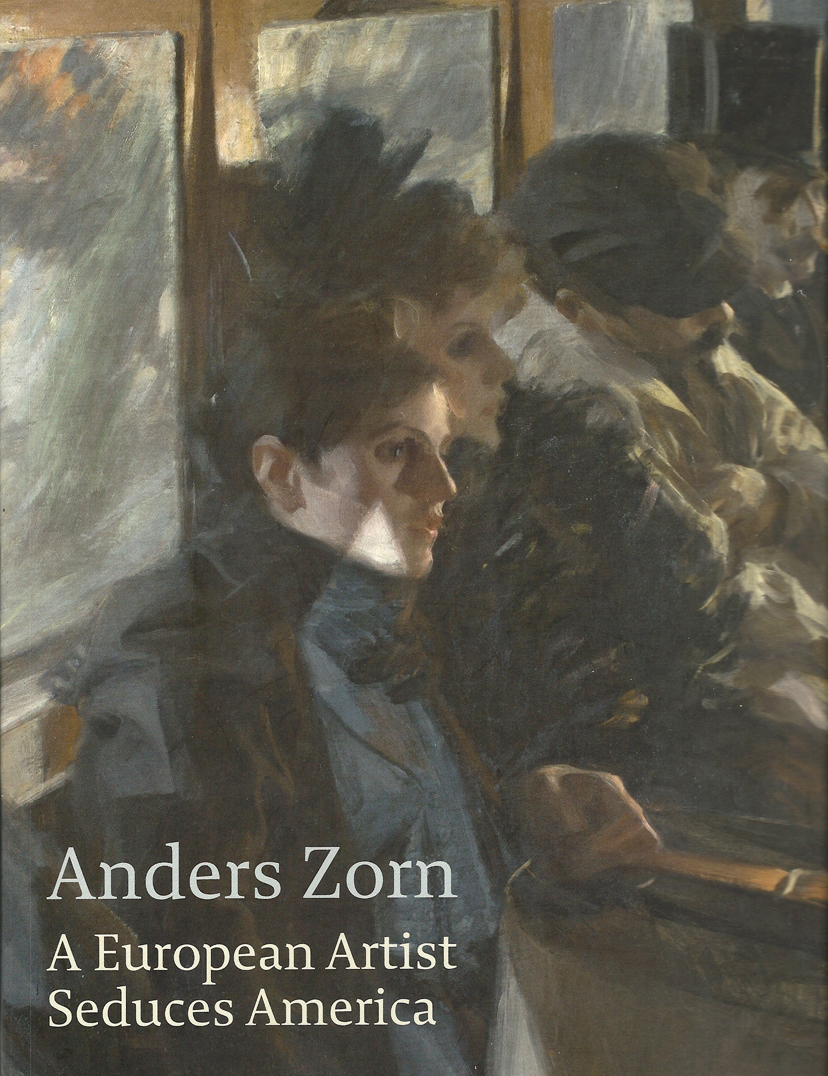
The cover of the exhibition catalog
From February 28 to May 13, 2013, the Isabella Stewart Gardner Museum in Boston hosted a large exhibit titled Anders Zorn: A European Artist Seduces America. The show re-evaluated the famous Swedish painter’s impact in the 1900s on America, where he was once held in high regard before being largely forgotten. The exhibit featured several international loans and was complemented by a series of lectures that experts on Zorn and his period presented.
Why am I writing about a retrospective on the activities of a Swedish painter in Boston? Because the American School of Classical Studies at Athens owns a portrait painted by Zorn—an image of William Amory Gardner (also known as WAG), the nephew of Zorn’s most important American patron and friend, Isabella Gardner. A balding WAG poses in three-quarter view while seated; he wears a black suit with an impressive red rose pinned on his left lapel. WAG himself never liked the portrait. Read the rest of this entry »

 From the Archivist's Notebook