Prevailing: Bert Hodge Hill (1910-1915)
Posted: May 4, 2024 Filed under: Archaeology, Archival Research, Biography, Classics, History of Archaeology, Uncategorized | Tags: art, Athens, Bert Hodge Hill, Edward D. Perry, Elizabeth Manning Gardiner, first-world-war, George W. Elderkin, greece, James R. Wheeler, Kendall K. Smith, women 2 CommentsIn my January post I explored the first term of Bert Hodge Hill’s long directorship (1906-1926) at the American School of Classical Studies at Athens (ASCSA or the School hereafter), which was the longest of any director. After a trial period with annual directors, the School introduced the five-year term with the possibility of one renewal. Rufus B. Richardson (1845-1914), Professor of Greek at Dartmouth, was the first director to serve two terms. He moved to Greece with his wife Alice Linden Bowen (1854-1948) and their two daughters, Lucy and Dorothy, setting up a bustling household and mingling with the local high society. The wedding of his oldest daughter Lucy to Arthur Morton Lythgoe (1868-1934), an American archaeologist working in Egypt, was the event of the year (1902) in Athens, attended by the Crown Prince and Crown Princess of Greece.
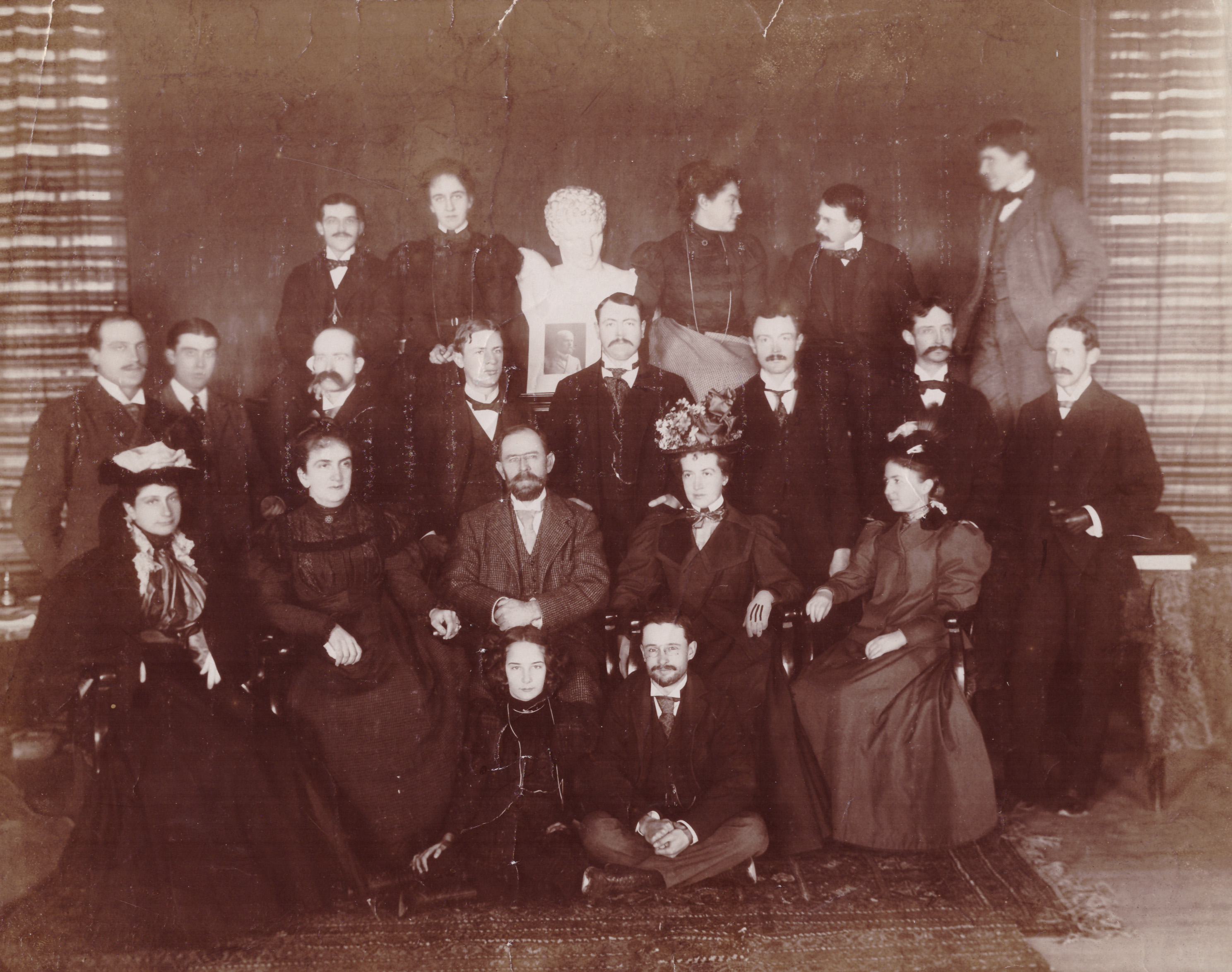
For Richardson’s successor the School appointed a young, highly promising scholar, Theodore W. Heermance, whose untimely death two years later (1905) from typhoid fever left the School in shock. One wonders what would have been the course of the School had Heermance lived longer. His successor Bert Hodge Hill was the first director at the School who was not a professor or held a Ph.D. Hill’s first term (1906-1911) was a trying experience, but he seemed to be able to deal with the challenges of an overseas post. Knowing some of Hill’s weak points –the most conspicuous being his inability to turn in anything in time– James R. Wheeler (1859-1918), the Chair of the School’s Managing Committee and Professor of Greek Archaeology and Art at Columbia University, kept a close eye on him during this first term.
Read the rest of this entry »GREEKS THEY ARE CALLED THOSE WHO SHARE IN OUR EDUCATION
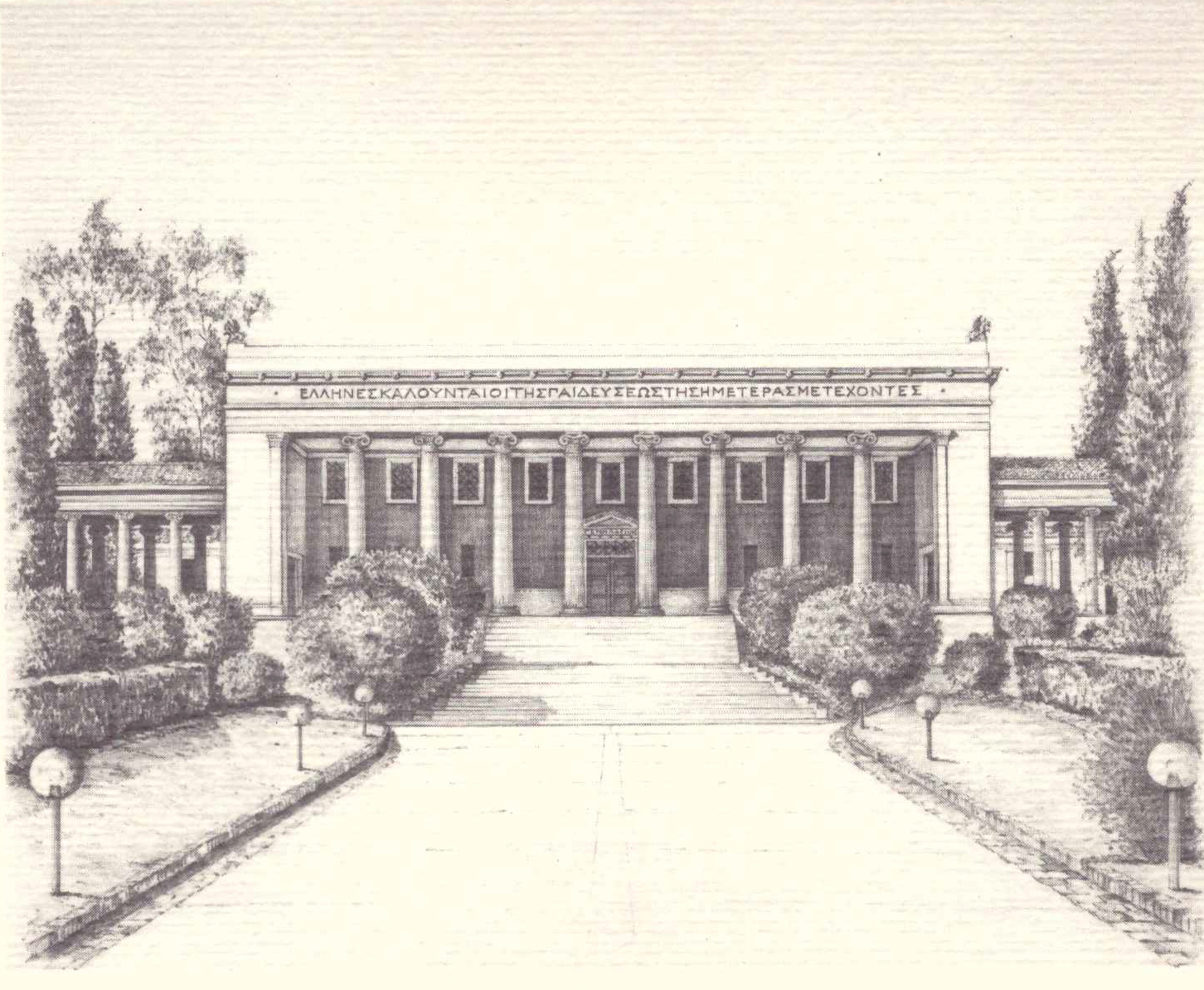
Posted: May 27, 2021 Filed under: Archaeology, Archival Research, Classics, History of Archaeology, Modern Greek History, Philhellenism | Tags: Edward Capps, Edward D. Perry, Gennadius Library, Kostas Varnalis, Paul E. More, Paul Shorey 10 CommentsAmong the first things one notices when approaching the Gennadius Library is the large inscription on the architrave of the neoclassical building, built by the American School of Classical Studies (ASCSA or the School hereafter) in 1926 to house the personal library of John Gennadius. It reads: ΕΛΛΗΝΕΣ ΚΑΛΟΥΝΤΑΙ ΟΙ ΤΗΣ ΠΑΙΔΕΥΣΕΩΣ ΤΗΣ ΗΜΕΤΕΡΑΣ ΜΕΤΕΧΟΝΤΕΣ, that is, GREEKS THEY ARE CALLED THOSE WHO SHARE IN OUR EDUCATION. It is a line taken from Isocrates, Panegyricus 50.
In the School’s Archives there is extensive correspondence between the Chair, Edward Capps, and the Secretary of the Managing Committee, Edward D. Perry, concerning this choice of passage. Both men were distinguished classicists: Capps (1866-1950) was a professor of Classics at Princeton and one of the three original editors of the Loeb Classical Library, and Perry (1854-1938) taught Greek and Sanskrit at Columbia University for several decades.
The original guidelines from the architects of the building, John Van Pelt and W. Stuart Thompson, limited the length of the inscription to twenty letters; in addition, the architects insisted on placing two rosettes to the left and right of the inscription.
The discussions about the inscription began in late 1922, as soon as the School had secured funding from the Carnegie Corporation for the construction of the library. “The book plate of [John] Gennadius contains: ΚΤΑΣΘΕ ΒΙΒΛΙΑ ΨΥΧΗΣ ΦΑΡΜΑΚΑ [buy these books, which are the medicine of the soul]. I think you could get up something better for the frieze over the entrance” Capps teased Perry on October 29, 1922. [1]. To which Perry answered: “I have been thinking over the matter a good deal, but so far have hit upon nothing that pleases me. As he [John Van Pelt] says ‘an inscription some twenty letters long’ I feel a good deal crammed. I will send him, as a mere suggestion to work with, the following, taken with slight changes from Aeschylus’s Prometheus, line 460: ΣΥΝΘΕΣΕΙΣ ΓΡΑΜΜΑΤΩΝ ΜΝΗΜΗ ΑΠΑΝΤΩΝ [“the combinations of letters, memory of all things”] which is thirty letters long” (AdmRec 311/3, folder 5, November 3, 1922).
Read the rest of this entry »“Mr. Lo”: The First Chinese Student at the American School of Classical Studies at Athens, 1933.
Posted: October 4, 2020 Filed under: Archaeology, Archival Research, Biography, Classics, History of Archaeology, Philhellenism | Tags: Edward D. Perry, Luo Niansheng, Mao-Te Lo, Richard H. Howland, Thomas Means 5 CommentsIn the late 1990s, a few years after I was appointed Archivist of the American School of Classical Studies at Athens (ASCSA or the School), Robert (Bob) A. Bridges, the Secretary of the School, brought to the Archives a Chinese metallic vase to be saved because it was part of our institutional history. Bob said that the bearer of the gift was a former student of the School from the 1930s, who had visited Greece and the School in the 1980s. Underneath the vase, Bob had pasted the donor’s professional card to make sure that his identity was not lost. The print on the card read: Luo Niansheng, Professor [and] Research Fellow of the Chinese Academy of Social Sciences; and scribbled on it: Lo Maote student of the American School in the academic year of 1933-1934.


The School’s Directory in Louis E. Lord’s History of the American School of Classical Studies (1947) lists the following information for “Mr. Lo”:
LO, MAO TE 1933-1934 – Tern., Chinese Educational Mission, 1360 Madison Street, Washington, D. C, or 317 College Avenue, Ithaca, New York; Per., Yu-Tai-Huan Company, Lo-Chwan-Tsing, Ese-Chung-Hsien, Sze-Chuan, China. A.B., Ohio State University, 1931.

 From the Archivist's Notebook