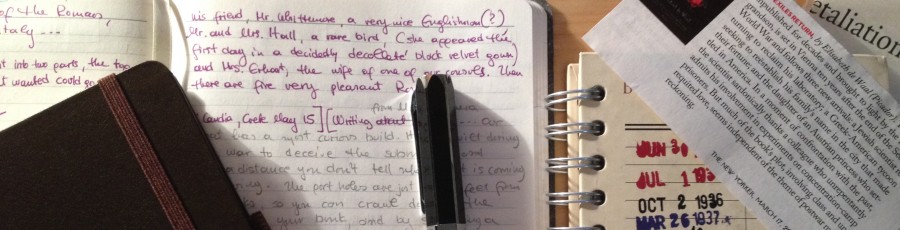
Celebrating Christmas and New Year’s in Athens, 1895-96: From the Letters of Nellie Reed, Student of the American School of Classical Studies at Athens.
Posted: December 31, 2024 Filed under: Archaeology, Archival Research, Biography, Greek Folk Art, History of Archaeology, Modern Greek History, Philhellenism, Uncategorized, Women's Studies | Tags: American School of Classical Studies at Athens, Benjamin Ide Wheeler, Charles Edward Prior Merlin, Eben Alexander, Merlin House, Nellie Marie Reed, photography, Wilhelm Wilberg 8 Comments
“The American in Athens at Christmas time has a distinct advantage over the rest of mankind for each of his holidays is multiplied by two. He must of course celebrate the day the dear ones at home are enjoying and he is equally desirous of helping the Greeks in their festivities. The heading of his letter, Dec. 25, is contradicted by the postmark Dec. 13, much to his confusion until he finds that in Greece Father Time lags twelve days behind his record in other lands. But one is inclined to doubt even that date, so different is the approach of the sacred festival. Windows flung wide open admit the warm southern sunshine. A walk along the streets is rewarded by glimpses into gardens full of orange trees hung with golden fruit and rose trees covered with fragrant blossoms,” wrote Nellie Marie Reed (1872-1957) sometime in early 1896, after having spent a year at the American School of Classical Studies at Athens (ASCSA or the School hereafter).
She was referring to Greece following the old (Julian) calendar, as did other eastern Orthodox countries in the 19th century. Christmas was celebrated on January 6 and New Year’s on January 13. The Gregorian calendar was adopted in Greece only in 1923. (See “An Odd Christmas” or the “Christmasless Year of 1923” in Greece .)
A graduate of Cornell University, Nellie attended the School in 1895-1896. We are fortunate to have in the School’s Archives the letters she sent to her family because they contain valuable information about her Greek experience. They were my main source of information for an essay exploring the close relations between the American School and the German Archaeological Institute in the late 19th century (On the Trail of the “German Model”: ASCSA and DAI, 1881-1918). Without her letters we would not have known that these relations were not limited to an official level but extended to informal, social gatherings between members of the two schools (the so-called “Kneipe” evenings); members of the Austrian Archaeological Station (not yet an Institute) were also part of these meetings.
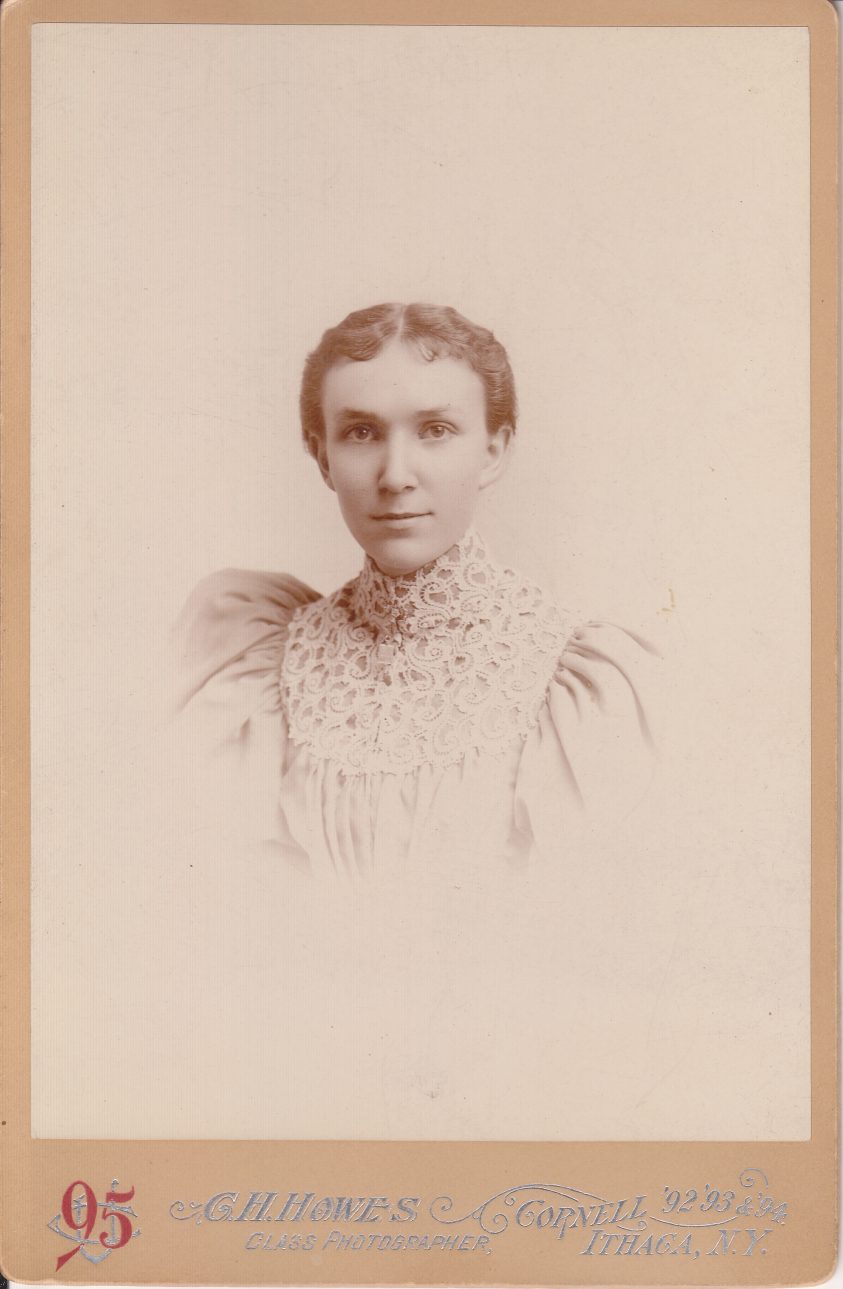
“You Undoubtedly Remember Mr. L. E. Feldmahn”: The Bulgarian Dolls of the Near East Foundation
Posted: August 31, 2024 Filed under: Archaeology, Archival Research, Biography, Economic History, Greek Folk Art, Greek Folklore, History, History of Archaeology, Mediterranean Studies, Modern Greek History, Philhellenism, Uncategorized | Tags: Dolls, Leonty E. Feldmahn, Near East Foundation, Near East Industries, Near East Industries Sofia, Near East Relief Museum, Priscilla Capps Hill, Rockefeller Archives Center 2 CommentsJack L. Davis, Carl W. Blegen Professor of Greek Archaeology at the University of Cincinnati and a former director of the American School of Classical Studies at Athens (2007-2012), here contributes an essay about Leonty E. Feldmahn, the man who conceived and produced in the 1930s the Bulgarian dolls of the Near East Foundation.
One rewarding sidelight of researching institutional history is that, from time to time, it affords an opportunity to resurrect once well-known individuals who have been lost to history. Here I call attention to a fascinating man, who, throughout much of his life, made outsize contributions to addressing one Balkan refugee crisis that resulted from the Russian Revolution of 1917. In the years prior to World War II, his activities in Bulgaria were sometimes tangential to those of certain individuals known to readers of this blog through the intermediary of the Near East Industries subsidiary of the Near East Foundation.
I only learned of Leonty E. Feldmahn recently and by accident. I didn’t remember him from any earlier reading. Feldmahn is not mentioned in the standard history of the Near East Foundation, or on the Foundation’s historical web site. He appears only three times in the New York Times: when he was awarded the Bulgarian Cross for Philanthropy from King Boris (he had in 1923 established “a playground and children’s club in Sofia serving 4200 poor children,” December 31, 1935, p. 17); earlier in 1935, when the character of the playground and club was described in detail (April 21, 1935, pp. 78, 80); and in his obituary (January 6, 1962, p. 16).
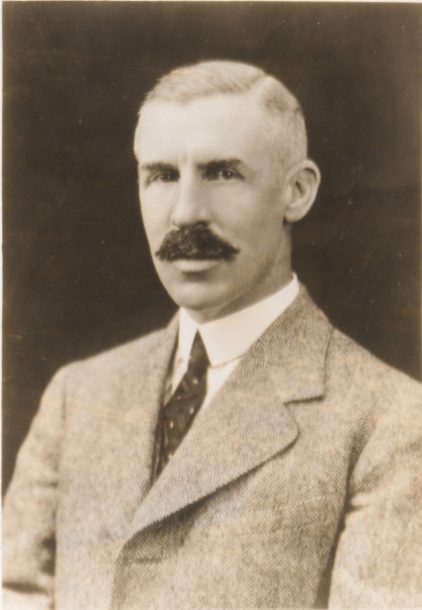
Dollies and Doilies: Priscilla Capps Hill and the Refugee Crisis in Athens, 1922-1941
Posted: July 1, 2017 Filed under: Archival Research, Greek Folk Art, History of Archaeology, Modern Greek History, Philhellenism, Women's Studies | Tags: Edward Capps, Gladys Slade Thompson, Near East Industries, Priscilla Capps Hill 6 CommentsPosted by Jack L. Davis
Jack L. Davis, Carl W. Blegen Professor of Greek Archaeology at the University of Cincinnati and a former director of the American School of Classical Studies at Athens (2007-2012), here contributes an essay about the (forgotten) relief efforts of Priscilla Capps Hill through Near East Industries during the great refugee crisis that followed the Asia Minor catastrophe in 1922.
In the months that followed the Asia Minor catastrophe in September 1922 and the population exchange of 1923, more than a million Orthodox Christians were ultimately compelled to desert their birth rights in Anatolia. Their influx to Greece generated an unprecedented humanitarian crisis. American expatriates in Greece took immediate action. Darrell O. Hibbard of the YMCA and Jefferson Caffery, Chargé d’Affaires of the U.S. Mission, created the Athens American Relief Committee, which notified Red Cross missions in Europe and America about the crisis and organized the first relief efforts. Bert H. Hill, Director of the American School of Classical Studies at Athens (ASCSA or the School hereafter), was appointed Chairman of the Relief Committee, in which role he was expected to coordinate communication with the Greek government. Harry Hill (no relation to Bert), an Englishman, head of the American Express Company in Athens, was charged with purchases and banking. Hundreds of thousands of dollars were collected by the time the Committee was disbanded on November 24, 1922, when the American Red Cross arrived in Greece to provide humanitarian aid together with Near East Relief, the latter focusing largely on Turkey. Its work had been invaluable. (See also E. Daleziou, ” ‘Adjuster and Negotiator’: Bert Hodge Hill and the Greek Refugee Crisis, 1918-1928,” Hesperia 82, 2013, pp. 49-65.)
The ASCSA’s involvement did not stop there. In the years to come “the School continued to be a hub for Americans offering their services to a variety of refugee relief efforts such as the ARC, the American Women’s Hospital Organization, Near East Relief, the YMCA, and the Athens American Relief Committee” (Daleziou 2013, p. 58). In addition to relief work, Edward Capps, the Chair of the School’s Managing Committee and a professor of Classics at Princeton University, was asked by Greece’s former prime-minister Eleftherios Venizelos to raise awareness in America of what was happening in Greece. Without wasting time, Capps, who knew Venizelos personally from his days as U.S. Minister to Greece (1920-1921), founded The American Friends of Greece (AFG), the broader mission of which was “to promote friendly relations between Greece and the U.S.” (The AFG later published booklets in support of Greece during World War II and a monthly newsletter, “The Philhellene,” which circulated from 1942-1950.)
Priscilla’s Story
Incorporation of the AFG on October 15, 1923 marked the start of Priscilla Capps’s involvement in refugee affairs, a much less well-known story than her father’s. Priscilla Capps (1900-1985), a graduate of Smith College, had assisted her father in Athens during his service as Minister, while she was a student at the ASCSA, as a kind of “first daughter.”
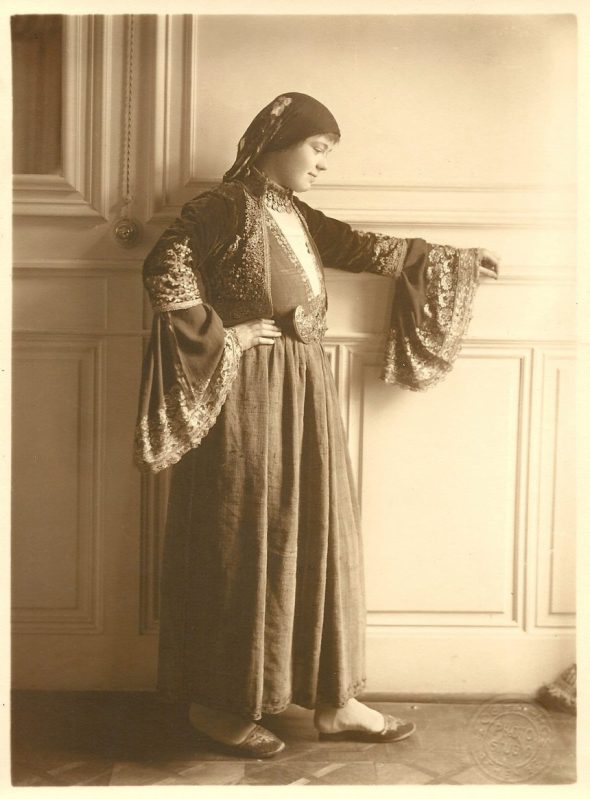
Priscilla Capps clad in a traditional Greek costume, ca. 1920s. Photo: ASCSA Archives, Oscar Broneer Papers.
The Spirit of St. Louis Lives in Athens, Greece
Posted: February 2, 2017 Filed under: Archaeology, Archival Research, Biography, Exhibits, Greek Folk Art, History of Archaeology, Philhellenism | Tags: Betty Grossman, George Mylonas, Lucia O' Reilly, Martyl Langsdorf, Spirit of St. Louis, Wallace Herndon Smith 3 CommentsHave you noticed that in the last ten days the press has been flooded with articles about the Doomsday Clock? Here are some of the titles: “The Doomsday Clock is the closest to midnight since 1953” (Engadget, Jan. 28, 2017), “Nuclear ‘Doomsday Clock’ ticks closest to midnight in 64 years (Reuters), “Doomsday Clock Moves Closer to Midnight, Signaling Concern Among Scientists (The New York Times, Jan. 26, 2017), and “The Doomsday Clock is now 2.5 minutes to midnight, but what does that really mean? (Science Alert).

Martyl’s design of the Doomsday Clock for the Bulletin of Atomic Scientists
The Doomsday Clock was created in 1947 by members of The Bulletin of the Atomic Scientists’s Science and Security Board; several of them were part of the “The Manhattan Project” that led to the creation of the first atomic bomb. (For those of you who want to learn more about “The Manhattan Project,” I recommend a drama series that premiered in 2014; although the series was discontinued after the second season, it featured good acting and it was fun to watch. Also see Jack Davis’s Communism In and Out of Fashion, Sept. 1, 2016.) “Originally the Clock, which hangs on a wall in The Bulletin’s office at the University of Chicago, represented an analogy for the threat of global nuclear war; however, since 2007 it has also reflected climate change and new developments in the life sciences and technology that could inflict irrevocable harm to humanity… The Clock’s original setting in 1947 was seven minutes to midnight. It has been set backward and forward 22 times since then, the smallest ever number of minutes to midnight being two in 1953, and the largest seventeen in 1991” (after Wikipedia, accessed 28/1/2017). As of January 2017 (and this explains the flurry of articles in the press), the Clock has been set at two and a half minutes to midnight, a reflection of President Trump’s comments about nuclear weapons: “The United States must greatly strengthen and expand its nuclear capability until such time as the world comes to its senses regarding nukes.” Trump posted this remark on Twitter on December 22, 2016, and followed it with an even more worrisome comment: “Let it be an arms race,” he said, referring to the Russians.
While reading the history of the Doomsday Clock my eyes happened to fall on the cover of the 1947 Bulletin of the Atomic Scientists, which featured for the first time the Clock (at seven minutes to midnight), and the name of the artist who had designed it: Martyl Langsdorf. Martyl is an unusual name, and I had seen it before. I went to the Archives Room of the American School of Classical Studies (ASCSA or the School hereafter), where we keep the School’s administrative records, and personal papers of its members. There, hanging on one of the walls, was an abstract painting depicting a mountainous landscape, and signed in the bottom left corner: “Martyl.” To my surprise, when I checked our inventory, there was a second work of art, an etching, by “Martyl” in the Archives of the ASCSA. But this one also carried a personal dedication: “To George and Lela with affection and admiration, Martyl.” This meant that Martyl’s other painting had also originally belonged to George and Lela Mylonas. Read the rest of this entry »
Skyromania? American Archaeologists in 1930s Skyros
Posted: June 1, 2016 Filed under: Archaeology, Archival Research, Greek Folk Art, History of Archaeology, Mediterranean Studies, Modern Greek History | Tags: Carol Bullard, Doreen Canaday Spitzer, Dorothy Burr Thompson, Faltaina Kalimeri Peschke, Georg von Peschke, Αngeliki Hatzimichali, Σκύρος, Richard H. Howland, Skyros 9 Comments
Skyros, house interior, 1931. ASCSA Archives, Dorothy Burr Thompson Photographic Collection
“The island of Skyros is fairly remote and inaccessible, on account of the winds. One consequence of its geographical location is that there is very little information about the island in the ancient authors, and the picture also given by the travelers is also fragmentary,” archaeologist Efi Sapouna-Sakellaraki could write in her archaeological guide to Skyros, as recently as 1998. Before her, American archaeologist Hazel Hansen, in writing about prehistoric Skyros in 1951, similarly described the island as “one of the most solitary islands in the Aegean for nearly all the other islands are nearer to one another or to the mainland.” Its isolation and the capricious sea between it and the mainland and Euboea are the reasons why Skyros is far less frequently visited…”.

 From the Archivist's Notebook