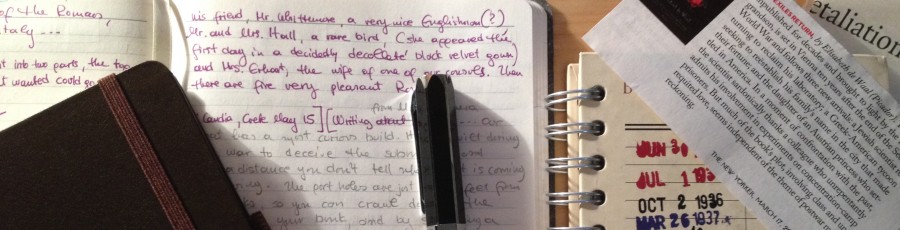
Celebrating Christmas and New Year’s in Athens, 1895-96: From the Letters of Nellie Reed, Student of the American School of Classical Studies at Athens.
Posted: December 31, 2024 Filed under: Archaeology, Archival Research, Biography, Greek Folk Art, History of Archaeology, Modern Greek History, Philhellenism, Uncategorized, Women's Studies | Tags: American School of Classical Studies at Athens, Benjamin Ide Wheeler, Charles Edward Prior Merlin, Eben Alexander, Merlin House, Nellie Marie Reed, photography, Wilhelm Wilberg 8 Comments
“The American in Athens at Christmas time has a distinct advantage over the rest of mankind for each of his holidays is multiplied by two. He must of course celebrate the day the dear ones at home are enjoying and he is equally desirous of helping the Greeks in their festivities. The heading of his letter, Dec. 25, is contradicted by the postmark Dec. 13, much to his confusion until he finds that in Greece Father Time lags twelve days behind his record in other lands. But one is inclined to doubt even that date, so different is the approach of the sacred festival. Windows flung wide open admit the warm southern sunshine. A walk along the streets is rewarded by glimpses into gardens full of orange trees hung with golden fruit and rose trees covered with fragrant blossoms,” wrote Nellie Marie Reed (1872-1957) sometime in early 1896, after having spent a year at the American School of Classical Studies at Athens (ASCSA or the School hereafter).
She was referring to Greece following the old (Julian) calendar, as did other eastern Orthodox countries in the 19th century. Christmas was celebrated on January 6 and New Year’s on January 13. The Gregorian calendar was adopted in Greece only in 1923. (See “An Odd Christmas” or the “Christmasless Year of 1923” in Greece .)
A graduate of Cornell University, Nellie attended the School in 1895-1896. We are fortunate to have in the School’s Archives the letters she sent to her family because they contain valuable information about her Greek experience. They were my main source of information for an essay exploring the close relations between the American School and the German Archaeological Institute in the late 19th century (On the Trail of the “German Model”: ASCSA and DAI, 1881-1918). Without her letters we would not have known that these relations were not limited to an official level but extended to informal, social gatherings between members of the two schools (the so-called “Kneipe” evenings); members of the Austrian Archaeological Station (not yet an Institute) were also part of these meetings.
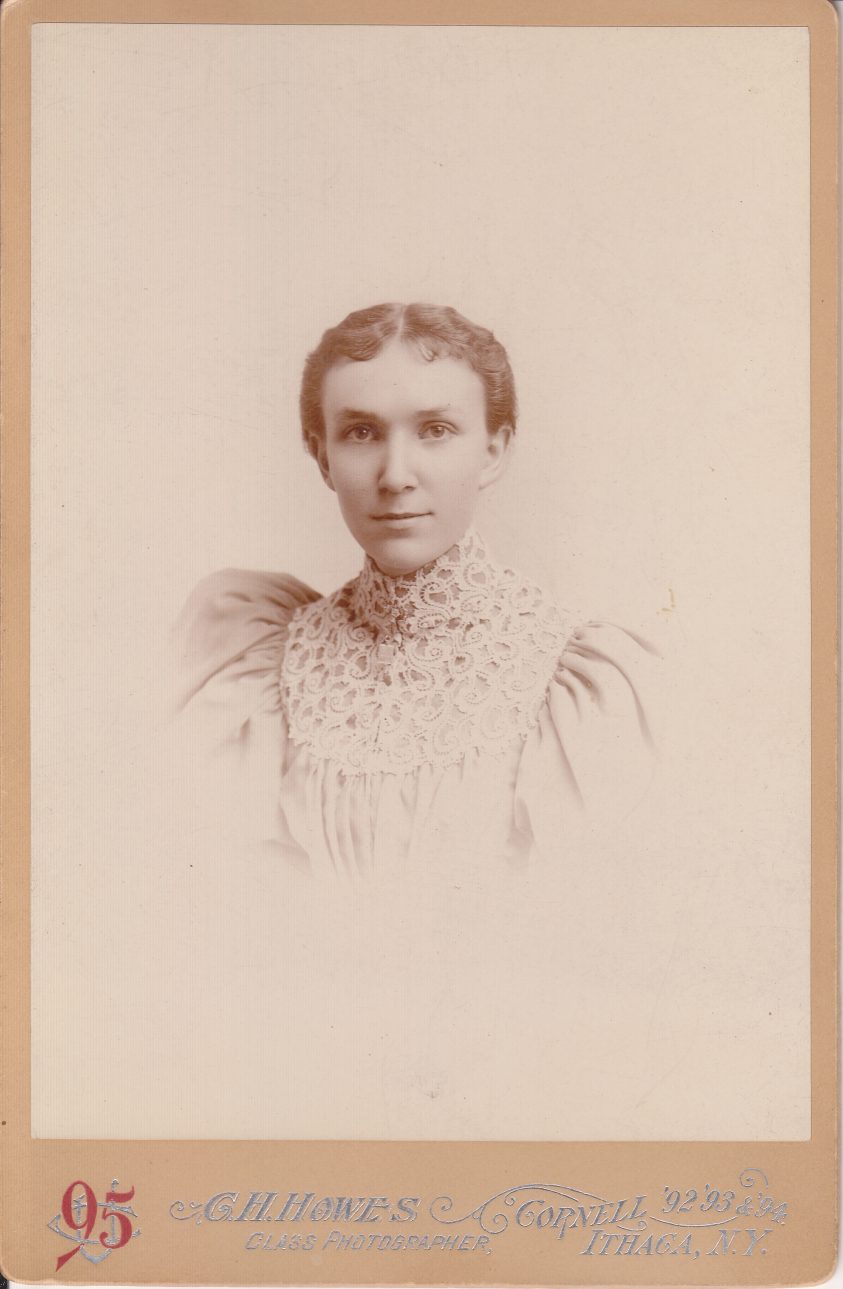
In Reed’s papers there is a typescript titled “Christmas Holidays at Athens” which is the source of the quote above. She must have intended to publish her story in some American magazine, but it is not known if she did. This edited copy contains descriptions and comments that are also present in her letters home; unlike the letters, the story in the typescript focuses more on the weather, landscape, and local customs and less on the people she with whom she celebrated the Christmas holiday. Her informal writings are more interesting (and less florid) because they describe life and people at the School and the American colony in Athens. I will be quoting from both sources.
Gregorian Calendar Christmas (December 25)
On the 24th of December (December 12 in the old calendar), Nellie began her day at the Acropolis Museum with a presentation on two Archaic korai (she called them “Aunties”) to other members of the School. “I cannot realize that Christmas is here –it is glorious October weather […]. There will be but little celebration in the American colony,” she wrote later that day. It was also her birthday, as it was the Greek King’s. She joked about their “joint birthday” (ASCSA Archives, Nellie M. Reed Papers, Nellie to her mother and brother, Dec. 22, 1895).
A week later, on December 29th, she started another letter by saying that: “Christmas time has come and gone but seemed really so little like Christmas that it wasn’t nearly so hard to bear […]. In the afternoon [Christmas Eve] we attended the Christian service at the German church.” From the typescript, however, we learn that Nellie attended the German service at the royal chapel in the Palace where every attendant had to carry his/her own candle since there was no provision for lighting, “on account of the fine work in the ceiling… the effect of these tiny lights in the entire absence of larger ones was quaint and pleasing in the extreme.” In addition to the Orthodox chapel that Queen Olga had created on the second floor of the Palace, there was still the Protestant chapel in the southeast corner of the ground floor which dated to the time of King Otto. That’s where Nellie and the other Americans attended the mass on Christmas Eve.
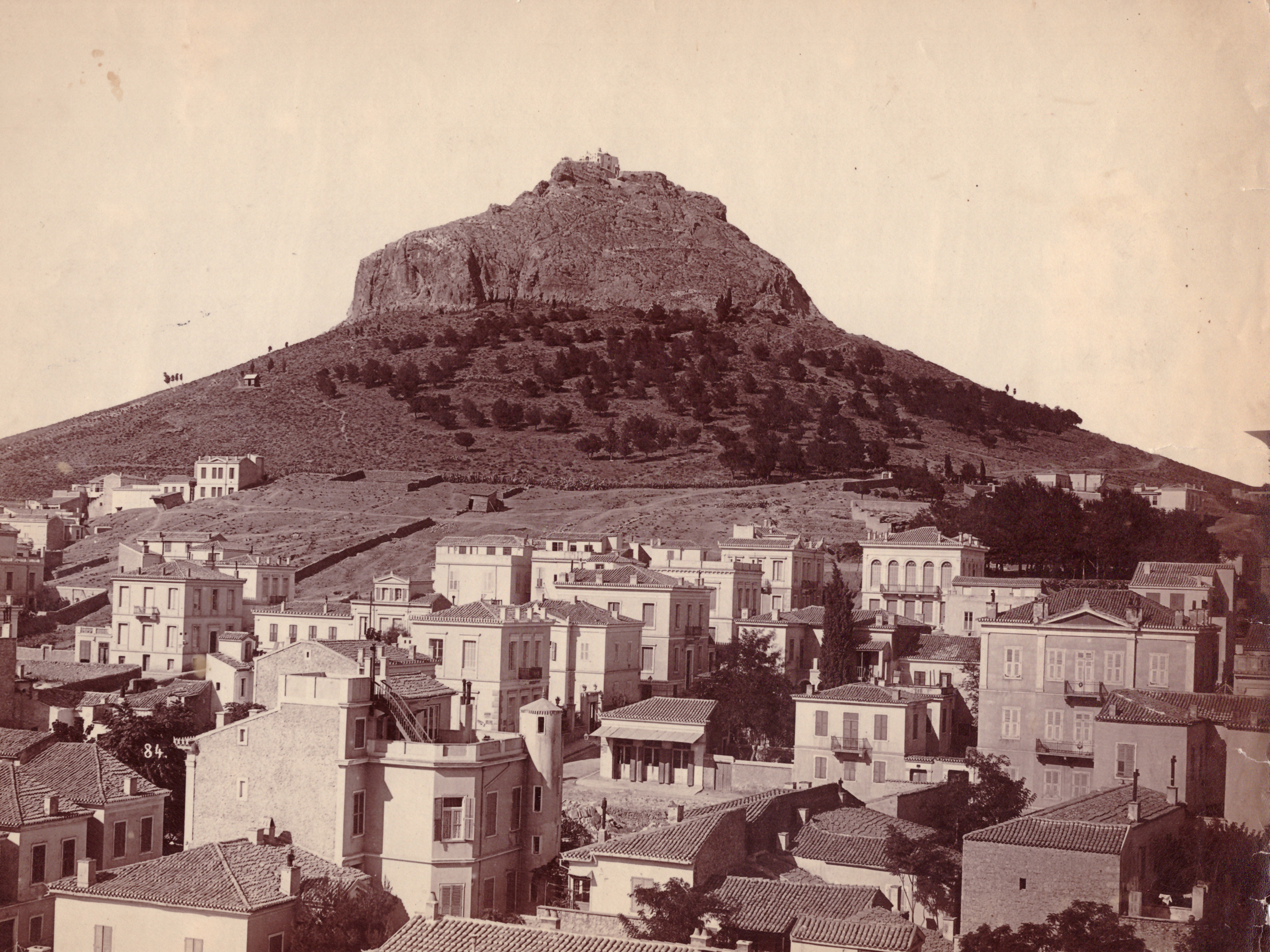
On the 25th of December (December 13 in the old calendar), she and her best friend at the School, Ruth Emerson, together with Alice Walton got up at 6am and climbed Mount Lycabettus to see the sunrise. “The Acropolis rose boldly out from clouds of pale blue mist that veiled but did not conceal the city below […]. It was not till quarter to eight that we actually saw the sun pull up from behind Hymettos, light the cross on the little chapel that crowns Lycabettos and then suddenly burst out in its full glory over us. It was warm as summer all day as in fact it was nearly the whole week.”
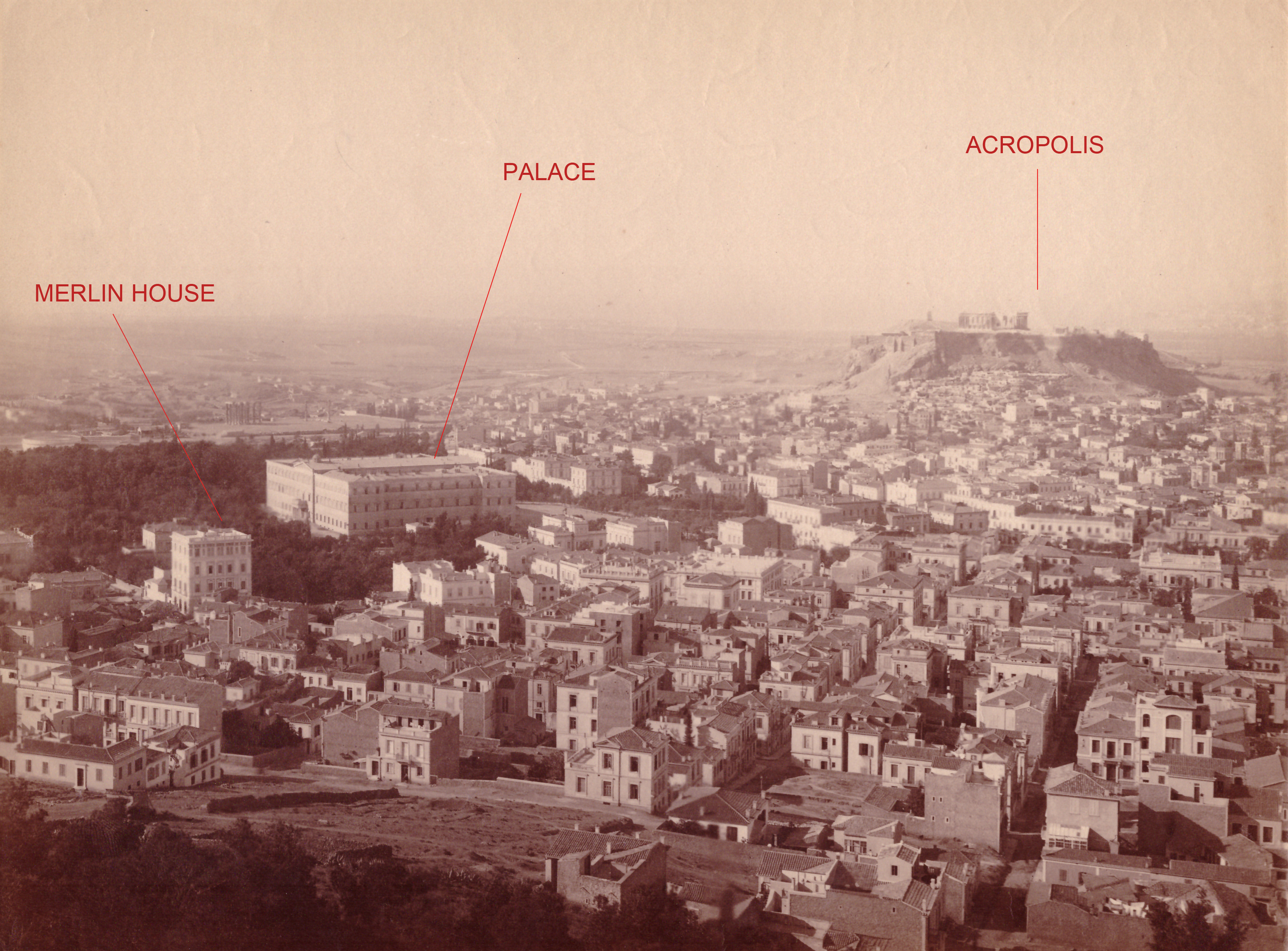
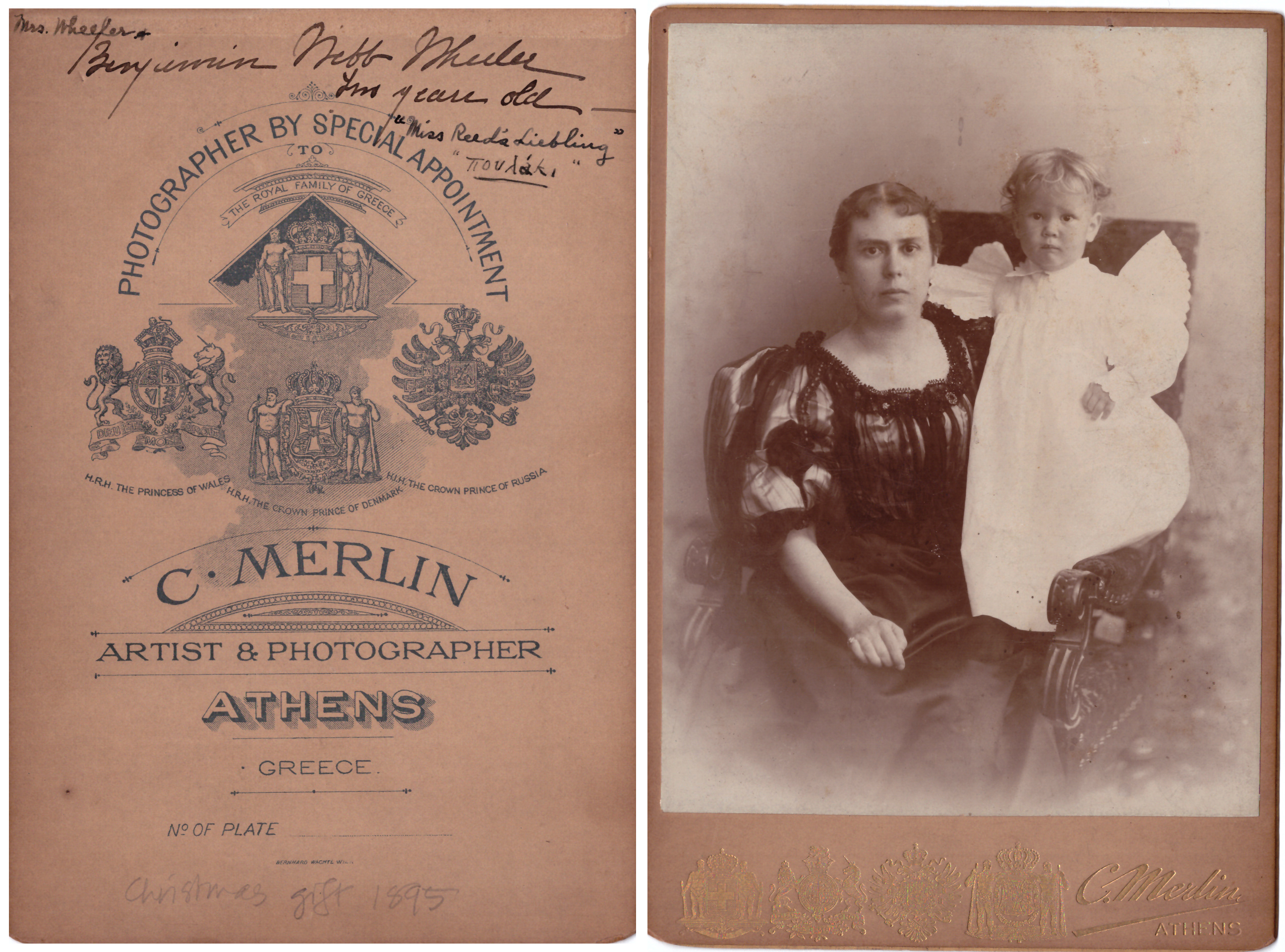
“Carnal creatures” in the words of Nelie, they rushed back to Merlin House to join the other female students and the family of the School’s Annual Professor, Benjamin Ide Wheeler for breakfast. Wheeler was Professor of Greek at Cornell University and the one who had encouraged Nellie and his other student, Eugene Andrews, to apply to the School. Nellie was surprised to find many presents for her under the Christmas tree that the foreign residents of the Merlin House had decked. (I have written about the Merlin House at the corner of Sekeri and Kanari streets in Kolonaki, and its owner Charles Edouard Prior Merlin (1850-1898), in an older post The Man from Damascus, the Good Wife, and Baby Solon: R.I.P. at the American School of Classical Studies at Athens. At the time I did not have a photo of the house, but I have now discovered a good one in the Nellie M. Reed Papers.)
The Director of the School, Rufus Richardson, and his family joined the crowd at the Merlin House. “The Richardsons were the only outsiders here and after they were gone, you would have been amused to see the scene in the hall -tiny little Benjamin [the son of Benjamin and Amey Wheeler] with a gun and diminutive horn, Dr. Wheeler following him with a drum, Prof. Lord [George Dana Lord] with another horn, Mrs. Lord, Mrs. Wheeler, Miss Walton and I following with feather dusters or such other implements of warfare as we could find, marching in solemn procession up and down the hall.”
On Christmas Eve, the Richardsons had invited members of the School and of the American colony including the American Minister Eben Alexander and his wife [Marion Howard-Smith] and the Director of the British School [Ernest Arthur Gardner] and his wife [Mary Wilson], for an evening of games, charades, and dancing. Alexander was an academic himself having taught Greek at the University of North Carolina at Chapel Hill.
“The charades were very funny – I figured in nearly every imaginable character, lame old woman healed in the Asklepieion, a bride, a queen, but funniest of all as an antique statue, one of the very “Aunties” on which I had spoken the day before. I kept my face fairly still till Prof. Lord and Dr. Wheeler who were lecturing on the statues remarked that my nose very evidently didn’t belong on my face and that my arm was of a different material from the rest of me and ought to be removed –then I smiled a smile that was not particularly archaic. I was really very happy and hardly thought of its being Christmas till the last half-hour and then I wished most devoutly that I could step in at home for a few minutes” wrote a homesick Nellie.
Old Calendar Christmas (January 6)
It was not until January 6th that the Greek Christmas came, not celebrated particularly in the homes but in the churches. On Greek Christmas Eve, the members of the School witnessed what for them was a strange event.
“A group of boys were carrying a fair-sized ship made in various colors of paper and brilliantly lighted both on the masts and inside. They halted before each house to play on crude instruments, expecting of course a reward.” It reminded them “of the great ship in the old Panathenaia festival.”
Next morning they attended mass at Agia Eirini (Saint Irene) church (the old metropolitan church) on Aiolou Street. The ceremony seemed even stranger.
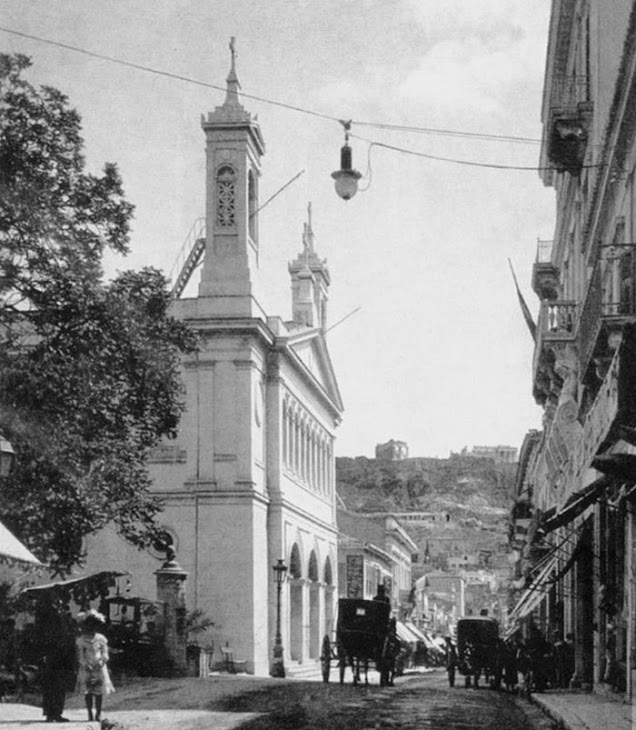
“The church was about full. You must not imagine seats only a few chairs for some of the women… There was much the same rigmarole as in the Russian church but more tawdry, the priests being dressed in showy but rather untidy robes of blue, white, gold, and the attendants running about lighting candles, changing chairs, passing plates for contributions […]. Some very good Byzantine music was mixed with the monotonous intoning and chanting of the priests and the bowing and crossing of the people, kissing of pictures and various other things that did not seem in the least sacred and religious,” Nellie wrote to her family. In the typescript the last sentence was omitted.
Αγία Ειρήνη (Agia Eirini), postcard, end of 19th century.
After an hour at the Greek church, they wandered over to the Russian church at Philellinon Street, the chapel of Queen Olga, who was of Russian descent. The ceremony was more impressive and eye-catching than the one in Agia Eirini: whole robes made of gold thread, tiaras and crosses with exquisite, sparkling precious stones, and lots of chanting.
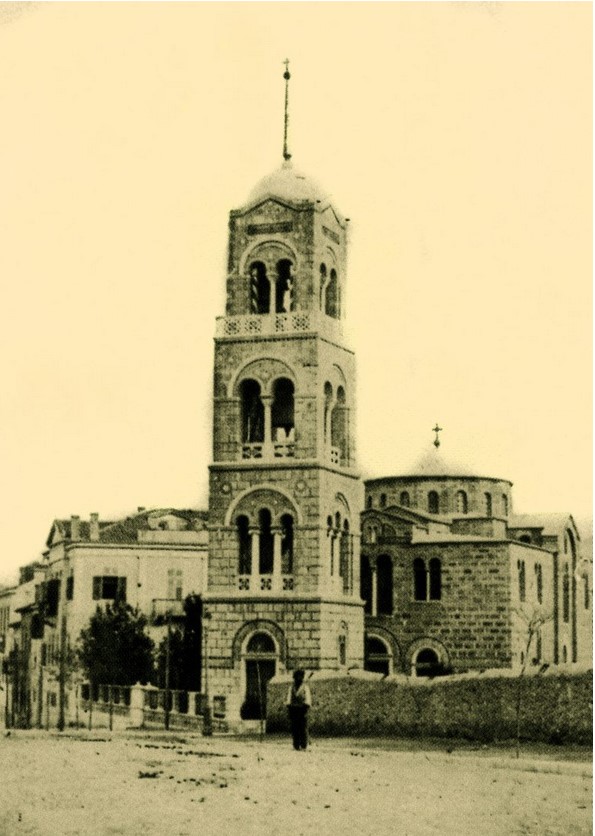
But Nellie still found the service lacking in religious sentiment: “a mere show, a very good piece of acting but not impressive enough to be able to keep my eyes off the gorgeously uniformed officers in attendance, beautiful suits with loads of gold decorations that fairly dazzled my eyes.” Her last comment was also omitted from the typescript and replaced by a description of mystagogic character: “The rich full voice of a gray-haired intoned the service answered by sweet music from an unseen choir, the curtain was slowly pulled aside, the bronze doors noiselessly opened, the clouds of fragrant incense from the swinging censer rose above the altar…”.
The Russian Church on Philellinon Street, ca. 1870. Photo Source: Ε. Γ. Σκιαδάς, “Η Σώτειρα του Λυκοδήμου (Αγία Τριάς) της οδού Φιλελλήνων,” Τα Αθηναϊκά, 6/8/2019.
In the evening Nellie and other members of the School were invited to a Christmas Eve formal dinner at the U.S. Minister’s house, Eben Alexander. “The table looked lovely, a tower of sweet alyssum, simple green and white. I can’t remember all there was, but is all nine or ten courses, soup, oyster platters, cutlets, some kind of meat, tiny cold birds, turkey, a particular kind of vegetable all alone and of course various vegetables, salads etc. with each one of these various dishes. For dessert some cakes and whipped cream, fruit and nuts. Three kinds of wine and champagne of all which I took only about two swallows and then after leaving the table, coffee, cigarettes and Benedictine in the drawing room, and still later some kind of liquers with soda-water.” Nellie had a very pleasant time “but much of that sort of thing would be an awful bore; deliver me from diplomatic life.”
Nellie preferred informal evenings with the German archaeological community. On December 26th, there was a gathering at the Dörpfelds. She “had a jolly, jolly time for besides a charming host and hostess,” she “found the Germans most entertaining.” We know that in the course of her year in Athens, Nellie developed feelings for Austrian architect Wilhelm Wilberg, the subject of a recent biography. (Their correspondence has recently been donated to the German Archaeological Institute by the Wilberg family. See Katharina Brandt, “Wilhelm Wilberg (1872-1956) and His Family,” People at the DAI Athens, 24/11/2022)
Old Calendar New Year’s Day (January 13)
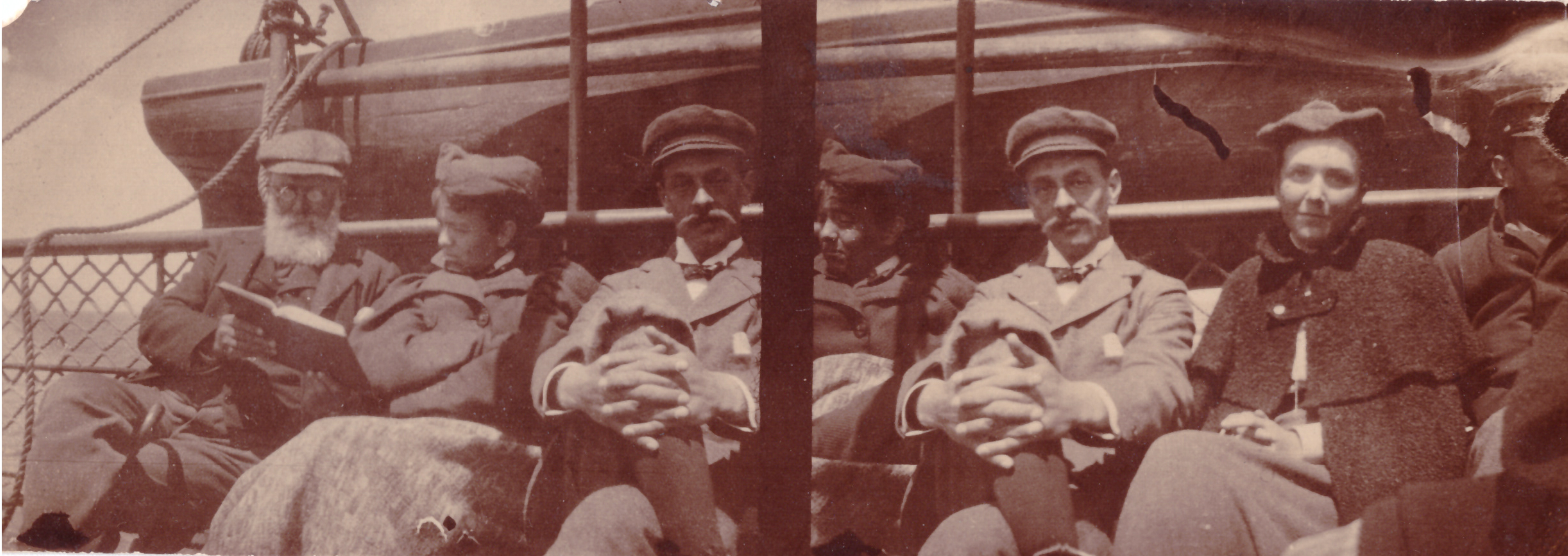
On January 16th, three days after the Greek New Year’s, Nellie dispatched another long letter describing blow-by-blow the service she attended in the Metropolitan church. “Thanks to Mr. Alexander’s son Eben[izer], we had fine places up in the choir-stall in the gallery where we could see everything. There was some preparatory service which all the common people attend but about half past nine the police came in and cleared most of them out but letting foreigners to stay. For a little while the church seemed almost deserted but very soon officers in brilliant uniforms came streaming in and filled up the back half of the church, standing all close together. Then diplomats came one-by-one taking places in the front half –the Turkish minister in gorgeous gold embroidery and red fez […]; the British minister in black and gold attended by dapper secretaries; the Italian legation in graceful cape-like cloaks in soft colors and resplendent uniforms underneath; the German minister with bands and sashes and embroidery and decorations, all sorts of men in all sorts of costumes from the blazing Russian minister to Mr. Alexander who entered in simple dress suit, high hat and white gloves, immaculate and distinctive from the extreme simplicity. I had an actual thrill that I belonged to the country he represented.”
After the church had filled with Greek and foreign dignitaries, the priests started down the aisle to meet the royal family entering the church:
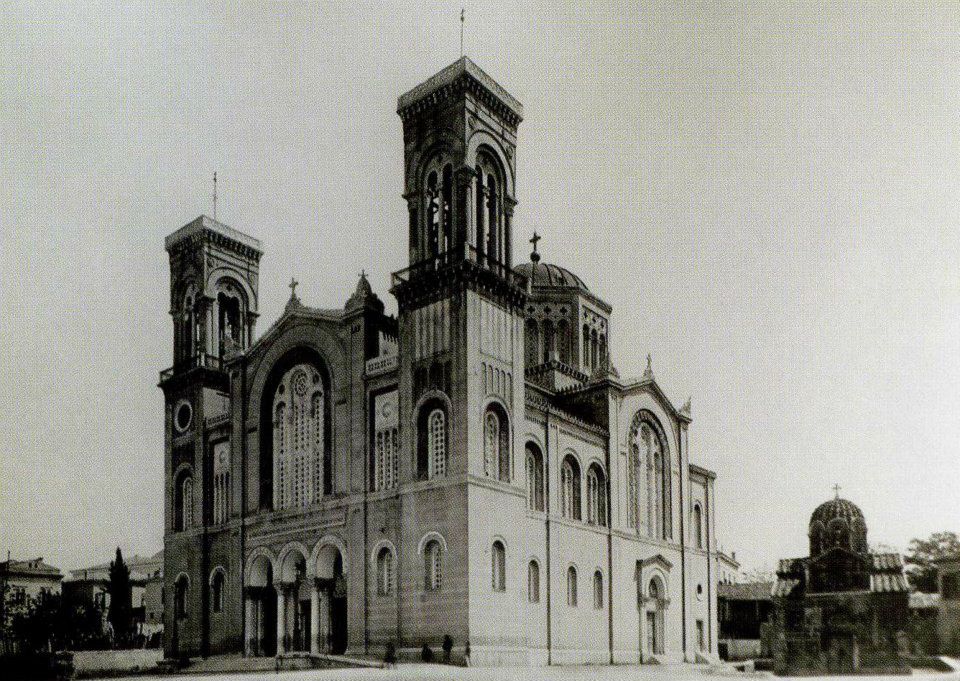
“Τhe King in uniform but simple, the Queen in a handsome lavender gown and black cape, the Crown Prince and Princess Marie, Prince Nicholas, Prince George and the small Prince Andreas [later the father of Prince Philip and grandfather of King Charles of England]. The service was short but the music, a choir of men’s voices, was magnificent, such strong splendid voices.”
Metropolitan Church of the Annunciation, 1870s. Photographer: Pascal Sebah. Source: Η μηχανή του χρόνου.
Nellie described the whole scene as “brilliant beyond description and gave one an inkling of what a great nation might do if a single little court could bring out such splendor.” I am not sure what she meant with her last comment whether she referred to her own country or to Greece.
Later in the morning there was a reception at the palace with the Queen and the court ladies all dressed in elegant national Greek costumes. In a recent exhibition at the Benaki Museum, titled Δίασμα (Weft and Warp) and based on the private collection of Ιoanna Papantoniou, there was an entire corner dedicated to Queen Olga and her efforts to make the national Greek costume the official costume of her court.
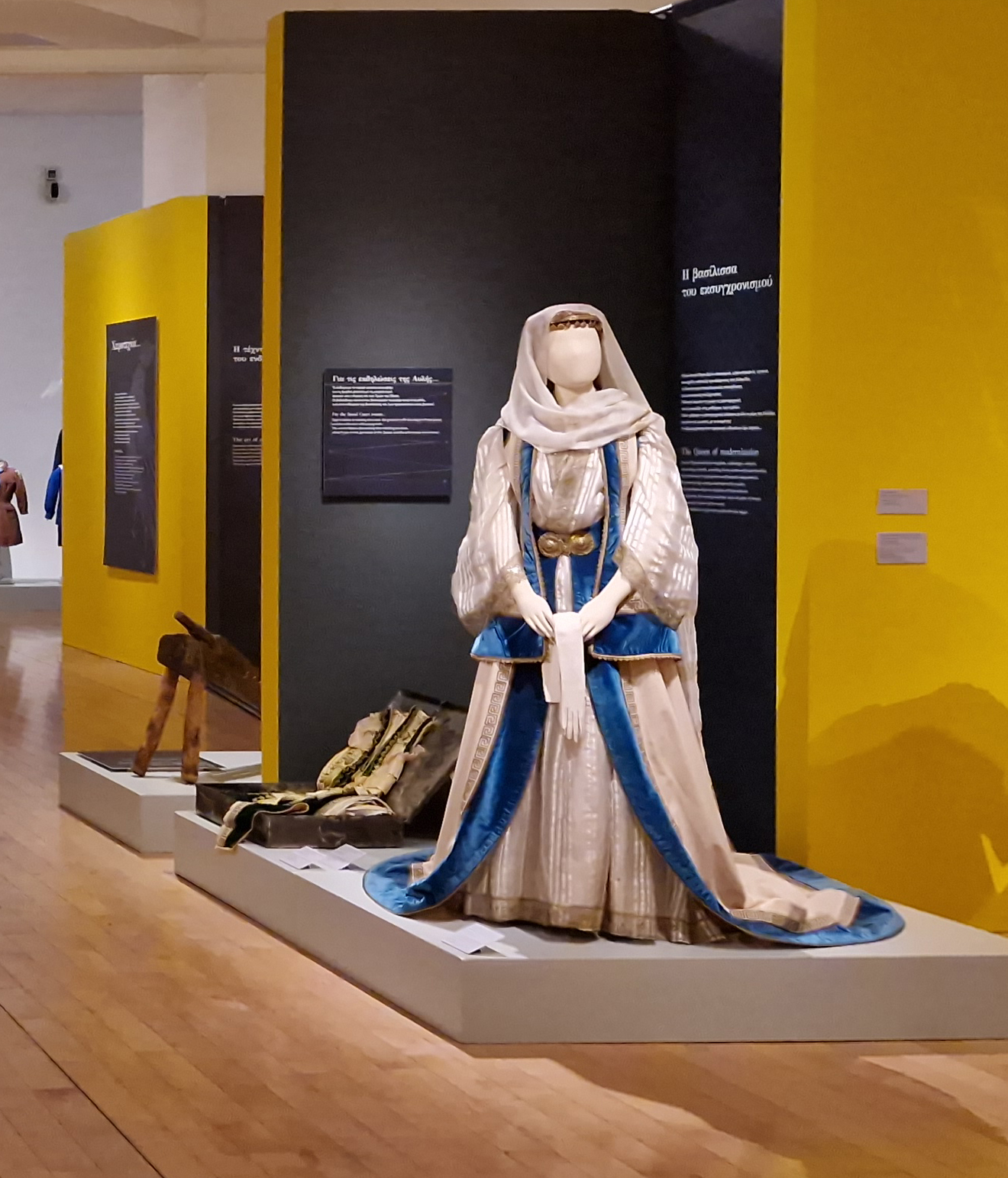
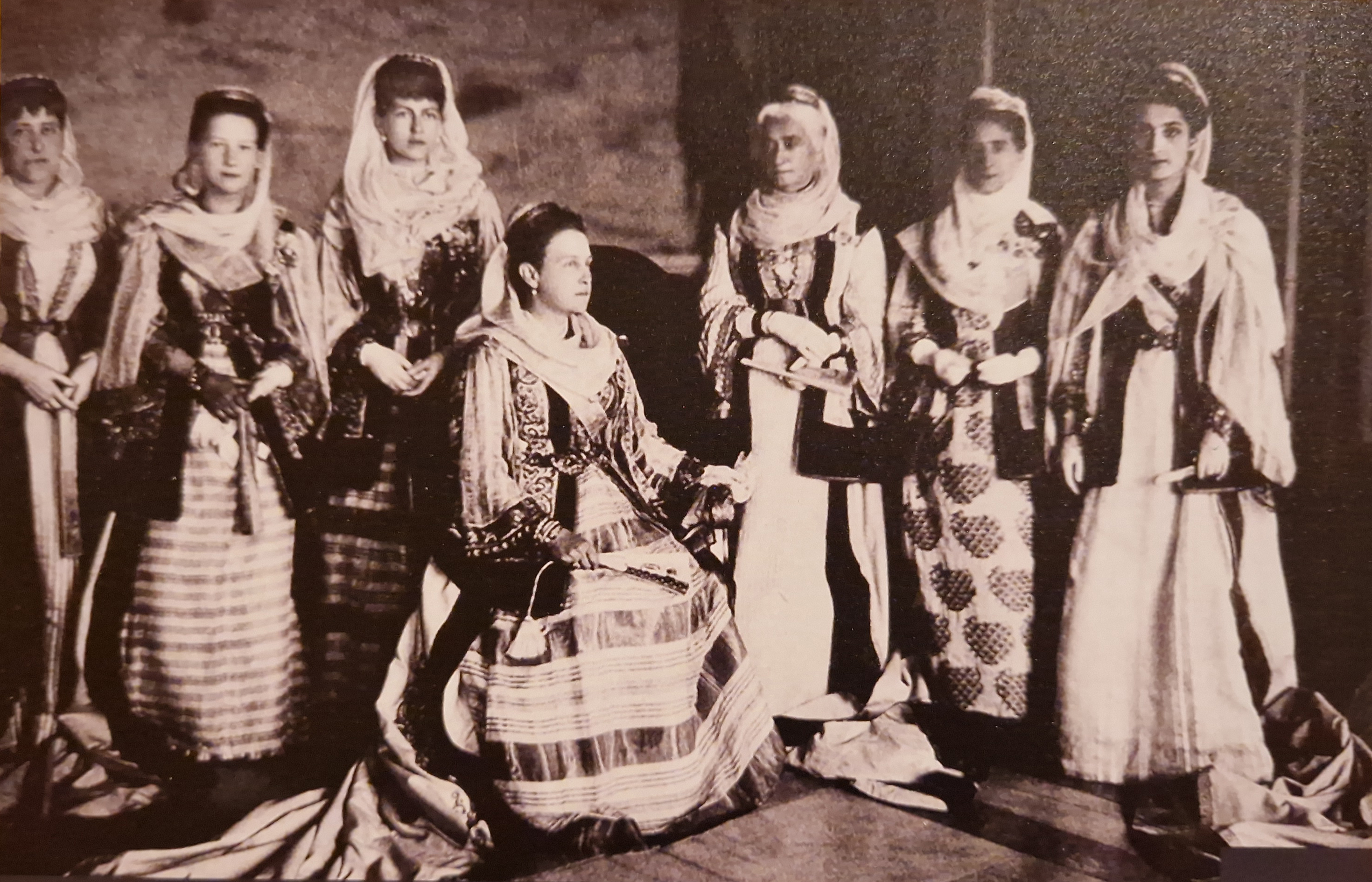
The next night the court ball served as the official start to carnival, which was the beginning rather than the end of the festival season.
______________________________________________

 From the Archivist's Notebook
As usual, great stuff, Natalia. Keep ’em coming. See you in Philly, Glenn
Thank you Glenn and Happy New Year. See you soon.
A wonderful snapshot of the School in 1895-96, Natalia. Thank you. I was interested to read about Christmas dinner at Eben Alexanderâs house. His involvement with the School is mostly absent from our records here in Chapel Hill. A brief footnote on Eben Alexanderhttps://classics.unc.edu/about-us-2/departmental-history-3/eban-alexander/. He came to Chapel Hill from University of Tennessee and was Professor of Greek from 1886-1893 and then from 1897-1909, the gap representing his time in Athens, when he was appointed by President Grover Cleveland as âEnvoy Extraordinary, Minister Plenipotentiary, and Consul General to Greece, Roumania [sic], and Servia.â On leaving his diplomatic post in 1897, he was given a walking stick carved from a branch of a moria olive tree from the plain of Marathon, which still resides in the chairâs office in Murphey Hall and is traditionally carried in procession at University Day and graduation.
Donald C. Haggis
Professor of Classical Archaeology and Chair
Nicholas A. Cassas Distinguished Term Professor of Greek Studies
Department of Classics
University of North Carolina at Chapel Hill
ÎÎ¹ÎµÏ Î¸Ï Î½ÏÎ®Ï ÎναÏκαÏÎ®Ï ÎζοÏιά ÎÎ±Î²Î¿Ï ÏίοÏ
ÎνÏÏιÏοÏÏο ÎÎ¹Î³Î±Î¹Î±ÎºÎ®Ï Î ÏοÏÏÏοÏίαÏ-ÎÎνÏÏο ÎελÎÏÎ·Ï ÎναÏÎ¿Î»Î¹ÎºÎ®Ï ÎÏήÏηÏ
ΠαÏεία ÎμμοÏ, ÎεÏάÏεÏÏαÏ, ÎαÏιθίοÏ
ÎÏήÏη 722 00
κιν. 6977647738
INSTAP Study Center for East Crete
P.O. Box 364, Pacheia Ammos, Ierapetra 72200, Crete, Greece
Tel. +30-28420-93027 Fax. +30-28420-93017
Personal Meeting Room, https://unc.zoom.us/j/5781769383
Thank you Donald. I was intrigued by Eben’s NC Chapel Hill connection and was hoping to hear from you. Until WW II most of the U.S. Ministers to Greece were academics or with a strong background in the Liberal Arts. I also read that Eben was involved with the organization of the first Olympics.
Fascinating, Natalia. And congratulations on getting the Aristea award — well deserved! Diane Fortenberry
Thank you Diane for reading my latest (and for your congratulations on the award).
Fascinating as always ! All the best for 2025.
Ευχαριστώ και καλή χρονιά με υγεία και πολλές νέες συνταγές!