“So very far away, but maybe it’s only yesterday”: Greece in Crisis, 1964, 2014.
Posted: December 1, 2014 Filed under: American Studies, Archaeology, History of Archaeology, Modern Greek History | Tags: Admiral's House, American School of Classical Stusies at Athens, Athenian Agora, Corinna Tsopei, Corinth Excavations, Gennadius Library, George Papandreou, Greece 1964, Henry Robinson, Ioannis Papademetriou, MONUMENTA, Spyros Skouras, Ward Canaday Leave a comment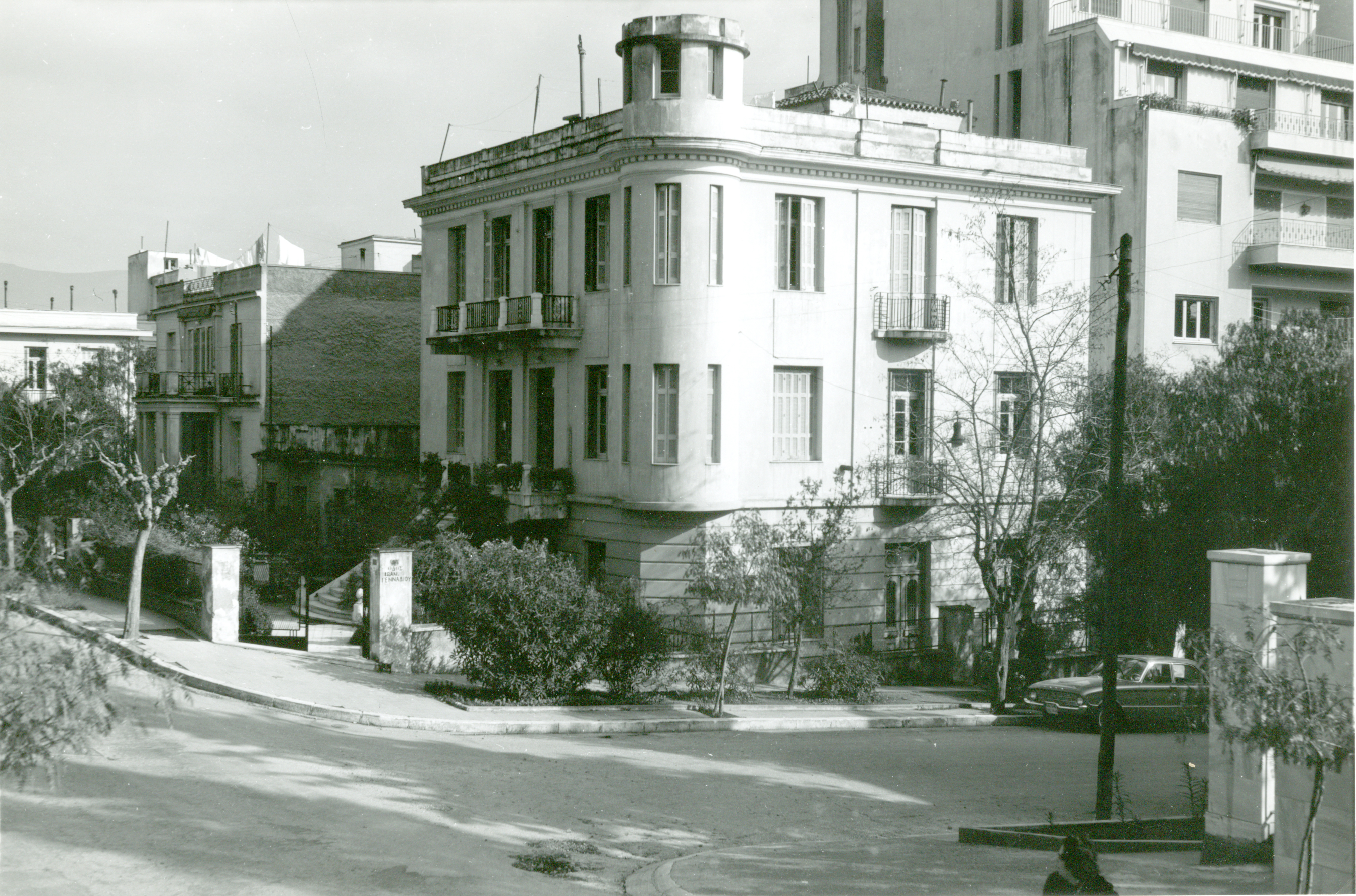
The Admiral’s House, 1964 (ASCSA Archives, Administrative Records)
“The decision made at the last Board of Trustees meeting… was to appoint a committee… to make an immediate study and prompt report on the Admiral’s House which as you know the School for some time has had the opportunity to buy. Will you, as Chairman of the Committee of the Admiral’s House, be good enough to write immediately to Henry Robinson, asking him to request [of] Mr. Kyriakides that he make a careful report as to the desirability of the house, the possibility of obtaining it and an appraisal not only of the price which the School should be willing to pay for it, but also his estimate of the price the owners would accept, the best terms available, the cost of maintenance, the cost of repairs or changes the School would need to make, the use to be made of it by the School, the income which the School would expect to receive from it, and the estimated cost of taxes or any other expenses which would be involved by the School in the advent of its purchase” wrote on December 7, 1964, Ward Canaday, chairman of the Board of Trustees of the American School of Classical Studies at Athens (ASCSA) to Charles Morgan, Trustee of the School and one of its former directors (1936-1938), and chair of the Managing Committee (1950-1960). Read the rest of this entry »
A Preamble to the Nazi Holocaust in Greece: Two Micro-Histories from the American School of Classical Studies at Athens
Posted: November 1, 2014 Filed under: Archaeology, Archival Research, Classics, History, History of Archaeology, Jewish Studies | Tags: American School of Classical Studies at Athens, Georg Karo, Henry Immerwahr, Holocaust, Israel Walker, Martin Amis, The Zone of Interest 9 CommentsJack L. Davis, Carl W. Blegen Professor of Greek Archaeology at the University of Cincinnati and a former director of the American School of Classical Studies at Athens (2007-2012), here contributes to The Archivist’s Notebook an essay about Jewish academics in Athens in the 1930s and anti-semitism at the ASCSA.
A recent comment by Barbara McManus on a older post to this blog makes it clear that leaders of the American School of Classical Studies at Athens (ASCSA) factored religion into decision-making about student applications for fellowships (https://nataliavogeikoff.com/2013/10/01/the-modern-greek-exam-professor-blanks-method-and-other-stories-from-the-1930s/). Natalia Vogeikoff-Brogan had observed that fellowship procedures in the 1930s were weighted against women, the handicapped, and even Canadians! McManus remarked:
“Besides being female, handicapped, or Canadian, if you were a Jew it was also difficult to win an ASCSA fellowship in the 1930s. Letters in the Samuel E. Bassett papers in Yale’s manuscript and archives library show that the Fellowship Committee gave Israel Walker the 1930-31 Fellowship in Greek Language, Literature and History only with great reluctance. In an undated letter to Edward Capps about the results of the 1930 fellowship examinations, Bassett lamented that John F. Latimer, “a very attractive young man and an excellent teacher,” fell down badly on the history and literature exams, while Walker placed 6 or 7 points ahead of his nearest competitor. The committee agreed to award the fellowship to Walker since he was ‘vouched for as personally acceptable’ by LaRue Van Hook, Walker’s Columbia professor, who wrote that ‘his semitic blood does not make him objectionable.’ Van Hook’s letter (5 March 1930) actually said, ‘He is of Semitic extraction, but a quiet, modest, and unassuming fellow, very presentable.’ When Bassett had asked David Robinson’s opinion about giving the fellowship to Walker (Robinson was a member of the Fellowship Committee), Robinson had replied (29 March 1930), ‘I am a firm believer in examinations and if Walker comes out far ahead in general average I should hesitate not to give him the fellowship, especially as he can work under his own instructor, Van Hook [Annual Professor for 1930-31]… Personality is an important thing and I hate the Jews with a few exceptions, but these fellowships are given for scholarship and ability to do research work and not merely on the grounds of personality.’” Read the rest of this entry »
The American Dream to Excavate Delphi or How the Oracle Vexed the Americans (1879-1891)
Posted: October 2, 2014 Filed under: Archaeology, Archival Research, Classics, History of Archaeology, Modern Greek History | Tags: American School of Classical Studies at Athens, Archaeological Institute of America, École française d’Athènes, Charilaos Trikoupis, Charles Eliot Norton, Charles Jean Tristan de Montholon, Charles Waldstein, Delphi, Paul Foucart, Pierre Amandry, Stephanos Dragoumis, Walker Fearn, Zante currants 5 Comments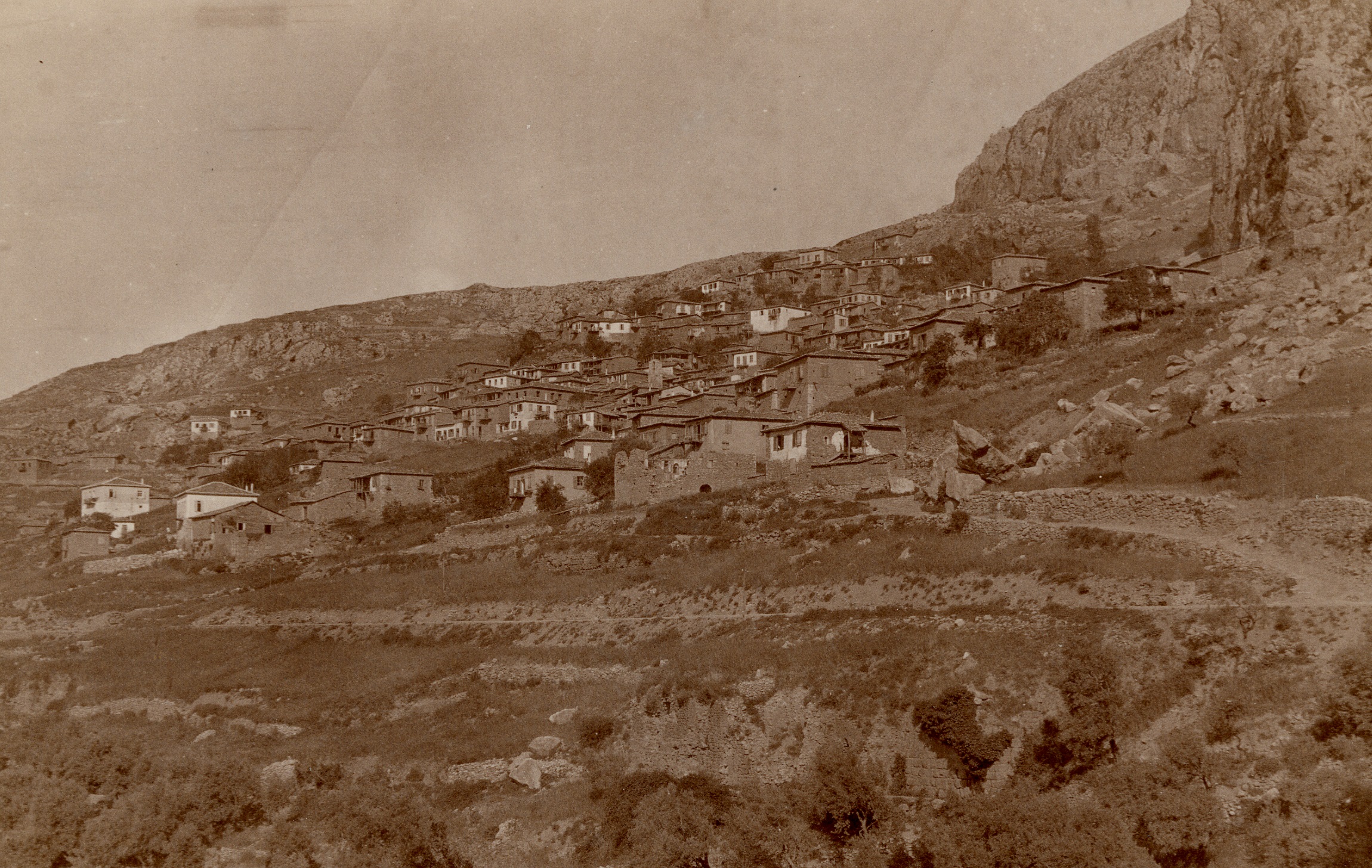
Delphi before the excavations, April 1891. Photo ASCSA Archives. Click to enlarge.
The story of how the French secured the excavation of Delphi has been told before. Pierre Amandry published an exemplary account (“Fouilles de Delphes et raisins de Corinthe”) of the negotiations between the French, Greeks, and Americans in La redécouverte de Delphes (1992). His work drew heavily on material in the archives of the French ministries of Public Instruction and Foreign Affairs and L’ Academie des Inscriptions et Belles Lettres to paint a detailed picture of the French side of the story. His account of the American side is much shorter because Amandry only had access to a handful of documents published in the History of the American School of Classical Studies at Athens, 1882-1942 (1947, pp. 58-62). The author of that volume, Louis Lord, included four letters either addressed to or written by Charles Eliot Norton, the President of the Archaeological Institute of America (AIA). Norton was not only the founding spirit of the American School of Classical Studies at Athens (ASCSA) but also the driving force behind the Institute’s unsuccessful campaign to dig at Delphi. In a brief essay from Excavating Our Past (2002), Phoebe Sheftel presented more records from the archives of the AIA that shed further light on the American side of the Delphi story without, however, making reference to the rich archival resources that Amandry had published in his long article. Sheftel’s story about Delphi is “the story that Norton wanted told” (Sheftel 2002, p. 106). Read the rest of this entry »
The Pride of Amphipolis
Posted: September 15, 2014 Filed under: Archaeology, Archival Research, History, History of Archaeology | Tags: American School of Classical Studies at Athens, Αμφίπολις, Λόφος Καστά, Jacques Roger, John Monks & Sons, Lincoln MacVeagh, Lion of Amphipolis, Oscar Broneer, Roy W. Gausmann, Stella Miller-Collett, Steve Miller, Ulen & Company 14 CommentsPosted by Betsey Robinson
Betsey A. Robinson, Professor of History of Art at Vanderbilt University, here contributes to The Archivist’s Notebook an essay about the history of the reconstruction of the Lion of Amphipolis in the 1930s and the people who spearheaded it; she also reminds us of recent work by the American School in the area in 1970. Her current essay is based on extensive archival research she conducted in the Archives of the American School of Classical Studies at Athens a few years ago, which resulted in an article entitled “Hydraulic Euergetism: American Archaeology and Waterworks in Early-20th-Century Greece,” in Philhellenism, Philanthropy or Political Convenience? American Archaeology in Greece, ed. Jack L. Davis and Natalia Vogeikoff-Brogan (Hesperia 82: 1, special issue), Princeton 2013, pp. 101-130.

The Lion of Amphipolis, 1962. Photo ASCSA Archaeological Photographic Collection. Click to enlarge.
Εἰπέ, λέον, φθιμένοιο τίνος τάφον ἀμφιβέβηκας, βουφάγε; τίς τᾶς σᾶς ἄξιος ἦν ἀρετᾶς;
Tell, lion, whose tomb do you guard, you slayer of cattle? And who was worthy of your valour?
Anthologia Palatina 7.426.1-2 (Trans. M. Fantuzzi & R. Hunter)
The lines above, by Hellenistic poet Antipater of Sidon, are as much of a tease today as they were when Oscar Broneer quoted them in The Lion Monument at Amphipolis in 1941. As I write, each day brings tantalizing new discoveries at Amphipolis where the Kasta Hill is being excavated by the 28th Ephorate of Prehistoric and Classical Antiquities. Less than 5 km to the south, the colossal marble lion that was reconstructed in 1937 has attracted renewed attention since archaeologist Katerina Peristeri and architect Michalis Lefantzis reported evidence connecting it to the mysterious tumulus (http://www.archaiologia.gr/en/blog/2013/04/01/the-lion-of-amphipolis/). Nearly a century after the lion’s discovery, as we await the excavators’ next revelations, it seems a good time to reflect on the lion and its modern history. Read the rest of this entry »
Unbalanced Academics, Scribblers, and an “Odd Christmas”
Posted: September 1, 2014 Filed under: Archaeology, Archival Research, Classics, Education, History of Archaeology | Tags: Alan Boegehold, Alan J. B. Wace, Carl W. Blegen, Dorothy Burr Thompson, Emily Vermeule, Gina Hiatt, Oscar Broneer, Rhys Carpenter, Robert D. Blegen, The Literary Club of Cincinnati, Theodor Adorno, Thomas W. Jacobsen 7 CommentsJack L. Davis, Professor of Greek Archaeology at the University of Cincinnati and former director of the American School of Classical Studies at Athens (2007-2012), here contributes to The Archivist’s Notebook an essay about the non-archaeological pastimes of some of the School’s most distinguished past members, including Carl Blegen, Emily Vermeule, Rhys Carpenter, Oscar Broneer, and Dorothy Burr Thompson.
Not so long ago I stumbled across an internet site called “The Academic Ladder,” a career counseling service. Its newsletter headlined a story of interest: “Get A Life! A Chart For Living A Balanced Life (Even If You’re An Academic),” by Gina Hiatt, clinical psychologist.
“Why do academics lead unbalanced lives?”
You can never do enough. The academic life is a writer’s life, only worse. This is because the academic constantly feels that he or she has not done enough. … There is always someone better than you. Academics constantly compare themselves to each other. … And face it: no matter how good you are at some aspect of a profession or field, there is someone else who does another part of the profession better.
In the long run, this is no way to live a life. You will end up with health problems and not enjoy your career, if you don’t balance your life better. There is more to life than academia!

German philosopher Theodor W. Adorno (1903-1969)
While recognizing that academics may not feel they “deserve” leisure time as a “reward,” Gina suggests ways to live more balanced lives by finding things to do, other than work, that are relaxing, fun, and important. Most of us at least are somewhat familiar with the concept (I am constantly being told by loved ones that I should relax more and have more fun), but the notion that leisure time should be filled with important activities is another matter entirely, and brings to mind Theodor Adorno’s 1963 essay “Free Time.” There he succinctly wrote:
Time and again in interviews and questionnaires one is asked what one has for a hobby. … I am startled by the question whenever I meet with it. I have no hobby. Not that I’m a workaholic who wouldn’t know how to do anything else but get down to business and do what has to be done. But rather I take the activities with which I occupy myself beyond the bounds of my official profession, without exception, so seriously that I would be shocked by the idea that they had anything to do with hobbies -that is, activities I’m mindlessly infatuated with only in order to kill time- if my experiences had not toughened me against manifestations of barbarism that have become self-evident and acceptable. Making music, listening to music, reading with concentration constitute an integral element of my existence; the word hobby would make a mockery of them. Read the rest of this entry »

 From the Archivist's Notebook