Brainerd P. Salmon: American Journalist (and Much More) and Friend of Greece
Posted: April 12, 2023 Filed under: Archival Research, Biography, Modern Greek History, Philhellenism, Uncategorized | Tags: Brainerd P. Salmon, Edward Capps, Eleutherios Venizelos, John Gennadius 4 CommentsIn American Influence in Greece, 1917-1929 (Kent, Ohio 1988), historian Louis P. Cassimatis refers to Brainerd P. Salmon, chairman of the American Chamber of Commerce in Greece, twice. In the Preface, by quoting a line from Salmon’s Glimpses of Greece (1928): “‘American interests in Greece are commercial, financial, educational, and at times philanthropic, but never political’.” And again, in Chapter Five under “Constantine and the Forced Loan of 1922,” when Cassimatis discusses the three-man economic and diplomatic mission that the Greek Government sent to Washington D.C. in the fall of 1921.
The mission composed of John Gennadius, former minister of Greece to Great Britain, Stamos Papafrangos, solicitor of the National Bank of Greece, and Salmon was sent to the United States by the Royalist government of Demetrios Gounaris to obtain recognition of King Constantine as head of the Greek State and request the advancement of the remaining part of the Tripartite Loan of 1918 (about 33 million dollars), which had been suspended. (Until King Constantine formally acknowledged that he had succeeded his dead son King Alexander, the United States could not honor agreements made with the previous Greek government, that of Eleutherios Venizelos.) Failing that goal, the three men had high hopes for a private loan from American banks since there were already several U.S. commercial firms active in Greece in the early 1920s (Cassimatis 1988, 166-172).
According to Cassimatis, the idea of a Greek mission to the U.S. was the “brainchild of Paxton P. Hibben” (1880-1928), a former diplomat and an Associated Press war correspondent sent to Greece in 1915, and a close friend of King Constantine (so close that, in 1920, Hibben would publish Constantine I and the Greek People, in support of Constantine’s decision that Greece should remain neutral during WW I). Hibben’s recommendations included Papafrangos, Philippos Dragoumis, Ion’s younger brother, and Alexander Mercati, “a confidant of the Royal Family” (Malakasses 1976). Gennadius, writing to Demetrios Maximos, Governor of the National Bank of Greece, described in detail his meeting with Prime Minister Gounaris in London in the fall of 1921. According to Gennadius, it was Gounaris who persistently asked him to head the Greek mission to America (ASCSA Archives, Joannes Gennadius Papers, Box 4, folder 15). Maximos must have supported the inclusion of Papafrangos, a lawyer and a high-ranking officer of the National Bank of Greece.
BPS Enters the Scene
But how did an American like Brainerd (or Brainard) Pomeroy Salmon become involved in this mission? I became interested in Salmon because his name kept popping up in the institutional records of the American School in the early 1920s. A google name search produced very little, however. Searching in www.ancestry.com and www.newspapers.com proved more fruitful. Salmon also appears in the Eleutherios Venizelos Papers at the Benaki Museum (accessed through www.searchculture.gr). The Salmon puzzle remains far from complete, but I was able to piece together certain parts of it.
Read the rest of this entry »“Metropolitan Transportation”: Sardis, Colophon, and the Asia Minor Disaster of 1922
Posted: July 3, 2021 Filed under: Archaeology, Archival Research, Biography, History of Archaeology, Mediterranean Studies | Tags: Aristides Stergiadis, Bert Hodge Hill, Colophon Excavations, Edward Capps, George Horton, Αριστείδης Στεργιάδης, Sardis Excavations 6 CommentsBY JACK L. DAVIS
Jack L. Davis, Carl W. Blegen Professor of Greek Archaeology at the University of Cincinnati and a former director of the American School of Classical Studies at Athens (2007-2012), here writes about the politics behind two American excavations in Asia Minor during the tumultuous years of the Greek-Turkish War of 1919-1922, and their connection to the acquisition of Greek antiquities by American museums.
For the paltry sum of $125, anyone can buy a pair of graceful bookends modeled on a column of the Temple of Artemis at Sardis from the gift shop of the Metropolitan Museum (Met) of New York. The Met describes them as follows:

An eye-catching pair for home or office, our bookends celebrate the magnificent Sardis column in The Met. The capital, base, and portions of the shaft of this great Ionic column come from a monumental temple constructed at Sardis (in today’s Turkey) and dedicated to Artemis, the Greek goddess of the hunt and the moon. Shortened from its original height of 56 feet, The Met’s massive column on display in the Greek and Roman galleries lets viewers admire the fine carving of the foliate ornaments on the capital and the fish-scale pattern on the molding at its base. These same decorative details appear on our handsome bookends.
The story of how this column ended up in the Met (and why it is shortened!) is more interesting than the bookends themselves, however worthy of admiration they may be. And it will cost you nothing to learn it here. Hint: the column was not shortened so that visitors could view its fine carving. (It is also important to note immediately that the Temple of Artemis is not only in “today’s Turkey,” but was already in Turkey when the Met’s column left Sardis.)
Read the rest of this entry »GREEKS THEY ARE CALLED THOSE WHO SHARE IN OUR EDUCATION
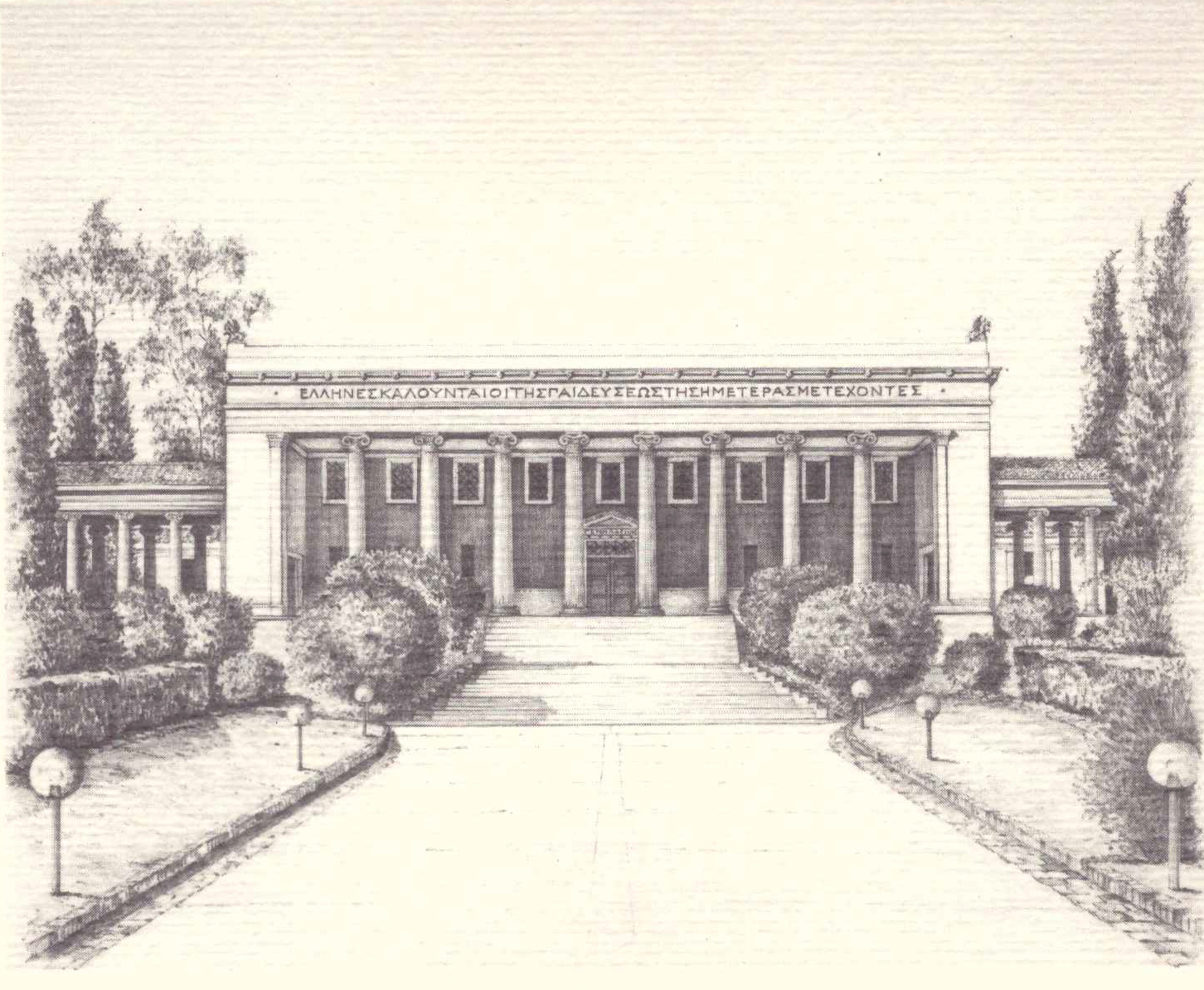
Posted: May 27, 2021 Filed under: Archaeology, Archival Research, Classics, History of Archaeology, Modern Greek History, Philhellenism | Tags: Edward Capps, Edward D. Perry, Gennadius Library, Kostas Varnalis, Paul E. More, Paul Shorey 10 CommentsAmong the first things one notices when approaching the Gennadius Library is the large inscription on the architrave of the neoclassical building, built by the American School of Classical Studies (ASCSA or the School hereafter) in 1926 to house the personal library of John Gennadius. It reads: ΕΛΛΗΝΕΣ ΚΑΛΟΥΝΤΑΙ ΟΙ ΤΗΣ ΠΑΙΔΕΥΣΕΩΣ ΤΗΣ ΗΜΕΤΕΡΑΣ ΜΕΤΕΧΟΝΤΕΣ, that is, GREEKS THEY ARE CALLED THOSE WHO SHARE IN OUR EDUCATION. It is a line taken from Isocrates, Panegyricus 50.
In the School’s Archives there is extensive correspondence between the Chair, Edward Capps, and the Secretary of the Managing Committee, Edward D. Perry, concerning this choice of passage. Both men were distinguished classicists: Capps (1866-1950) was a professor of Classics at Princeton and one of the three original editors of the Loeb Classical Library, and Perry (1854-1938) taught Greek and Sanskrit at Columbia University for several decades.
The original guidelines from the architects of the building, John Van Pelt and W. Stuart Thompson, limited the length of the inscription to twenty letters; in addition, the architects insisted on placing two rosettes to the left and right of the inscription.
The discussions about the inscription began in late 1922, as soon as the School had secured funding from the Carnegie Corporation for the construction of the library. “The book plate of [John] Gennadius contains: ΚΤΑΣΘΕ ΒΙΒΛΙΑ ΨΥΧΗΣ ΦΑΡΜΑΚΑ [buy these books, which are the medicine of the soul]. I think you could get up something better for the frieze over the entrance” Capps teased Perry on October 29, 1922. [1]. To which Perry answered: “I have been thinking over the matter a good deal, but so far have hit upon nothing that pleases me. As he [John Van Pelt] says ‘an inscription some twenty letters long’ I feel a good deal crammed. I will send him, as a mere suggestion to work with, the following, taken with slight changes from Aeschylus’s Prometheus, line 460: ΣΥΝΘΕΣΕΙΣ ΓΡΑΜΜΑΤΩΝ ΜΝΗΜΗ ΑΠΑΝΤΩΝ [“the combinations of letters, memory of all things”] which is thirty letters long” (AdmRec 311/3, folder 5, November 3, 1922).
Read the rest of this entry »“From ‘Warriors for the Fatherland’ to ‘Politics of Volunteerism’: Challenging the Institutional Habitus of American Archaeology in Greece.
Posted: February 1, 2020 Filed under: Archaeology, Archival Research, Biography, History of Archaeology, Intellectual HIstory, Mediterranean Studies, Philhellenism | Tags: American School of Classical Studies at Athens, Archaeological Institute of America, Colophon Excavations, Edward Capps, Hesperia, Jack L. Davis 3 CommentsDisciplinary history is not a miraculous form of auto-analysis which straightens out the hidden quirks of communities of scholars simply by airing them publicly. But it does force us to face the fact that our academic practices are historically constituted, and like all else, are bound to change.
Ian Morris, Archaeology as Cultural History, London 2000, p. 37.
Jack L. Davis. Created by Blank Project Design, 2020.
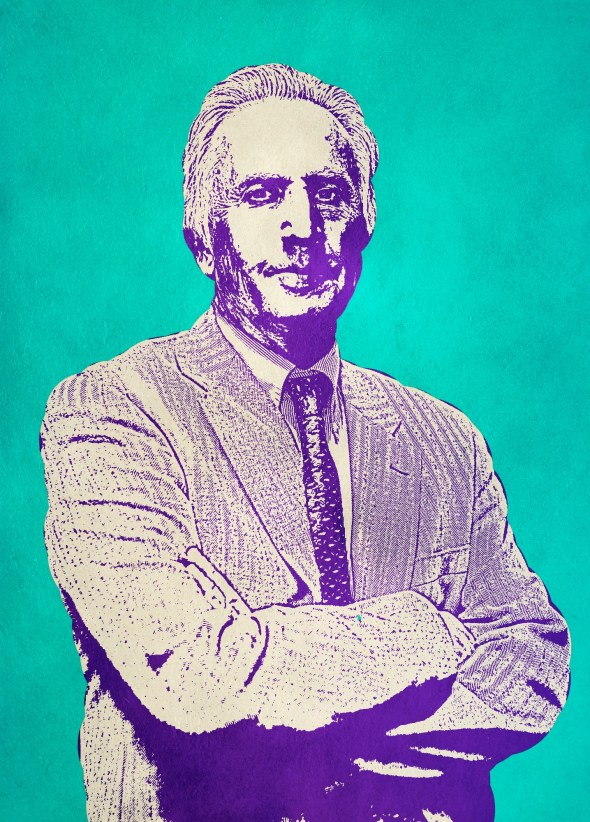
“Archives may be even more important than our publications” said Jack L. Davis in his acceptance speech on January 4, 2020, at the Annual Meeting of the Archaeological Institute of America (AIA) in Washington D.C. Recognizing his outstanding career in Greek archaeology, the AIA awarded Davis, a professor of Classics at the University of Cincinnati and former Director of the American School of Classical Studies at Athens (and a frequent contributor to this blog), the Gold Medal Award for Distinguished Archaeological Achievement. Earlier that day, in a symposium held in his honor, eight speakers highlighted Davis’s contributions to the field. Honored to be one of them, I presented a paper about a lesser known aspect of his career: his scholarship concerning the history and development of American Archaeology in Greece. An updated version of my paper follows below.
“Warriors for the Fatherland” (2000)
Jack Davis made his debut as an intellectual historian and historiographer in 2000 when he published “Warriors for the Fatherland: National Consciousness and Archaeology in ‘Barbarian’ Epirus and ‘Verdant’ Ionia, 1912-1922” (Journal of Mediterranean Archaeology 13:1, 2000, pp. 76-98). Following “Warriors,” he published more than twenty essays of historiographical content in journals, collected volumes, and online platforms. Today I have chosen to review the ones that, in my opinion, offered counter-narratives challenging the institutional habitus of American archaeology in Greece. Read the rest of this entry »
Professors to the Rescue: Americans in the Aegean at the End of the Great War, 1918-1919.
Posted: January 3, 2019 Filed under: Archival Research, Biography, History of Archaeology, Philhellenism | Tags: A. Winsor Weld, American Red Cross Greek Commission, Cyril G. Hopkins, Edward Capps, Henry B. Dewing, Horace S. Oakley 4 Comments“Islands and coast Asia Minor still crowded with refugees. Stop. Number there still to be repatriated estimated three hundred thousand. Stop. We are maintaining three stations in Mytilene district clothing alone being available, but food urgently needed. Stop. Above statements based on personal inspection this Commission. Stop. We recommend that work in Aegean be immediately extended to other islands like Chios, Samos and to opposite coast which can be reached by sea transport which can be secured by Greek governments. Stop.”
The text quoted above is a small portion of a long telegram (47 lines) that Colonel Edward Capps sent to Harvey D. Gibson, member of the American Red Cross War Council in Paris, on December 12, 1918 (NACP, Greece, ARC Commission to, 964.62/08). The telegram reported the activities of the American Red Cross (ARC hereafter) since arrival of its Greek Commission in Athens on October 23rd.
 This is not the first time I am writing about the activities of the ARC in Greece. In 2011, together with Jack L. Davis, then Director of the American School of Classical Studies at Athens (ASCSA or the School hereafter), we organized and subsequently published the proceedings of a conference titled Philhellenism, Philanthropy, or Political Convenience: American Archaeology in Greece (Princeton 2013). Davis’s paper, “The American School of Classical Studies and the Politics of Volunteerism,” discussed the involvement of members of the ASCSA, through enlistment in the Greek Commission of the ARC, in humanitarian aid in eastern Macedonia, as well as in the repatriation of Greek citizens who had been taken as hostages to Bulgaria. Later in 2015, on the occasion of the centenary of the Battle of Gallipoli, I was invited to participate in a conference about The First World War in the Mediterranean and the Role of Lemnos, with a paper that discussed the humanitarian activities of the ARC Greek Commission in the eastern Aegean at the end of the Great War. Read the rest of this entry »

 From the Archivist's Notebook