Sophia and Heinrich Schliemann: An Unusual Relationship (Pt. II)
Posted: December 26, 2025 Filed under: Archaeology, Archival Research, Biography, Exhibits, History of Archaeology, Modern Greek History, Women's Studies | Tags: family-history, genealogy, Heinrich Schliemann, History, Αγαμέμνων Σλήμαν, Ανδρομάχη Σλήμαν, Ερρίκος Σλήμαν, Σοφία Σλήμαν, Sophia Schliemann, travel 2 CommentsHappy Holidays! Inspired by the correspondence between Sophia and Heinrich Schliemann, Natalia Vogeikoff-Brogan and Leda Costaki curated, in the spring of 2025, a bilingual digital exhibition titled Sophia and Heinrich Schliemann: An Unusual Relationship (Σοφία και Ερρίκος Σλήμαν: Μια ασυνήθιστη σχέση), a version of which is presented here in two parts to reach a wider audience. Part I was published in this blog on December 6, 2025. We now continue with the second part of their captivating story.
Posted by Natalia Vogeikoff-Brogan and Leda Costaki, ca. 1,800 words, 10′ read time.
Recap (or Go to Part I)
Heinrich Schliemann came to Greece in 1869, having sold his businesses in Russia and divorced his Russian wife. Schliemann was looking for a new partner to share his dream of excavating the Homeric citadels of Troy and Mycenae, so as to prove that the Iliad was not a fairy-tale. In September 1869 Heinrich married Sophia Engastromenou. He was then 48 years old, and she was 18. Following an unsuccessful honeymoon, in the course of which the couple were on the verge of divorce, Schliemann left for Troy to start excavating. The couple did not separate, and in fact they became famous for their discoveries, remaining together till Heinrich’s death in 1890. In 1936 their children, Andromache and Agamemnon, donated their Papers to the American School of Classical Studies at Athens.
Married to a Sociopath
After their successful appearance in London, the Schliemanns left for their beloved Boulogne-sur-Mer, where they stayed for five weeks at the Hotel du Pavillon. From there, instead of returning to Greece, Schliemann established the pregnant Sophia in Paris, under the superintendence of French and Greek physicians, in order to forestall yet another miscarriage after the many she had undergone after the birth of Andromache. For the following months, up until the birth of Agamemnon in March 1878, Sophia remained alone in Paris with Andromache and their French nanny, with occasional visits from her brother Spyros and, towards the end of her pregnancy, from her mother. Heinrich paid them only one two-day visit on his way from Würzburg to Athens. He returned to Paris a week before his son’s birth on the 16th March 1878.
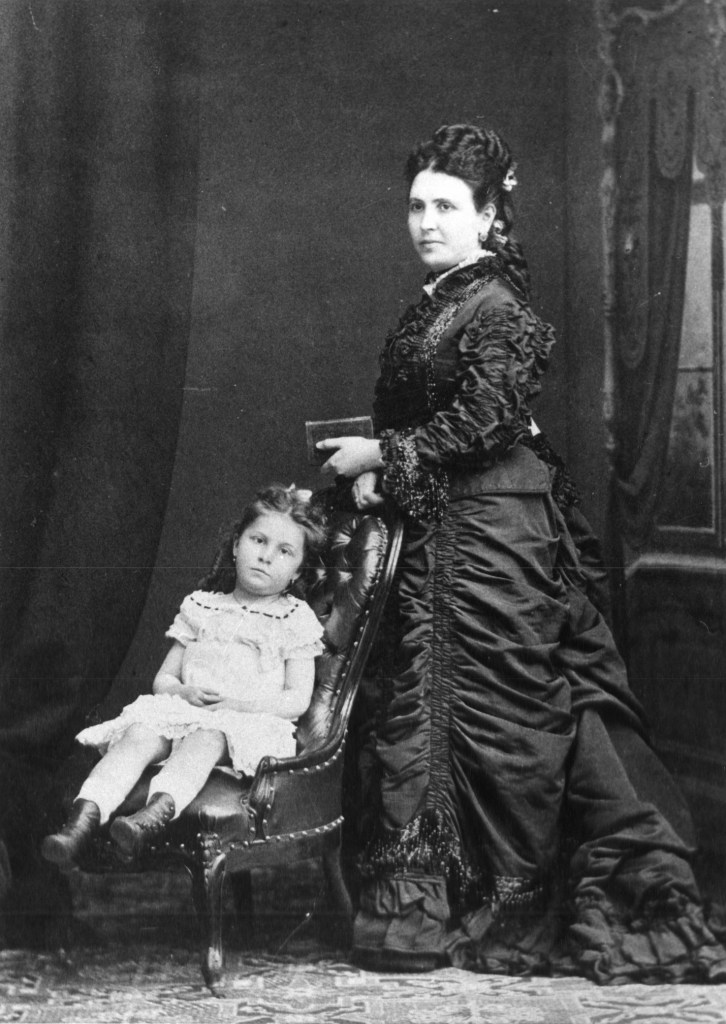
“Πώς λέγεις ότι δεν θα είσαι δια τα Χριστούγεννα μαζύ μας, είναι δυνατόν να μείνης περισσότερον των 6 ημερών εις Würzburg;”
“How can you say that you will not be with us for Christmas? Is it possible to stay longer than 6 days in Würzburg?” Sophia wrote him on December 11, 1877.
Photo: Sophia, pregnant with Agamemnon, with little Andromache in Paris, 1877. ASCSA Archives, Lynn and Gray Poole Papers.
David Traill considers that only a sociopath and egoist like Schliemann could leave his wife alone in a foreign country throughout her pregnancy (Traill 1986). Even Lynn and Gray Poole, authors of One Passion, Two Loves, who painted a very romantic picture of the relationship between Heinrich and Sophia, find Schliemann’s behavior inexplicable.
Sophia Reaches Her Limits!
Aside from Heinrich’s miserliness, another thorn in their relationship was his insistence on the curative properties of water, whether spas, cold baths or sea-bathing. He himself swam winter and summer. When in Athens he would go every morning on horseback down to Faliron. Even at Troy he never missed the chance of riding to the sea to bathe.
From 1880 the almost obligatory holidays would begin for Sophia and the children at some European spa in Germany or Austria. Schliemann was usually absent or would take the waters at some other nearby spa, as in the summer of 1883 when he was at Bad Wildungen in Germany while Sophia and the children went to Carlsbad and Franzenbad in Bohemia.
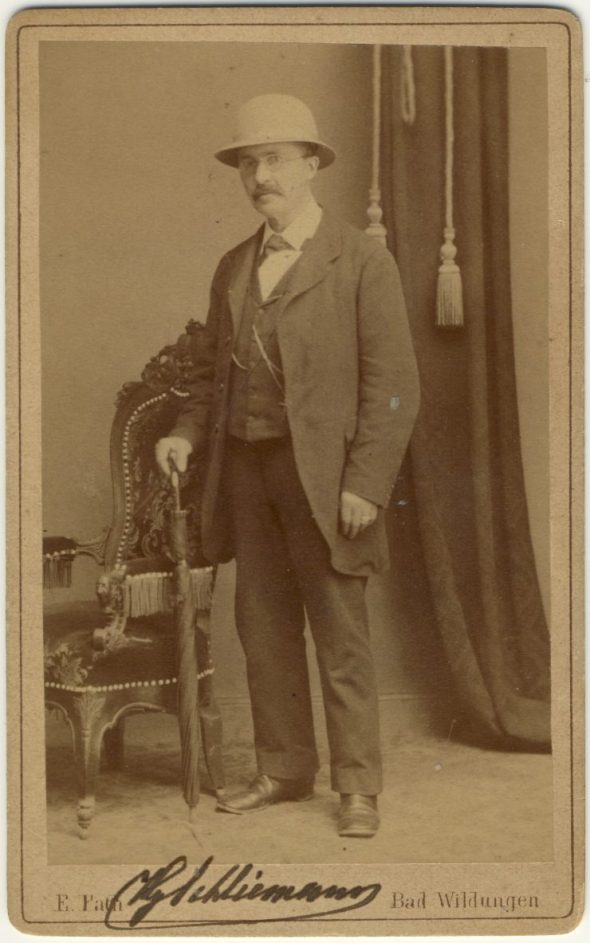
On August 22, 1883, Sophia wrote him from Franzenbad: ‘I have had enough of the baths…’ (‘Απηύδησα πλέον των λουτρών‘). Before that, she thanked him for the photograph he sent from Bad Wildungen, commenting humorously: ‘Your photograph […] is most expressive; I read my whole little Heinrich in it (‘αναγιγνώσκω μέσα εκεί όλον μου τον Ερρικάκη‘). Surely you thought of me at that very moment, for whenever you speak to me you wear that very expression.’ ASCSA Archives, Heinrich Schliemann Papers, Box 92, #703.
On July 29, 1883, with relations already strained after Schliemann had compelled Sophia and the children to spend several weeks with his family at Ankershagen, Sophia wrote to him from Carlsbad that the only way they could still find happiness was to live apart: ‘we must seek to be happy while living at a distance’ (‘πρέπει να ζητήσωμεν να γίνωμεν ευτυχείς μακράν όντες‘). And if she were ever to cease loving him, ‘you will weep greatly; no one will ever love you as I do -no one’ (‘μεγάλως θα κλαύσης, ουδείς αγαπήσει Σε ως εγώ ουδεμιά‘). She was also angered by Heinrich’s claims to others that she is supposedly ill.
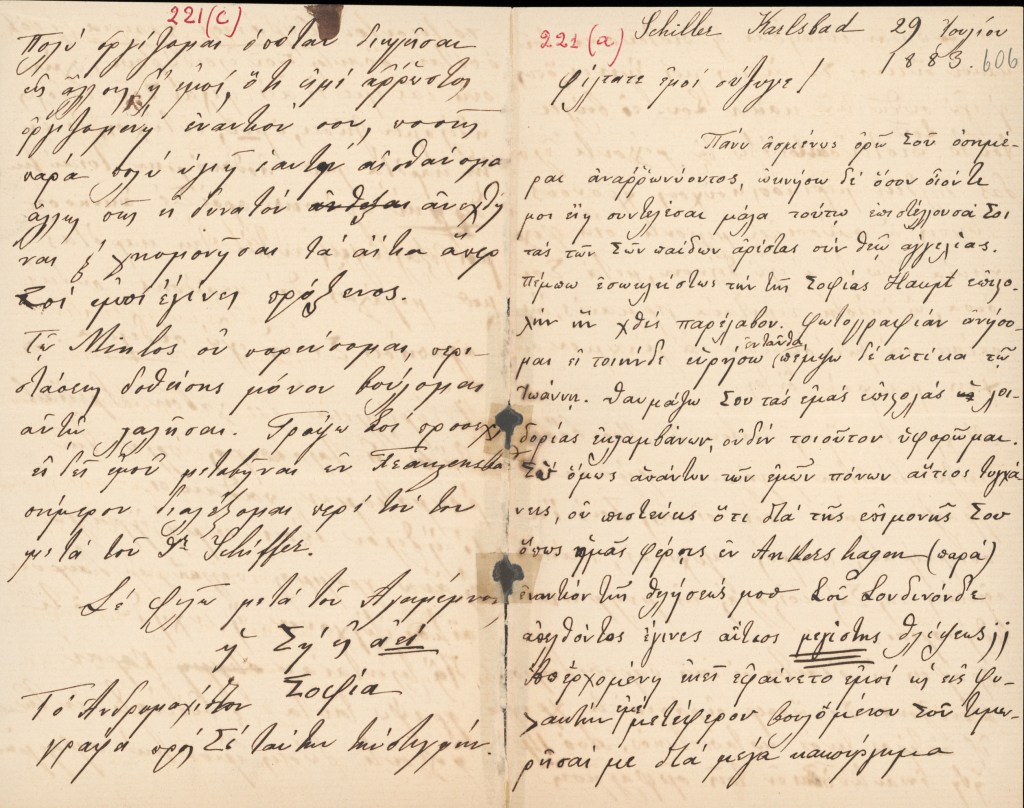
On the contrary, she felt she was in excellent health, too healthy, in fact, to keep tolerating and forgiving him:‘I feel myself far too healthy; otherwise, how could I endure and forget the causes for which you became the source of my sufferings?’
ASCSA Archives, Heinrich Schliemann Papers, Box 92, #606.
Sophia’s most significant revolt happened at the end of 1885, when Schliemann was on holiday in Cuba, and she took it upon herself to make the important decision to cut short Andromache’s studies at a Lausanne school for girls and return to Athens. Sophia disagreed with the progressive principles of the school. Deep down, it is possible that she could not stand the idea of yet another ‘banishment’ from her beloved Athens.
One year later, at the end of summer 1886, having once more endured a ‘banishment’ to European watering places far from the sea she adored, she decided, without his approval, to take the children and go to Ostend on the Belgian coast.
“My dear papa”
With Schliemann absent for long periods, Sophia had the primary role in the upbringing and supervision of their children. In the Heinrich Schliemann archive there are more letters from Andromache, who was the eldest, and fewer from the younger Agamemnon. Sophia always gave Heinrich news of the children, and sometimes made them add one or two lines to her own letters.
At the beginning of 1886, with his mother’s help, seven-year old Agamemnon (known as ‘papa’s child’ for he had taken after his father’s character), thanked his father, who was away on a trip to Cuba, for the rare stamps he sent, and expressed his regret that he was not yet old enough to travel with him. In the same envelope, Sophia enclosed another letter from little Memekos (his nickname) written in German so that Heinrich could witness his son’s progress.
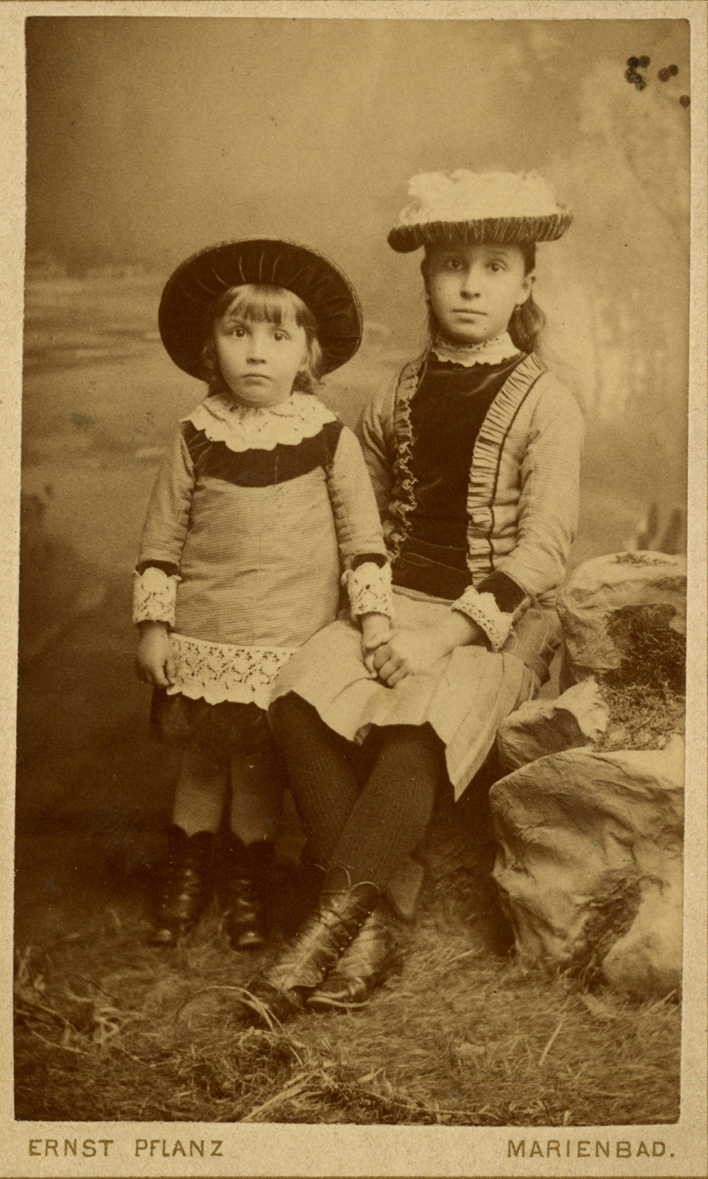
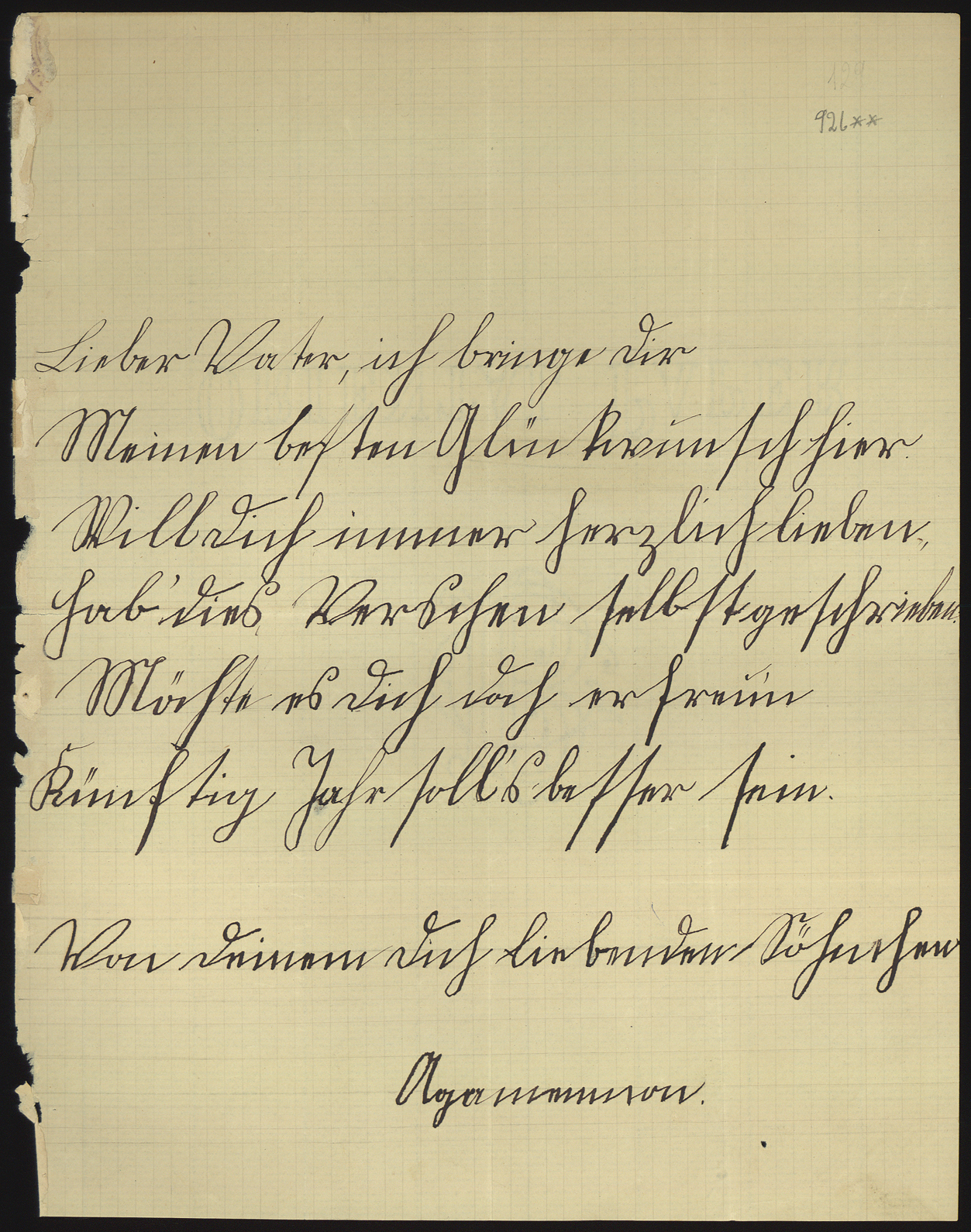
Agamemnon and Andromache, ca. 1883. Agamemnon’s German letter to his father, 1886 (ASCSA Archives, Heinrch Schliemann Papers, Box 97, #926d).
On December 8, 1886, writing from Cairo, Schliemann praised his daughter Andromache for her good English: ‘I had the very greatest pleasure in receiving your charming letter […], the more so as it is written in good English and shows that you have made great progress […]. In the same letter he informed her of the excavation of the Great Sphinx at Giza: The great sphinx is now being excavated, and its colored paws have already come to light […].’
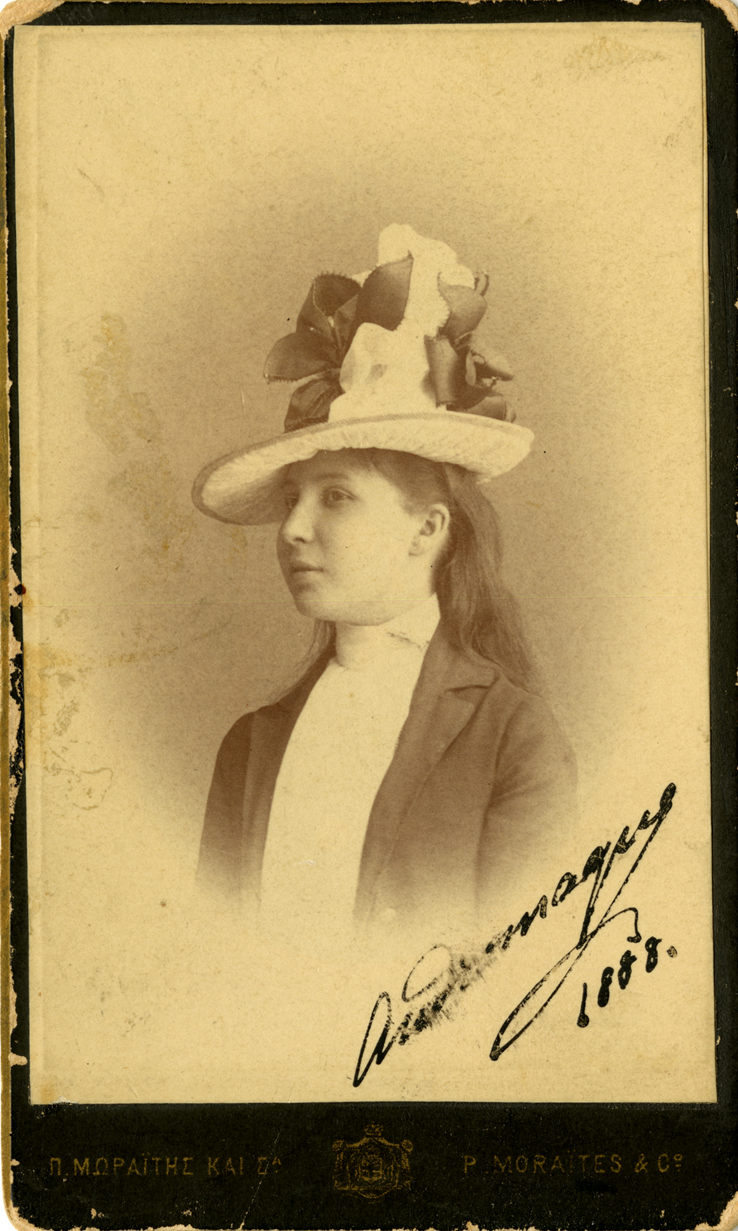
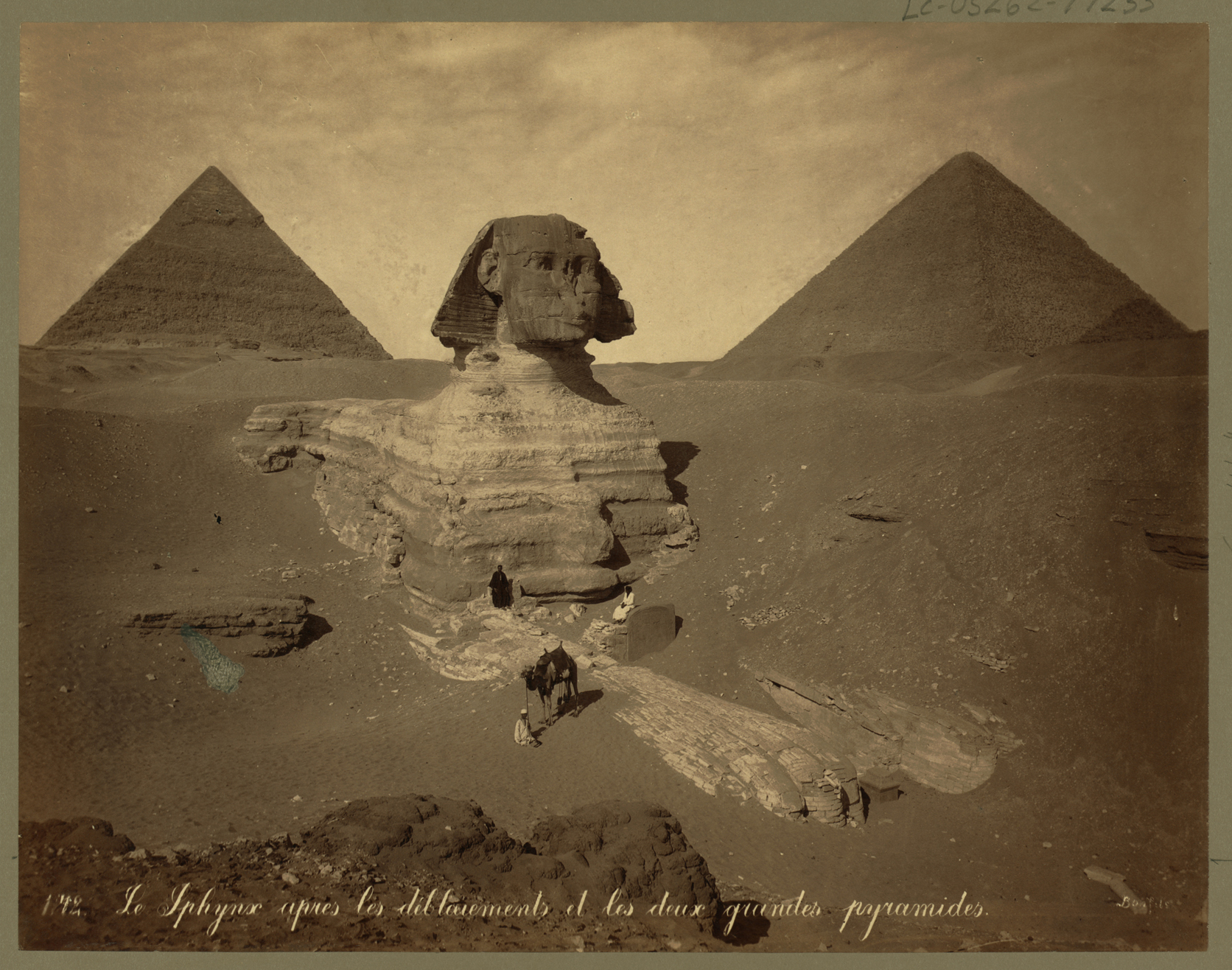
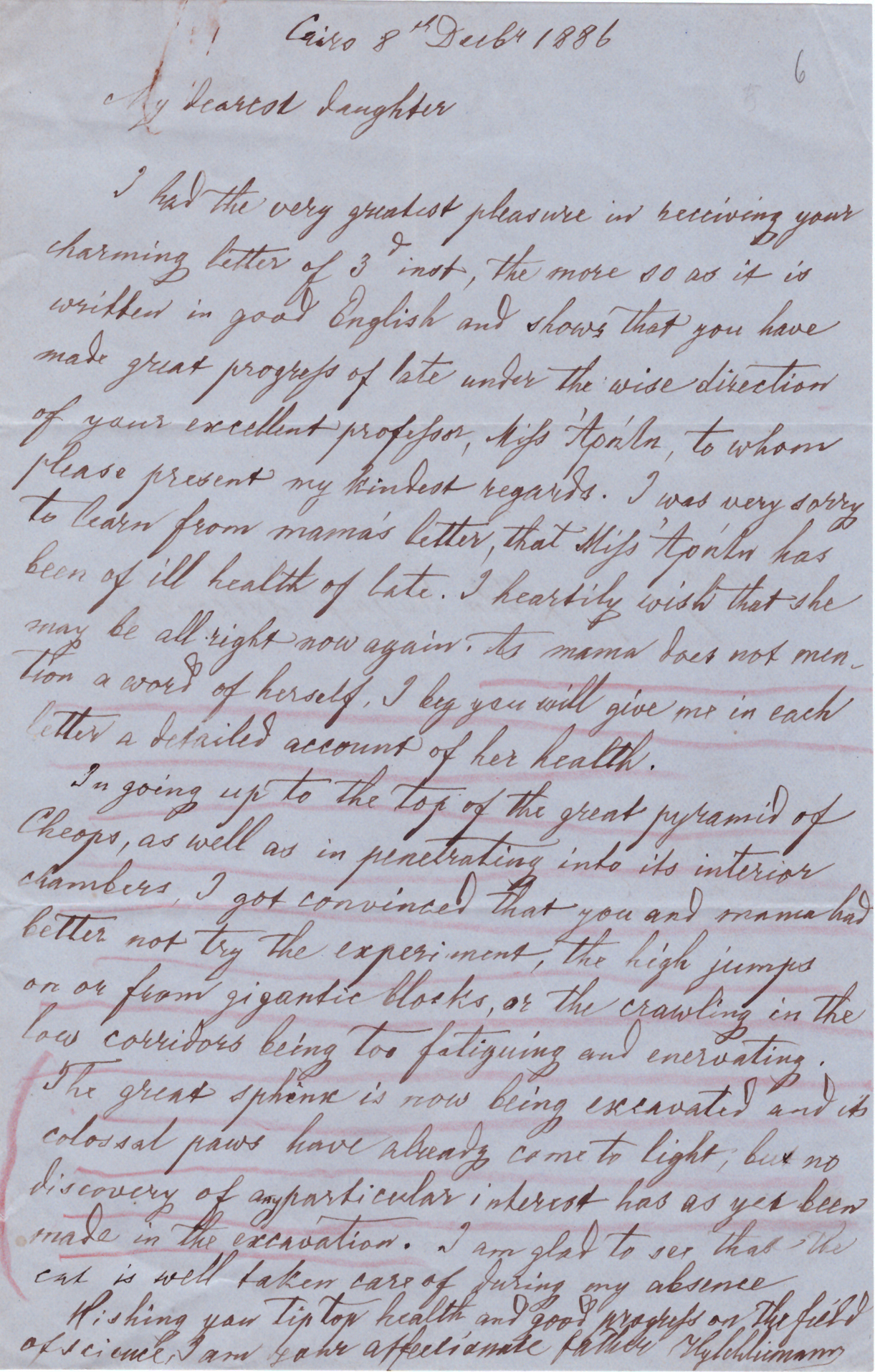
Andromache Schliemann, 1888; Schliemann witnessed the excavation of the Great Sphinx (Source: Bonfils Wikipedia Commons); Schliemann to his daughter, Dec. 8, 1886. ASCSA Archives, Heinrich Schliemann Papers
Schliemann also had three children from his first marriage with the Russian Ekaterina Lyschina: Sergei (1855-1939), Natalya (1858-1869) and Nadezhda (1861-1935). Schliemann was on his honeymoon with Sophia when he heard of the death of his daughter Natalya. In a letter to her father Sophia described that painful time: when the news arrived, ‘for three days he resembled a dead man’.
In the Heinrich Schliemann archive there are about 115 letters from Nadezhda and 411 from Sergei, which prove that Schliemann maintained close contact with the children of his first marriage. Since most of them, with very few exceptions, are written in Russian, we cannot reach a clear understanding of the relations between them. But it seems that Sophia had a good relationship with Heinrich’s children, at any rate with Sergei.
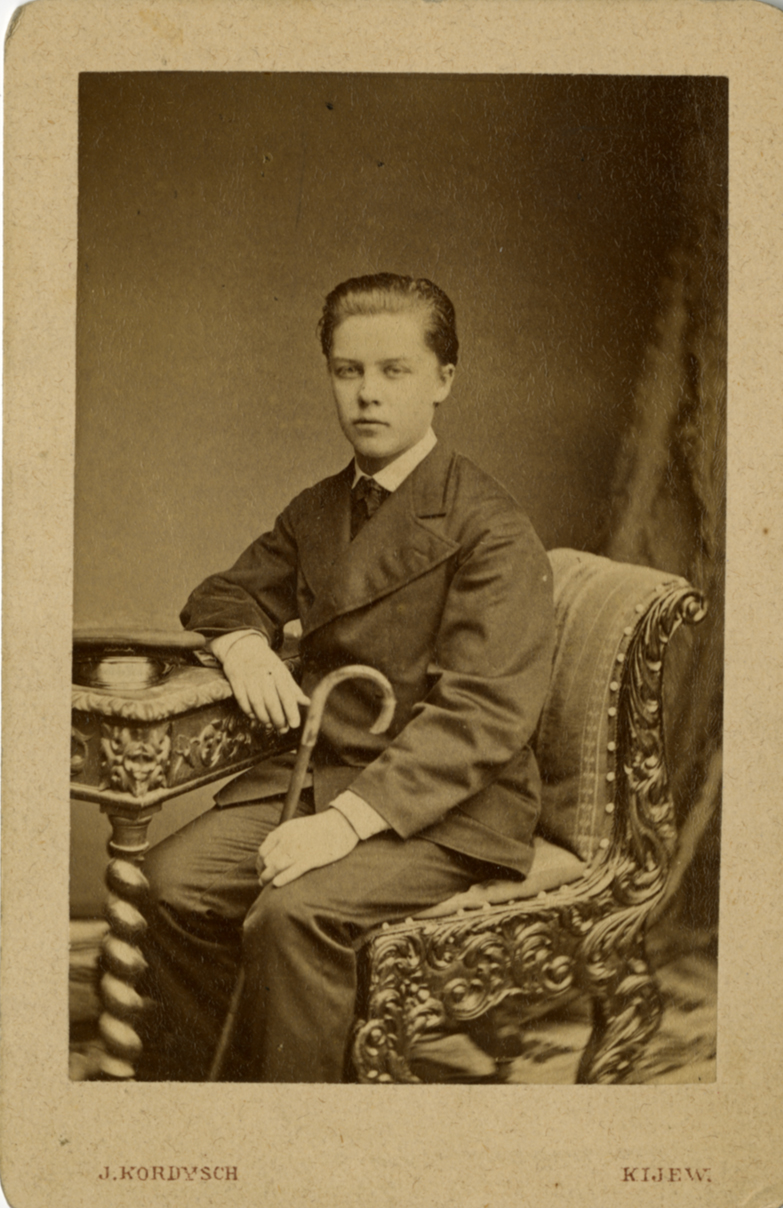
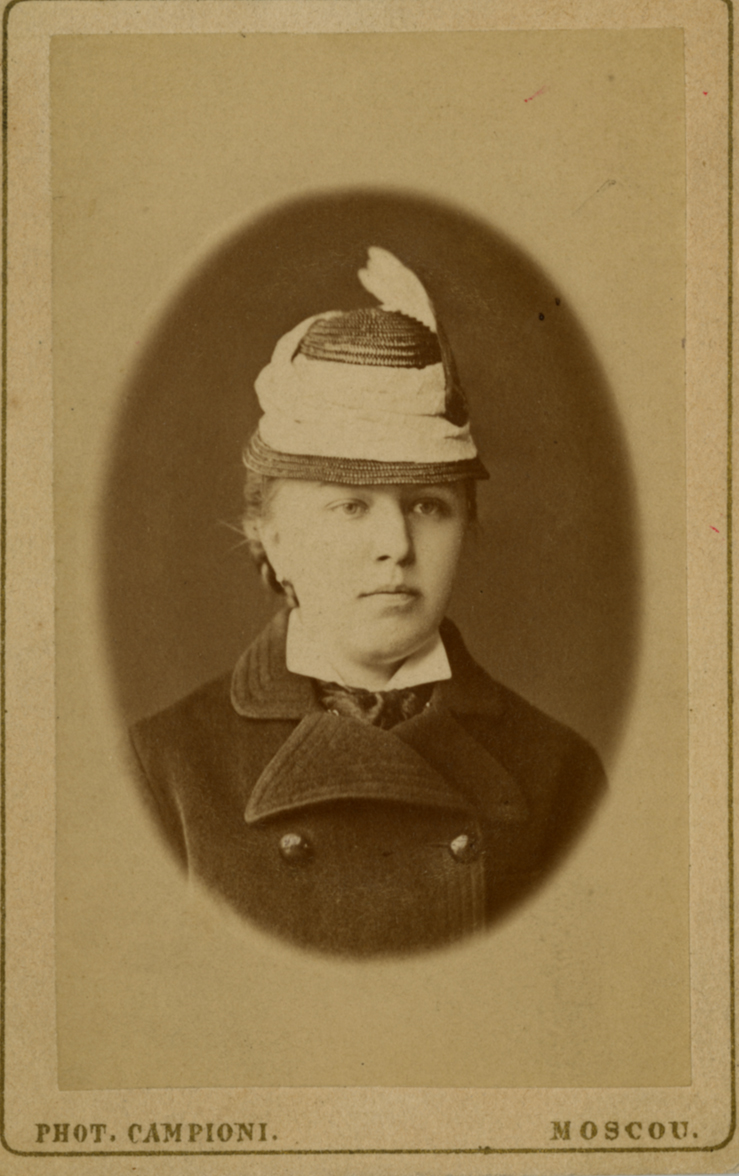
Sergei Schliemann, 1872; Nadezhda Schliemann, 1870s. Source: ASCSA Archives, Melas Family Papers.
“What God Has Joined Together”
The construction of the Iliou Melathron mansion took three years (1878-1880). It was Heinrich’s life’s dream, but not Sophia’s, who was emotionally attached to their first house in Mouson Street (Οδός Μουσών). The size and magnificence of the new house reminded her more of a museum than a home.
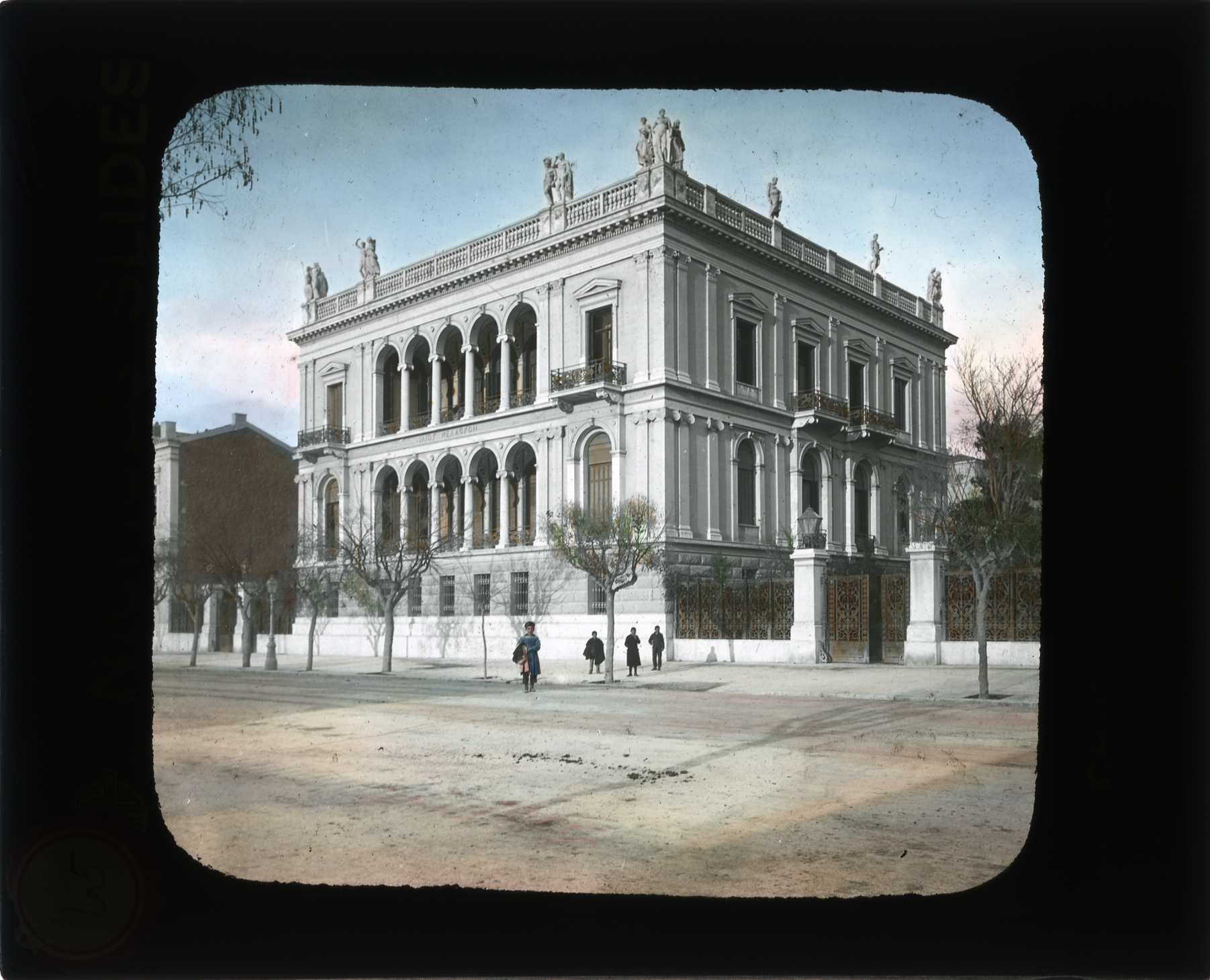
In an undated letter, likely written in 1879, while theIliou Melathron was still under construction, Heinrich wished that he and Sophia would celebrate there their silver and gold wedding anniversaries, ‘but also the weddings of our children, in health, in harmony, and in happiness’ (‘αλλά και τους των ημετέρων παίδων γάμους, υγιαίνοντες, ομοφρονούντες τε και ευδαίμονες’) [ASCSA Archives, Sophia Schliemann Papers #130].
On September 21, 1890, Schliemann celebrated their 21st wedding anniversary in Athens without Sophia and the children, whom he had sent to an Austrian spa. Alone and lost in thought, he reviewed the two decades of their married life, concluding that Sophia had been a beloved companion and partner, and a worthy mother:
‘[…] I see that the Fates have healed many of our wounds, but have also bestowed on us many joys; and as we tend to see the past through rose-colored spectacles, forgetting its sufferings and recalling only its moments of joy, I cannot praise our marriage sufficiently. For you have never ceased to be for me my beloved wife (άλοχος προσφιλής), a pure-minded companion (εταίρος αγαθός) and trustworthy guide in difficulties (κυβερνήτης εν ταις δυσκολίαις πιστός), as well as a gentle fellow-traveller and remarkable mother (συνέμπορος φιλόφρων και μήτηρ των ου τυχουσών)’ (ASCSA Archives, Heinrich Schliemann Papers, Copybook 43, 20).
Schliemann died of postoperative complications at Christmas in 1890 at Naples, on his way back to Greece. Only shortly before, he had sent two telegrams to Sophia, asking them to wait for him for the Holidays: ‘Come state? Arriverò sabbato mattina.’
After Heinrich’s death, Sophia lived in the Iliou Melathron until 1926, when she moved to Palaio Faliro. The Iliou Melathron was for many years a social and intellectual landmark of Athens, where Sophia and her daughter Andromache presided hospitably over Schliemann’s posthumous fame.
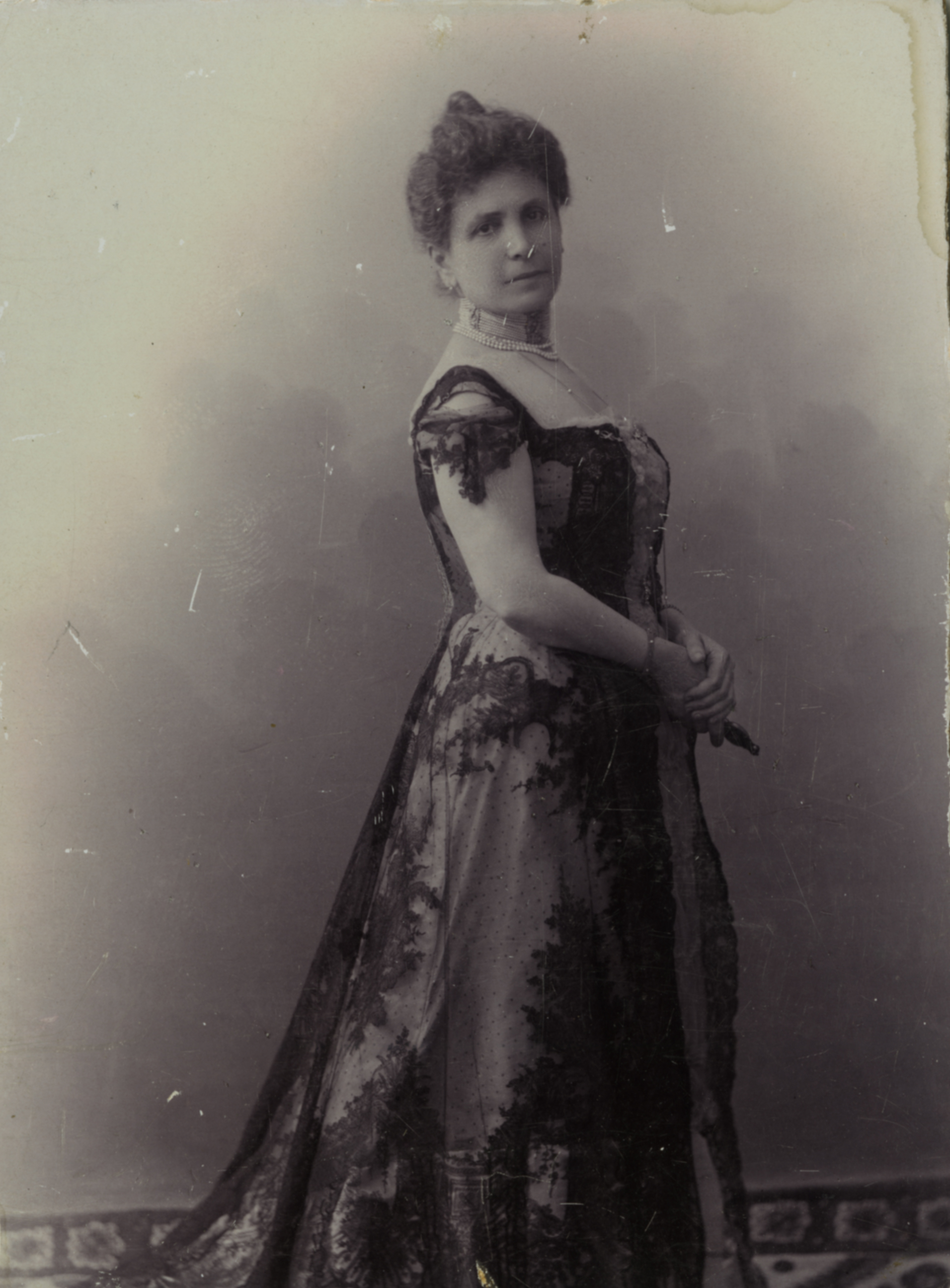
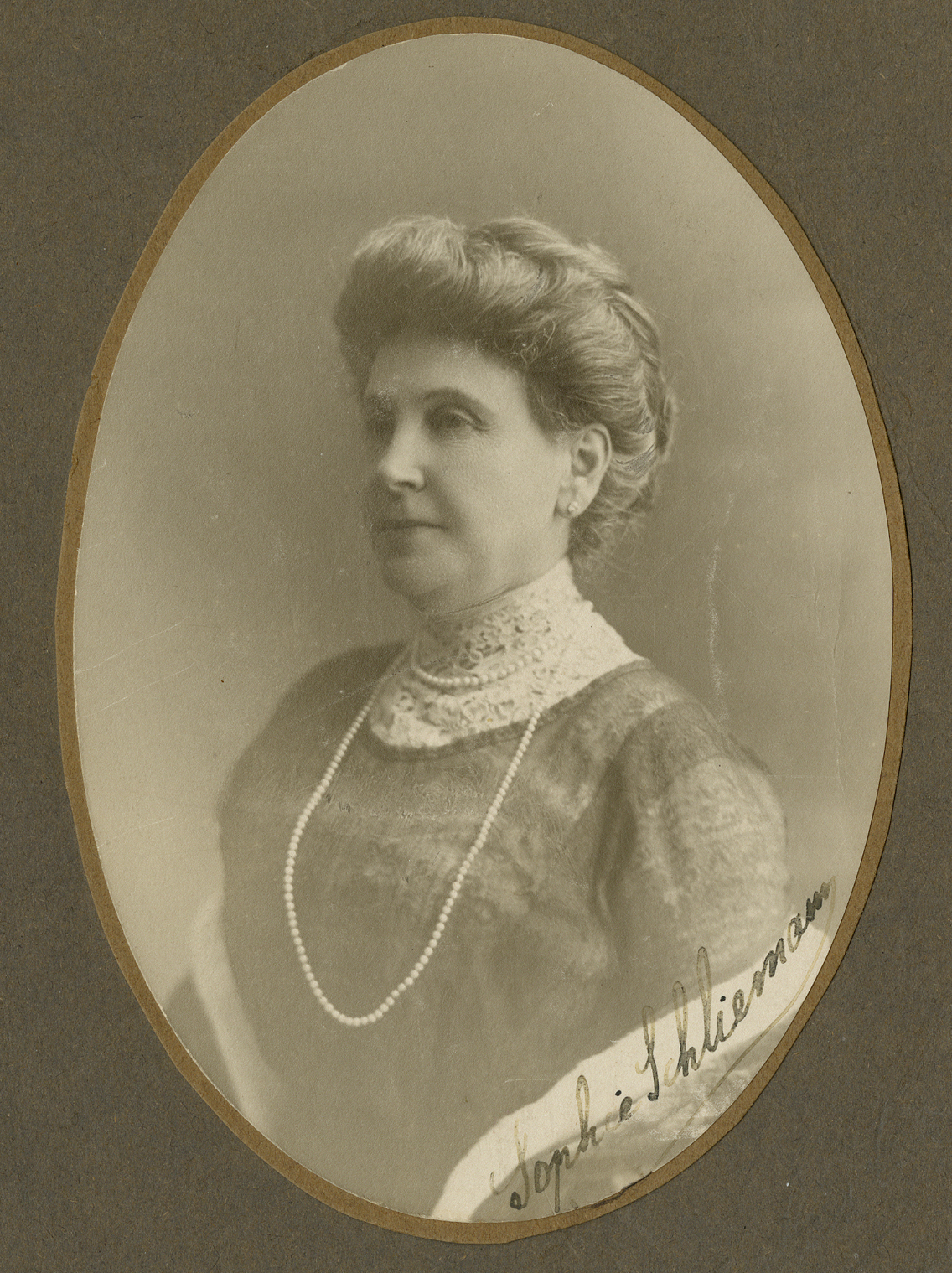
Sophia Schliemann, ca. 1880s, and at an older age.
References
Poole L. and G. 1967. One Passion, Two Loves: The Schliemanns of Troy, London.
Trail, D. A. 1986. “Schliemann’s Acquisition of the Helios Metope and his Psychopathic Tendencies,” Myth, Scandal, and History: The Heinrich Schliemann Controversy and a First Edition of the Mycenaean Diary, ed. W. M. Calder III and D. A. Traill, Detroit, 48-80.
Sophia and Heinrich Schliemann: An Unusual Relationship (Pt. I)
Posted: December 6, 2025 Filed under: Archaeology, Archival Research, Biography, History of Archaeology, Modern Greek History, Philhellenism, Women's Studies | Tags: daily-readings, ESPA 2021-2027, family, genealogy, Heinrich Schliemann, History, Ερρίκος Σλήμαν, Σοφία Σλήμαν, Sophia Schliemann, travel 9 CommentsIn 2024-2025 the American School of Classical Studies at Athens (ASCSA) implemented the project “Highlighting the Cultural Content of the American School of Classical Studies at Athens with the Help of Artificial Intelligence.” This initiative, within the framework of the Digital Transformation ESPA 2021–2027 Program of the European Union, included the digitization of roughly 80,000 documents from Heinrich Schliemann’s correspondence in the ASCSA Archives (now available online). The program also involved the creation of narrative digital exhibitions. Inspired by the correspondence between Heinrich and Sophia Schliemann, Natalia Vogeikoff-Brogan and Leda Costaki staged a bilingual digital exhibition titled Sophia and Heinrich Schliemann: An Unusual Relationship (Σοφία και Ερρίκος Σλήμαν: Μια ασυνήθιστη σχέση), a version of which is presented here in two parts to reach a wider audience.
Posted by Natalia Vogeikoff-Brogan and Leda Costaki, ca. 2,738 words, 14′ read time
Heinrich Schliemann (1822-1890) came to Greece in 1869, having sold his businesses in Russia and divorced his Russian wife. Schliemann was looking for a new partner to share his dream of excavating the Homeric acropolises of Troy and Mycenae, so as to prove that the Iliad was not a fairy-tale.
In September 1869 Heinrich married Sophia Engastromenou. He was 48 years old, and she was 18. Following an unsuccessful honeymoon, in the course of which the couple were on the verge of divorce, Schliemann left for Troy to start excavating. The couple did not separate, and in fact they became famous for their discoveries, remaining together till Heinrich’s death in 1890. In 1936 their children, Andromache and Agamemnon, donated their archive to the American School of Classical Studies at Athens.
The following story draws from a digital exhibition that the Archives of the American School of Classical Studies at Athens (ASCSA) prepared following the digitization of Schliemann’s correspondence funded by an European Union grant (ESPA 2021-2027) to the American School. The exhibition aimed at providing a visual record of the Schliemanns as a couple, using photographs and letters from the archive, and complementing the publications by Eleni Bobou-Protopapa, Sophia Engastromenou-Schliemann: Letters to Heinrich (2005) and Danae Κoulmasi, Schliemann and Sophia: A Love Story (2006).
An Arranged Marriage: Bride and Groom on the Verge of Divorce
On the 1st September 1869, Heinrich Schliemann, a wealthy German businessman, married Sophia Engastromenou in Athens. Heinrich was 48 and Sophia was 18. It was an arranged marriage, and a second marriage for Schliemann, who had just divorced his Russian wife of 20 years, Ekaterina Lyschina. Schliemann, having liquidated his business enterprises in Russia, was seeking a new way of life, in order to prove that the Homeric cities of Troy and Mycenae were real and not mythical. The choice of a Greek wife was part of this ‘dream’. The couple signed a pre-nuptial agreement to the effect that during Heinrich’s lifetime Sophia would have no claim on his fortune.
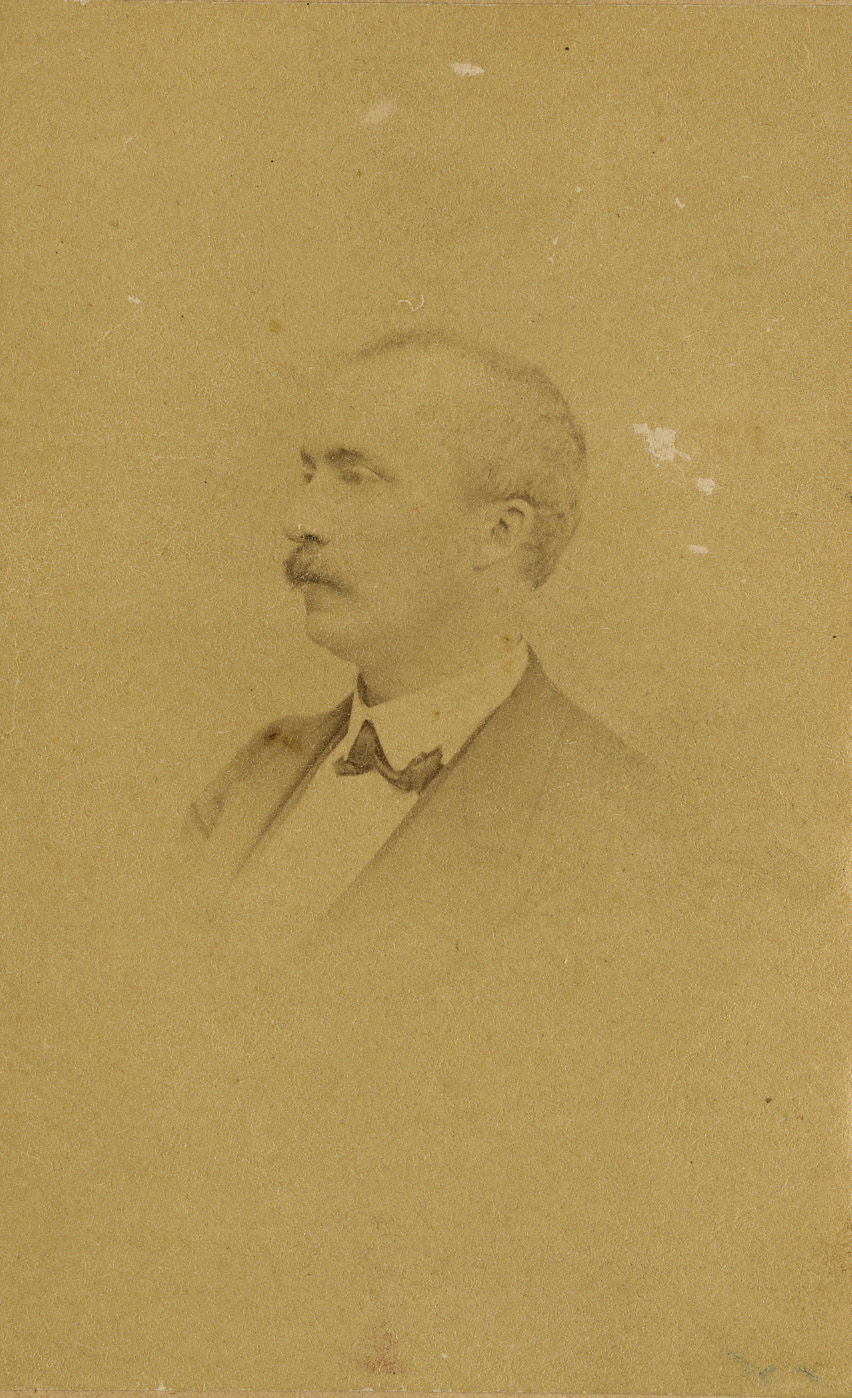
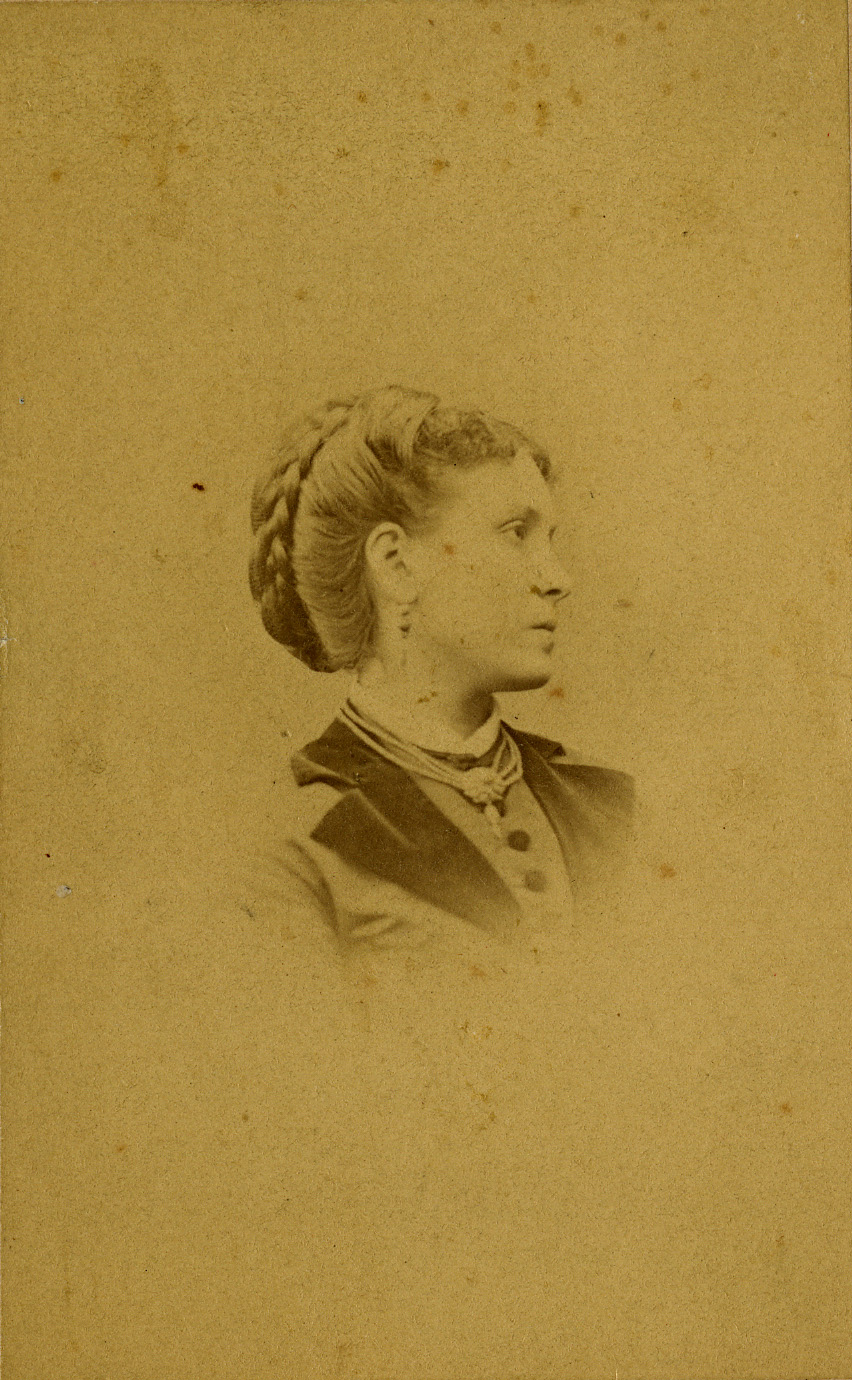
After an extended and disastrous honeymoon in Europe, during which Heinrich tried unsuccessfully to present the inexperienced Sophia to Parisian high society, the couple returned to Athens on the 19th February 1870, ready to divorce. Sophia’s letters to her family from Paris make reference to the couple’s busy social life, but reading between the lines it is clear that on the one hand Sophia was unable to respond to her husband’s excessive demands, and on the other that she was bitterly homesick for Greece and her family. On arriving in Greece, Heinrich was confronted by Sophia’s mother and elder brother, who accused him of not having presented his wife with a single jewel of any value.
Dreading the scandal of a divorce, and with Schliemann having already left for Troy for preliminary trial digs, Sophia’s family moderated their combative stance. Since the Ottoman authorities had not granted him formal permission to excavate Troy, Heinrich soon returned to Greece.
In the belief that his young wife was ill, he took her on another journey to Europe, to the Schweizermühle sanatorium in Germany. There Sophia was diagnosed with ‘hysteria,’ a favorite medical diagnosis at the time for women who had difficulty adjusting to the demands of married life.
The couple returned to Athens on the 2nd June 1870, and Schliemann was due to embark for France the next day. In a letter that he gave Sophia when they landed, but which he had written on board, he represented himself as the victim of the marriage and Sophia as the bad wife, a victim of her family’s decisions. However, what we glean from a reading of the letter is that Heinrich felt uncomfortable in the face of the unexpected disobedience and the emergent powerful personality of his young wife.
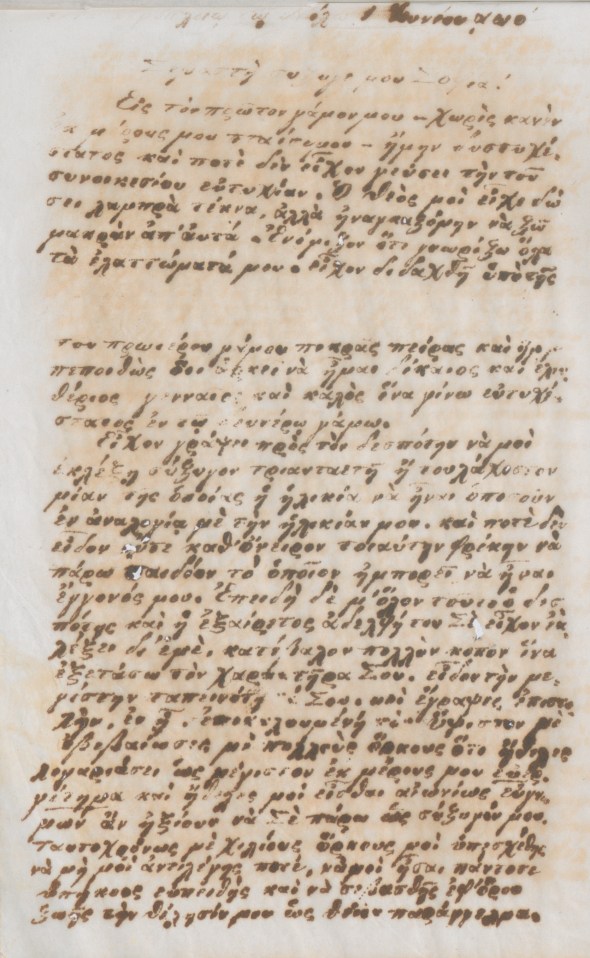
According to the letter Heinrich handed to Sophia as soon as they returned to Athens, Sophia had vowed to him before their marriage that she would always be grateful (αιωνίως ευγνώμων), and she promised με χιλίους όρκους (swearing a thousand oaths) that she would never contradict him (να μη μοι αντιλέγης ποτέ) and that she would always be obedient and respect his will forever […].
ASCSA Archives, Heinrich Schliemann Papers, Copybook BBB 29.
Medical Advice
Doctor Miltiadis Venizelos (1822-1887), who was the same age as Schliemann and in charge of the mentally and physically distraught Sophia, in two letters written on the 22nd and 23rd June 1870, tried to persuade Schliemann to abandon the idea of divorce. For one thing, a second divorce would irrevocably blight his reputation, and for another he was in large part responsible for the situation, as he should have foreseen that marriage to such a young girl would not be easy (‘την διαφοράν ταύτη ώφειλες Συ να προΐδης’). Thus, it was not Sophia alone who was to blame, and who according to Venizelos was a woman ‘with a good heart, a healthy mind and a high spirit.’ Contrary to the diagnosis of the German doctor at the Schweizermühle sanatorium, the Greek physician did not attribute Sophia’s behavior to hysteria. Schliemann should show greater patience and try harder to make Sophia happy, the implication being that many problems would be solved if she got pregnant.
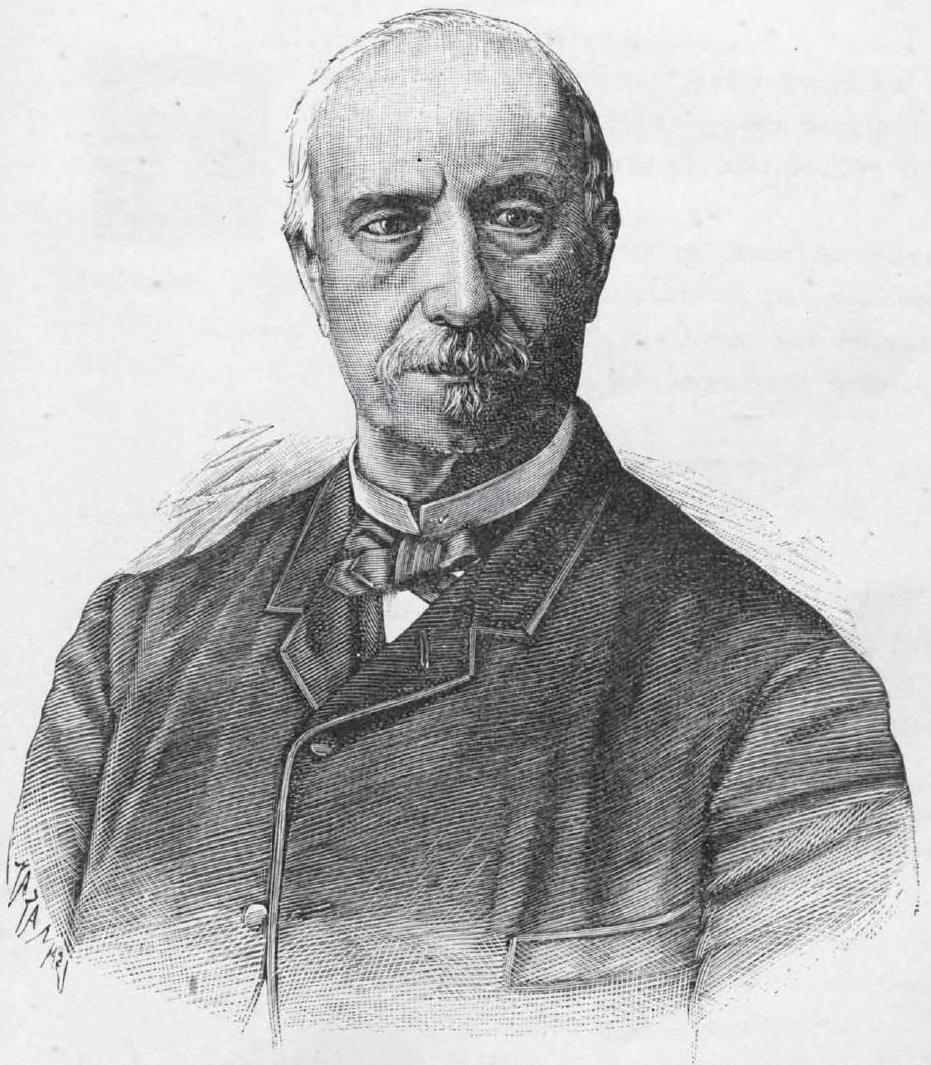
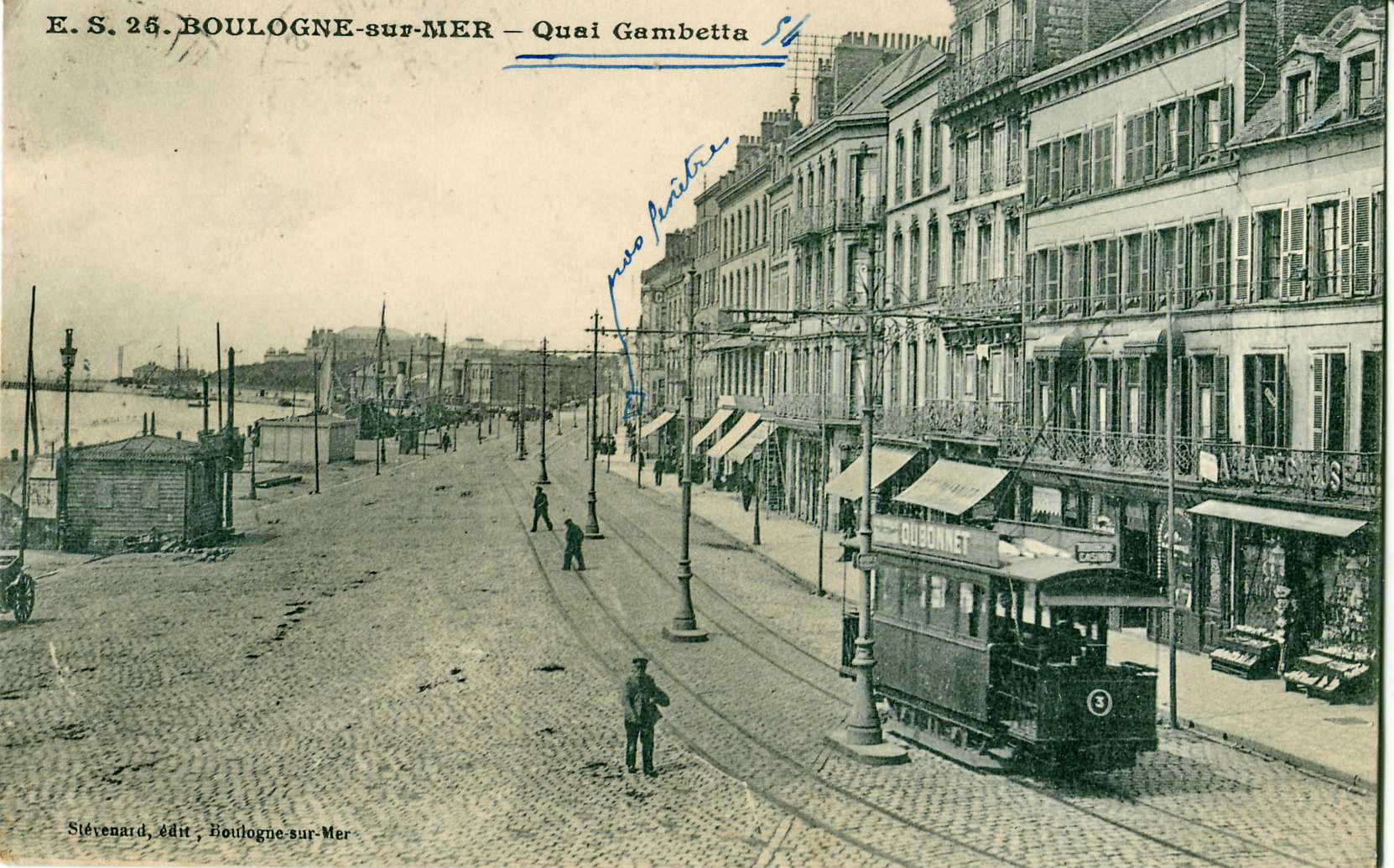
Schliemann followed the Greek doctor’s advice, with positive results. Koulmasi (2006, 64-65) believes that the change in Schliemann’s behavior had another more fundamental cause. Schliemann ‘wanted to keep the dream alive… he still saw Sophia as an inalienable part of his life and work.’ In July 1870 Heinrich and Sophia went to Paris and thence to the north coast of France, where they spent August in Boulogne-sur-Mer, and Sophia relaxed beside the sea she adored. During the months that followed, Schliemann, who was again away on his business travels, was transformed into an affectionate husband, sending her loving letters with words of advice and caution: Sophia was pregnant.
Nine months later, on the 25th April 1871, their first child Andromache was born. Heinrich and Sophia would find refuge in peaceful Boulogne-sur-Mer many times in the course of their twenty years of marriage. In the summer of 1877, the successful appearance of the Schliemann couple at the Royal Institute of Archaeology in London was followed by six weeks of holiday at Boulogne-sur-Mer. A few months later, on the 16th March 1878, Sophia gave birth to their second child, Agamemnon.
Ερρικάκι and Σοφιάκιον
Sophia and Heinrich exchanged hundreds of letters in the course of their twenty-one years of marriage, far more than most couples at the time. Heinrich’s frequent and lengthy absences from the family hearth, whether for excavations or for other reasons, and the obligatory summer breaks for Sophia, usually without Heinrich, in various European watering places, were the main reasons for such frequent correspondence.
Most of Sophia’s letters to Heinrich have been published by Eleni Bobou-Protopappa (2005). Heinrich’s letters to Sophia have not been published separately. Koulmasi in her book (2006) quotes extracts from his letters, but as they are not referenced it is very difficult to locate them in the archive.
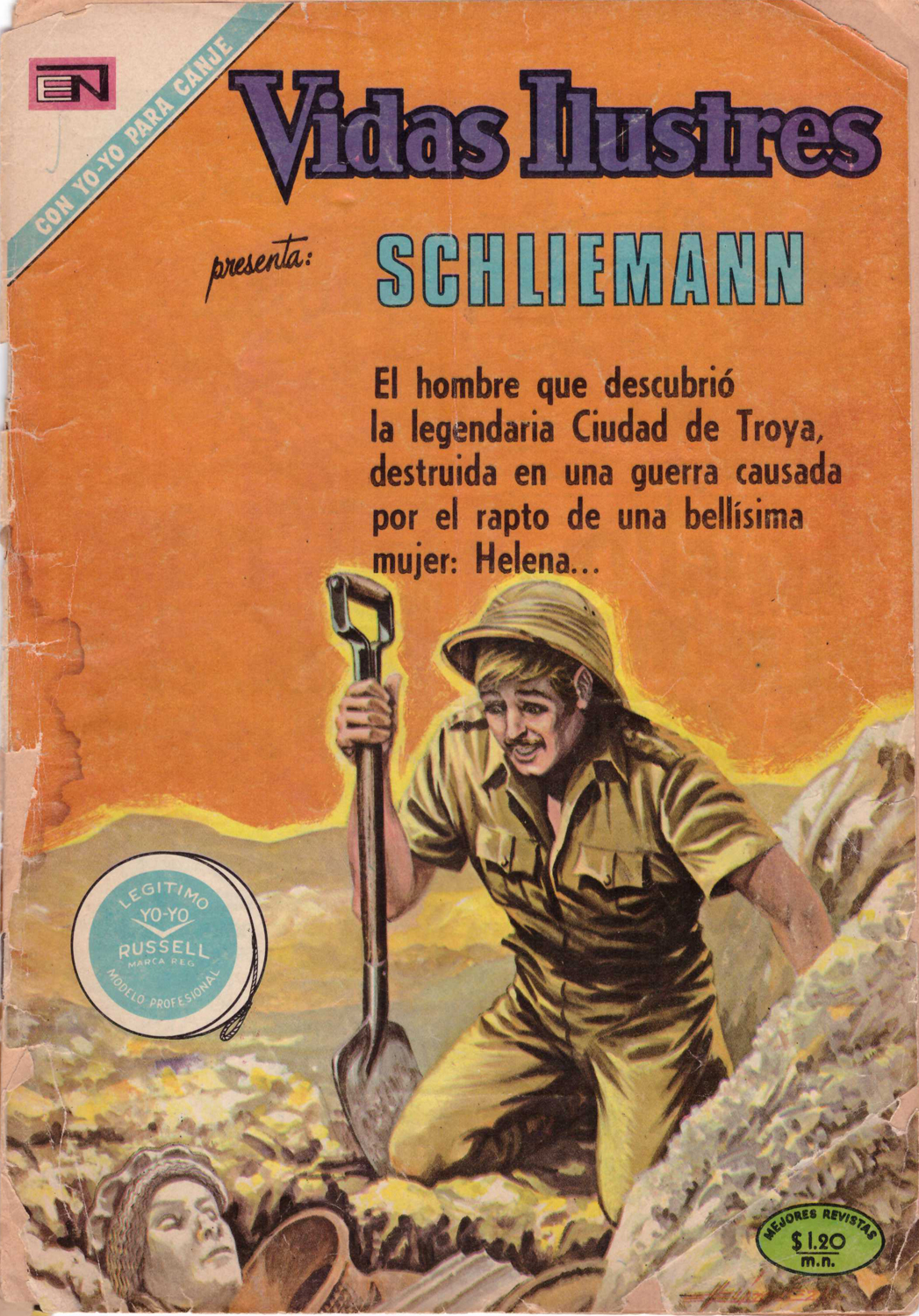
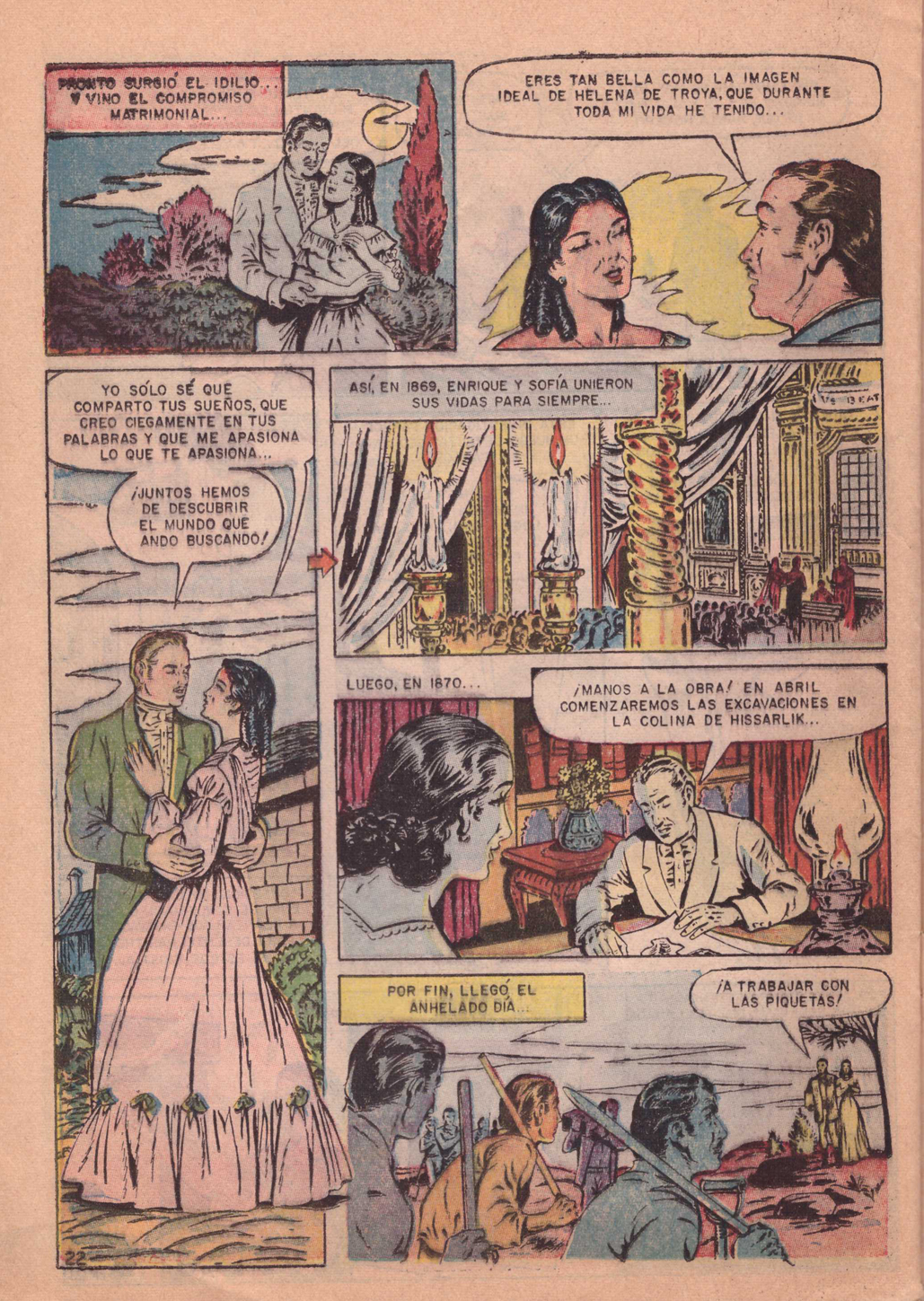
Popularized version of the lives of Heinrich and Sophia, in comic-book form (Spanish), February 17, 1971. ASCSA Archives, Curtis Runnels Papers.
After the turmoil of their first months of marriage, their trip to Boulogne-sur-Mer in August 1870, Sophia’s pregnancy and the birth of Andromache in April 1871, we observe a striking improvement in the couple’s relationship. In the Sophia Schliemann archive are preserved ten letters from Heinrich, sent during a 6-month period between August and December 1871. In one of his letters from this period he addresses her ‘Αγαπητόν μοι συζυγάκιον Σοφάκιον’ (‘my dear little wife, little Sophia’ – our [unfair] translation).
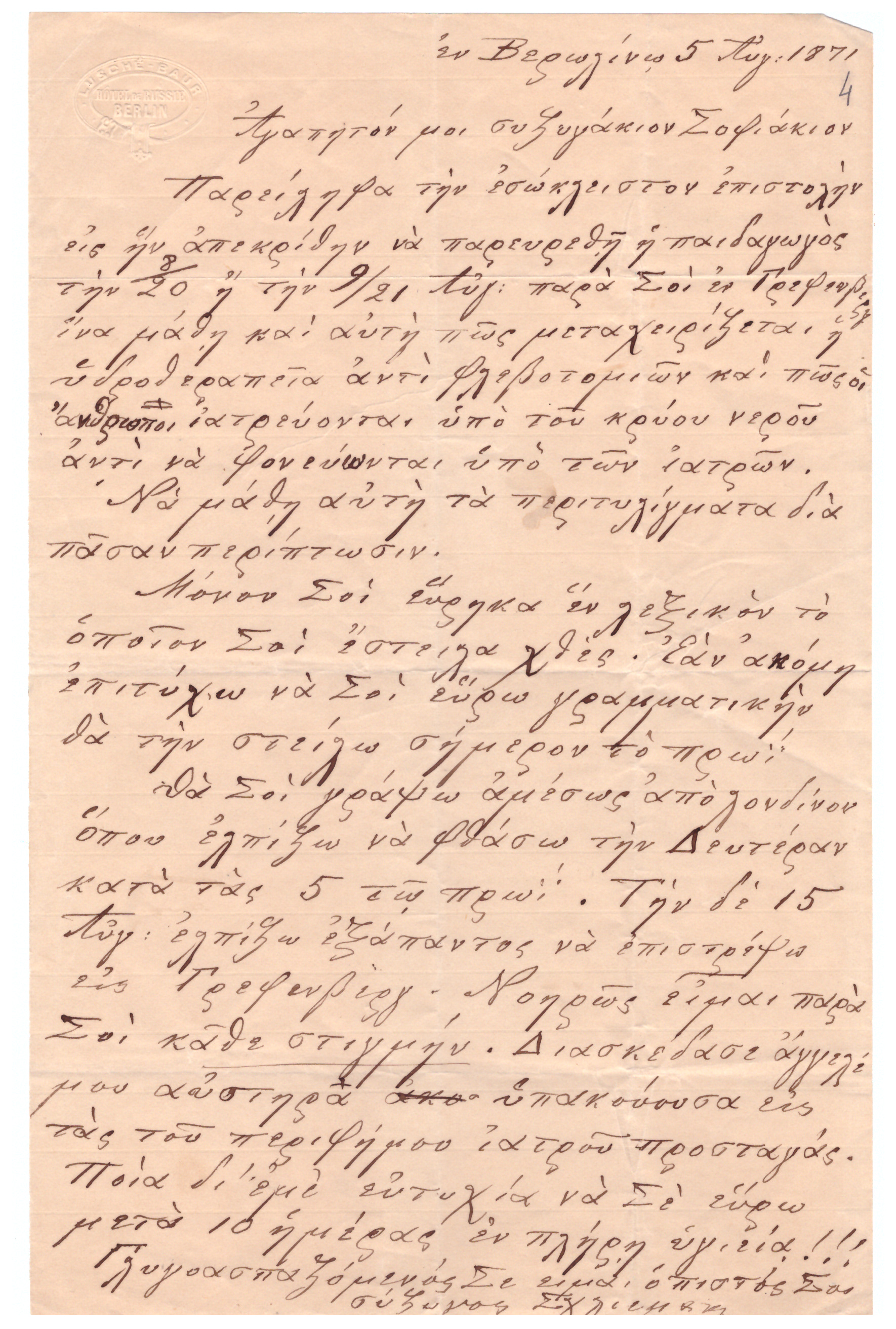
Sophia is a little more conventional in her expressions: ‘My dear and much-loved husband’ (Ακριβέ και περιπόθητέ μου σύζυγε) on the 25th April 1872, the day of Andromache’s first birthday when Schliemann was away at Troy, and also ‘My dear husband Errikaki’ (Αγαπητέ μοι σύζυγε Ερρικάκι) [28th September 1875], ‘My beloved Errikaki’ (Φίλτατέ μοι Ερρικάκι) [4th October 1875], a time when their relations were again strained. She usually ends her letters either with her name and surname, or ‘with love from Your faithful wife Sophia’ or ‘The children and I embrace You’ (18th July 1883).
Koulmasi lays special emphasis on the couple’s private life, and despite the difference in age and the prudishness surrounding sexuality in the 19th century, it would seem that there was a strong sexual bond between them. Although there are hints of this here and there in their letters, most of the information comes from the correspondence between Heinrich and the doctor/anthropologist Rudolf Virchow (1821-1902), a contemporary of Schliemann and a family friend. Both Sophia and Heinrich turned to him for advice when they encountered problems in their relationship (Koulmasi 2006, 224-228). On April 3, 1880, Schliemann confided to Virchow that he experienced problems of periodic impotence (especially when he was devoted to the study and publication of his excavations) which caused strain in the couple’s relationship. In response to Virchow’s earlier advice that Schliemann and Sophia should not sleep together for a while, Schliemann replied that this was impossible with a Greek wife, who, in order to sleep, always lay down in her husband’s arms.
‘I am endeavoring to make Sophia an archaeologist’
If there was one thing that Schliemann wanted more than Sophia, it was her active participation in his excavations. This was quite unusual at a time when the roles of the spouses were distinct and married women were not involved in their husbands’ professional life. Sophia refused to accompany Schliemann in the autumn of 1871 for his first official digs at Troy, with the excuse that Andromache was too little to be left in the care of others. Schliemann did not write to her for a while, and when he decided to reply (in French, not in Greek) he reminded her of how hurt he was by her refusal to go with him to Troy.
After the 1871 excavations, Schliemann returned to Troy in April 1872. By late May, Sophia had gone to join him, leaving one-year-old Andromache with her parents. At first, Schliemann set her to oversee two workers, but later he placed her in charge of an excavation trench. It is clear he wanted Sophia with him at the dig and not in some subsidiary role in the house at the site. He not only relied on her to write his Greek reports about the excavation but had no hesitation in giving her credit for them.
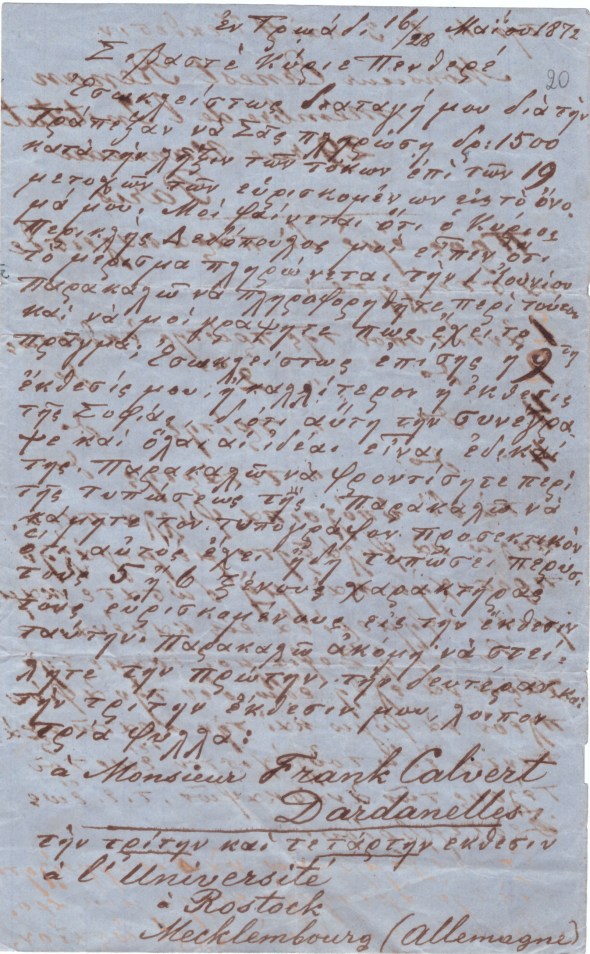
In a letter that Schliemann sent to his father-in-law on May 16/28, 1872, he praised Sophia for the composition of the 9th Troy report which would be printed in the Greek newspapers: ‘Find enclosed my 9th report, or better Sophia’s report, since she wrote it and all the ideas are hers (και όλαι αι ιδέαι είναι εδικαί της).’
The excavations at Troy were continued in February 1873, with cold and bad weather. Sophia traveled to Troy in April, intending to stay with him for the duration of the dig. This time he put her in charge of the excavations at Pasha Tepe (Koulmasi 2006, 129), but the news of her father’s death obliged her to leave Troy at the beginning of May. At the end of May, Schliemann discovered the Treasure of Priam. He did not share what was possibly the most important moment of his life with Sophia, even though in his books he asserted that she was with him at the discovery. Much ink has been spilled by researchers in their attempt to explain why Schliemann pretended that Sophia was present when the Treasure was discovered. The most likely answer is in a letter he sent to the Director of the British Museum, Charles Newton, on the 27th December 1873 (the letter is in the Museum Archives and was published by Lesley Fitton).
On acc[oun]t of her father’s sudden death Mrs Schliemann left me in the beginning of May. The treasure was found end of May; but since I am endeavouring to make an archaeologist of her, I wrote in my book that she had been present and assisted me in taking out the treasure. I merely did so to stimulate and encourage her, for she has great capacities. So f[or] i[nstance] she has learned Italian here in less than two months (Fitton 2012).
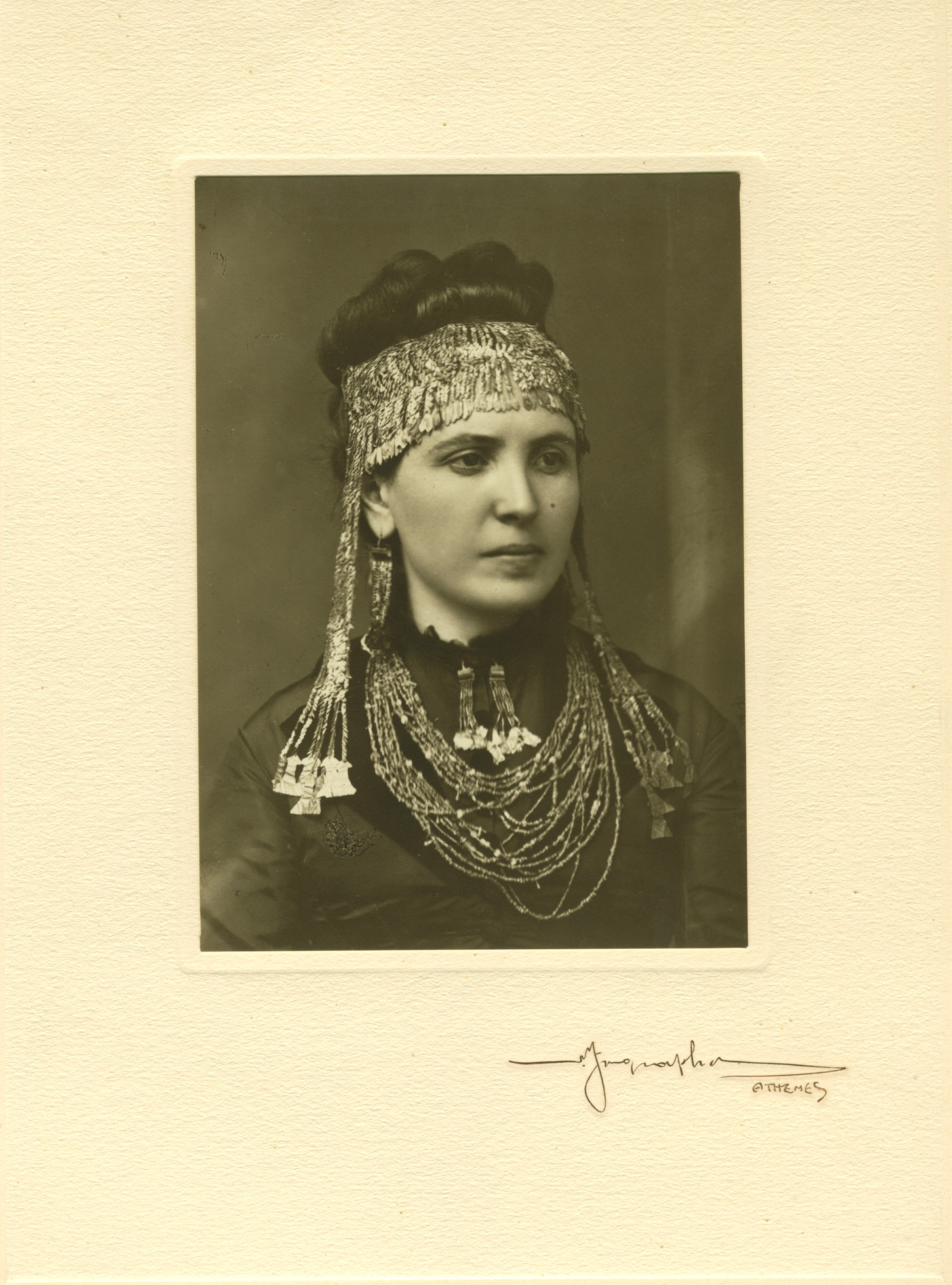
On the hard cover of the diary of the excavations at Troy for the year 1873, Schliemann wrote ‘Henry und Sophia’, even though she was only with him at the dig for a few days that year. Sophia never refuted Schliemann, even after his death. In fact, sometime between 1873 and 1877 Sophia posed for a photograph as Helen of Troy, wearing part of the so-called Treasure of Priam. She would be identified by this image not just during her lifetime but after it (Stager 2022). It is the most used photograph on the covers of books dealing with Heinrich Schliemann and the excavations at Troy.
Insofar as she was able, particularly before the birth of their second child in 1878, Sophia accompanied Heinrich to the excavations and actively participated in the laborious everyday life of the site. It should be noted (and has gone relatively unremarked by the researchers) that Sophia suffered many miscarriages during her life. At Mycenae she was with him at the discovery of the intact shaft graves of Grave Circle A in 1876. Once again, Schliemann drew attention to her presence, showing her participation in the excavation.
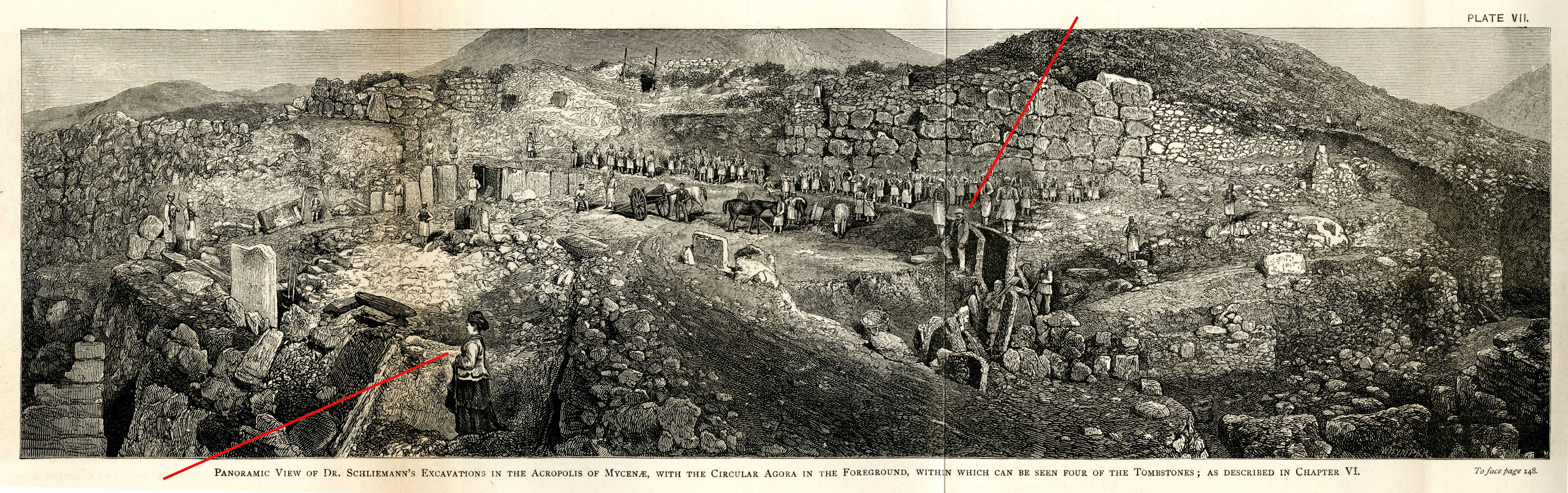
On the other hand, he chose to downplay the role of the archaeologist Panayotis Stamatakis who had been sent by the Archaeological Society to oversee the excavations at Mycenae. We learn from Stamatakis’s diaries (Vasilikou 2011) that in some cases Sophia conducted herself with a regal haughtiness that astounded Stamatakis, who wrote in a letter to Stephanos Koumanoudis, secretary to the Archaeological Society:
My relations with Mr Sch. remain broken off, and we communicate through the overseers. His lady has returned here from Athens, but it would be better if she had not come. For she has been the cause of everything and I much fear the same will happen again (Vasilikou 2011, 203).
TO BE CONTINUED
REFERENCES
Bobou-Protopappa, E. 2005. Sophia Engastromenou-Schliemann: Letters to Heinrich, Athens.
Fitton, L. 2012. “‘The help of my dear wife’: Sophia Schliemann and the discovery of Priam’s Treasure” in Archaeology and Heinrich Schliemann. A Century after his Death. Αssessments and Prospects. Myth – History – Science, ed. G. S. Korres, Ν. Karadimas & G. Flouda, Athens, 421-424. https://www.aegeussociety.org/images/uploads/publications/schliemann/Schliemann_2012_421-424_Fitton.pdf
Koulmasi, D. 2006. Σλήμαν & Σοφία: Μια ιστορία αγάπης, Athens.
Stager, J. 2022. “Sophia’s Double: Photography, Archaeology, and Modern Greece,” Classical Reception Journal 20, 1-42.
Vasilikou, Ν. 2011. Το χρονικό της ανασκαφής των Μυκηνών 1870-1878, Athens.
The Island of Zeus Revisited
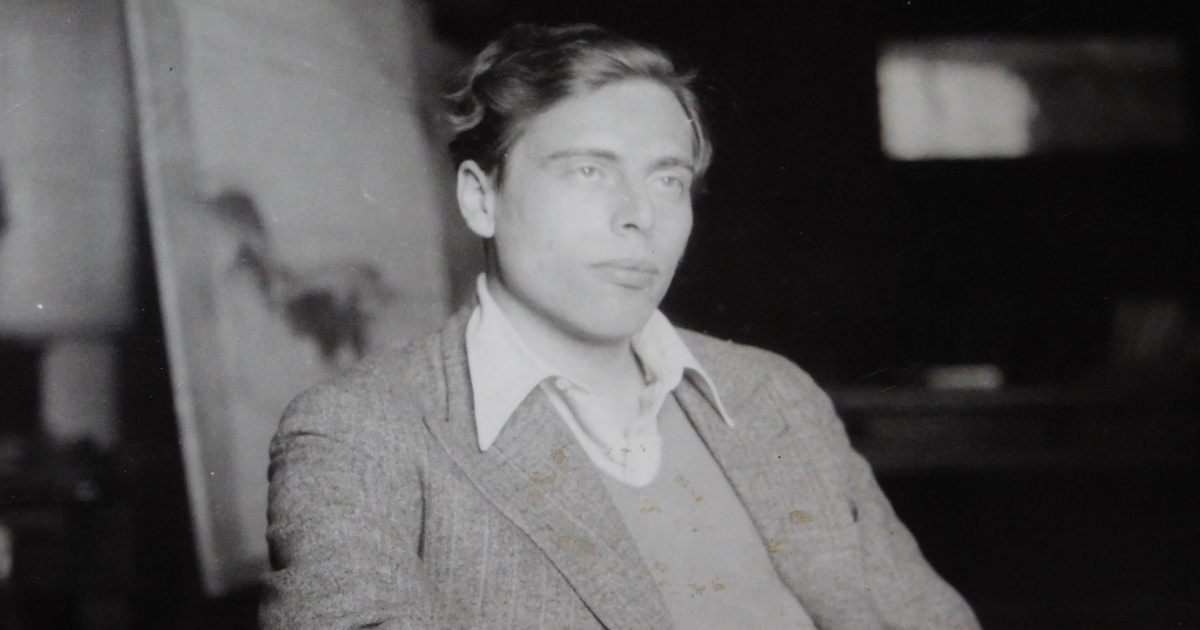
Posted: March 2, 2025 Filed under: Archaeology, Archival Research, Biography, Crete, Modern Greek History, Philhellenism, Uncategorized, Women's Studies | Tags: Bes-Silenus, Crete, Femicides, Ralph Henry Brewster, Richard B. Seager, Spyridon Marinatos 3 CommentsA few months ago, I was leafing through a special lot of old books that Nick Ervin gifted to the library of the Study Center for East Crete (Pacheia Ammos). One of the books, The Island of Zeus: Wanderings in Crete (London: Duckworth, 1939), caught my eye because I recognized its author: Ralph Brewster (1904-1951). Born in Florence in 1904 to an American father and a German mother, he was fluent in English, German, French, and Italian, and traveled with ease in Europe. I have written about Brewster before (THE LIFE AND TIMES OF A DILETTANTE: RALPH HENRY BREWSTER) when I discovered in the Archives of the American School of Classical Studies at Athens (ASCSA hereafter) that he had been involved in the theft of a hermaic stele from the island of Siphnos in 1932. Georg Karo, the Director of the German Archaeological Institute in Athens, who knew personally Brewster’s family, managed to save Brewster’s skin by coming to “an understanding with the Greek authorities that they would wipe the matter out if the herm could be located and returned” (ASCSA Archives, AdmRec 1001/1, folder 4, Richard Stillwell to Rhys Carpenter, October 2, 1932).
While researching Brewster’s “misdemeanor,” I understood that he left Greece after the theft, not to return since he was unwelcome, and that the subsequent publication of his two books The 6000 Beards of Athos (1935) and The Island of Zeus (1939) were based upon trips he had taken during his time in Greece in 1932. I was wrong. Brewster kept returning until the late 1930s. His many references to Metaxas’s dictatorship in The Island of Zeus date Brewster’s trip to Crete after 1936.
Interested in old ways of land and sea communications, descriptions of landscape and travel distances before modern road construction, and modes of interaction between locals and foreigners, I decided to give it a shot.
Persona non grata?
In The Island of Zeus, they travel by a donkey, which was named Minos, and by living in a tent when they do not break into μετόχια. I say “they” because Ralph had a travelling companion, a young Austrian man, Freddy, whom he had met on the island of Corfu. A constant theme in Brewster’s Cretan trip is their lack of money and bad weather. They were traveling in late fall, either of 1936 or 1937. Since the book was published on January 1, 1939, I presume that it was submitted to Duckworth in 1938 at the latest.
In general, Brewster seemed to live by the day. Although from a well-to-do mixed family of English/Austrian origin living in Florence, Brewster seemed to have struggled with money. He delayed his trip to Crete until the fall because his “publishers refused to advance me the necessary funds, yet kept tormenting me with friendly but hurt letters for not having begun the book. […] It is strange that most people -especially the English- are so snobbish that according to them a gentleman must have money, ça va sans dire. If he has not, then he just doesn’t belong, and is not a gentleman. […] Money is sine qua non with them, and as soon as they smell a rat, it’s finished and they either cut you or behave to you like ice” (Island of Zeus, p. 19). At the end of September, with the help of an unnamed friend, Brewster managed to retrieve his cameras from the pawnbrokers in London, buy films, and a ticket as far as Corfu where he met his family. With a little more help from his mother, he bought the tent and the boat tickets to Athens and Crete.
While in Athens he obtained a letter of recommendation to all Greek authorities from the Ministry of Education which allowed him to photograph antiquities. Brewster preferred to use that document when asked for his passport by the Greek authorities. He would even get into a fights rather than present his passport to the police. Brewster blamed the dictatorship of Metaxas for the police’s insistence; this happened in almost every town or village they went, and almost every time Ralph fought it. Was he just obnoxious or afraid that his name might ring a bell?
Three Nights in Anogeia
Ralph and Freddy’s original plan was to explore Crete economically living in the tent. A recurrent theme in the book is their penniless situation, with Ralph waiting for wired money either from his publisher or his mother. Instead of being an asset, the tent soon became a burden. “Our tent is most unsatisfactory. It has no floor, so everything inside is covered with dust and dirt.” But their biggest problem was an unprecedented storm that hit Herakleion and forced them move with all their belongings into the Hotel Palace, borrowing from the proprietor four hundred drachmas on the strength of their luggage. “Since four o’clock in the afternoon the rain has been coming down with unprecedented violence. It is really like the great deluge in the bible. The streets have turned into rivers […]. The electric light has gone out, and there are no candles in the hotel” (Island of Zeus, p. 22-23). The next day they found that one quarter of the city had completely flooded, houses were destroyed, and many people were drowned. As for their tent, “it had been carried off into the sea.” They retrieved it the following day: “a large muddy bundle […] some fishermen had found it on the beach a couple of miles further on, where it had been washed by the waves” (Island of Zeus, p. 25). After paying a reward of three hundred drachmas, they happily went on to wash and dry the tent.
Having paid their debts in Herakleion (Ralph had received a check of five pounds from his mother), they headed toward Mount Ida. They spent the night in the village of Anogeia in the house of a family that Ralph had met in Herakleion. They entered the house through a small forecourt leading to an oblong kitchen-living-room where several people were seated round a corner fire-place (Island of Zeus, p. 30). Ralph went on to describe about ten relatives of all ages in the room. Soon they were drinking “Tsikoudhia” with almonds. “We had to drink it down with a smile, although intensely disliking it. It burned the throat and tasted of aniseed though made of raisins” (Island of Zeus, p. 31).
The moment they retired to their bedroom, “a nice room with hand-woven colored kerchiefs hanging from pegs on the walls,” on the first floor of the house, “one by one the entire party from downstairs came up to see us settled, and the room was soon packed. We were obliged to have another round of Tsikoudhia.” In the middle of the night, both Freddy and Ralph experienced tummy-aches from the food they had eaten. Their visits to the shed outside the house held more surprises: “The floor with the important hole was lop-sided and disconcerting and I was startled by alarming noises coming from underneath the hole. It was the grunting of pigs who were scuffling about underneath” (Island of Zeus, p. 32).
For breakfast they were brought Turkish coffee, dried crusts, and raisins. “And soon, one by one, the various members of the family came in and sat down” with them. Their breakfast was interrupted by the police who wanted to check their passports. “Yes, things seem to have changed a lot in Greece since last year!” I said handing the passports to our host. “And how!” he sighed, and everybody turned round and looked up mournfully at the photograph of Venizelos on the wall. “Poor old dear!” the father said in a quivering voice. “He was a great man! He has left us now!” (Island of Zeus, p. 33).
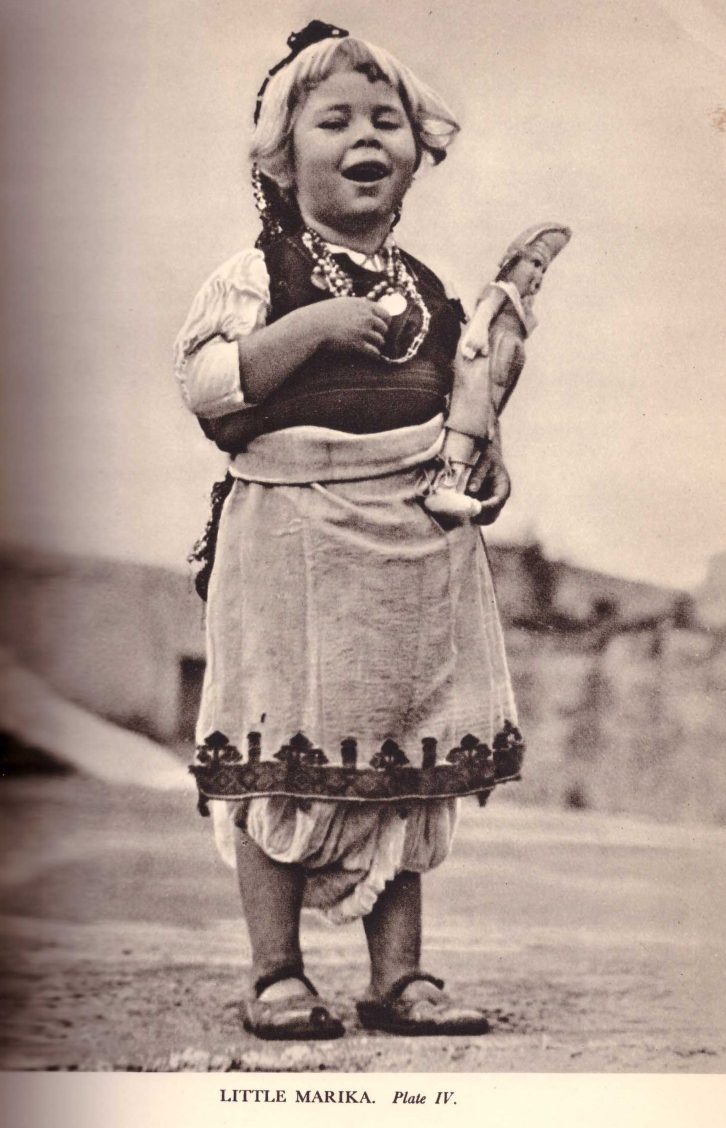
Because of the rainy weather Ralph and Freddy were forced to extend their stay at Anogeia for another day. Their lunch consisted of roast mutton and some vegetable. Once again, only the host ate with them. In the evening, to reciprocate the hospitality, they treated their hosts with hot chocolate that they cooked on their Primus, a camping stove. “It was appreciated as a change from the usual Tsikoudhia” (Island of Zeus, p. 34). Finally, after three days at Anogeia, the rain stopped and the two men got ready to leave. The Cretan family insisted on being photographed. “They all put on their national costumes, which the women wear nowadays only on feast-days, and stood stiffly in a row […]. Only little Marika was not self-conscious and stiff during this absurd performance” (Island of Zeus, p. 35). And it was sweet, little Marika’s photo that Ralph chose to include in The Island of Zeus (pp. 32-33).
Chania more Charming than Candia
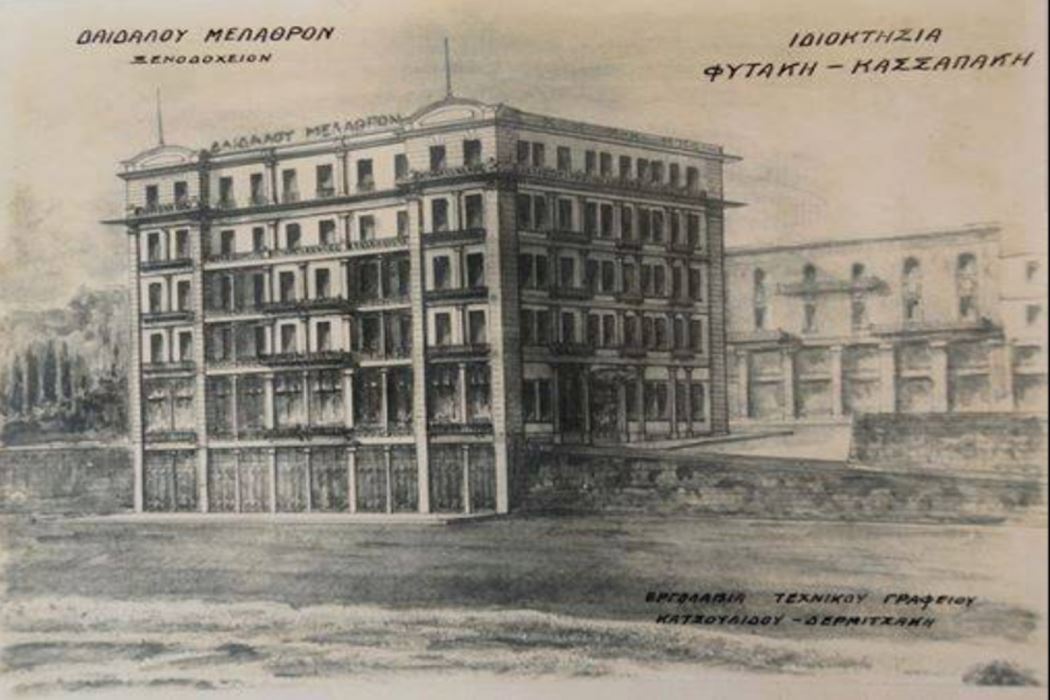
Of the two Cretan cities, Brewster found Chania more charming, mainly because the destruction of the Venetian and Ottoman buildings was not as widespread as in Herakleion (Candia). Ralph was also disappointed by the lack of life in the harbor: “here in Candia the water-front is dead -almost sinister.” The modern harbor was even more depressing than the inner one (the Venetian), “for its chief feature is a monstrous seven-storied building whose pretentiousness crushes everything within sight” (Island of Zeus, p. 16). Ralph was referring to the newly constructed Μέγαρον Φυτάκη, the pride of Herakleion. It was the first multi-storied building to be constructed in the city in the late 1920s, and the center of local life until WW II. There were 26 residential apartments in the upper floors while the lower floors were occupied by various offices including the Theotokopoulos Club of Scientists (Λέσχη Επιστημόνων Ηρακλείου). (After decades of decline, the Μέγαρον Φυτάκη was renovated and transformed into a five-star hotel, the GDM Megaron, in the 2000s.)
Ralph did not have anything good to say about the Herakleion Museum either. “Everything is crammed into three rooms, while a new museum is being built.” He found the restoration of the Minoan frescoes “most horribly.” “But the vases, statuettes, bronze objects, and jewels are very beautiful…” (Island of Zeus, p. 24).
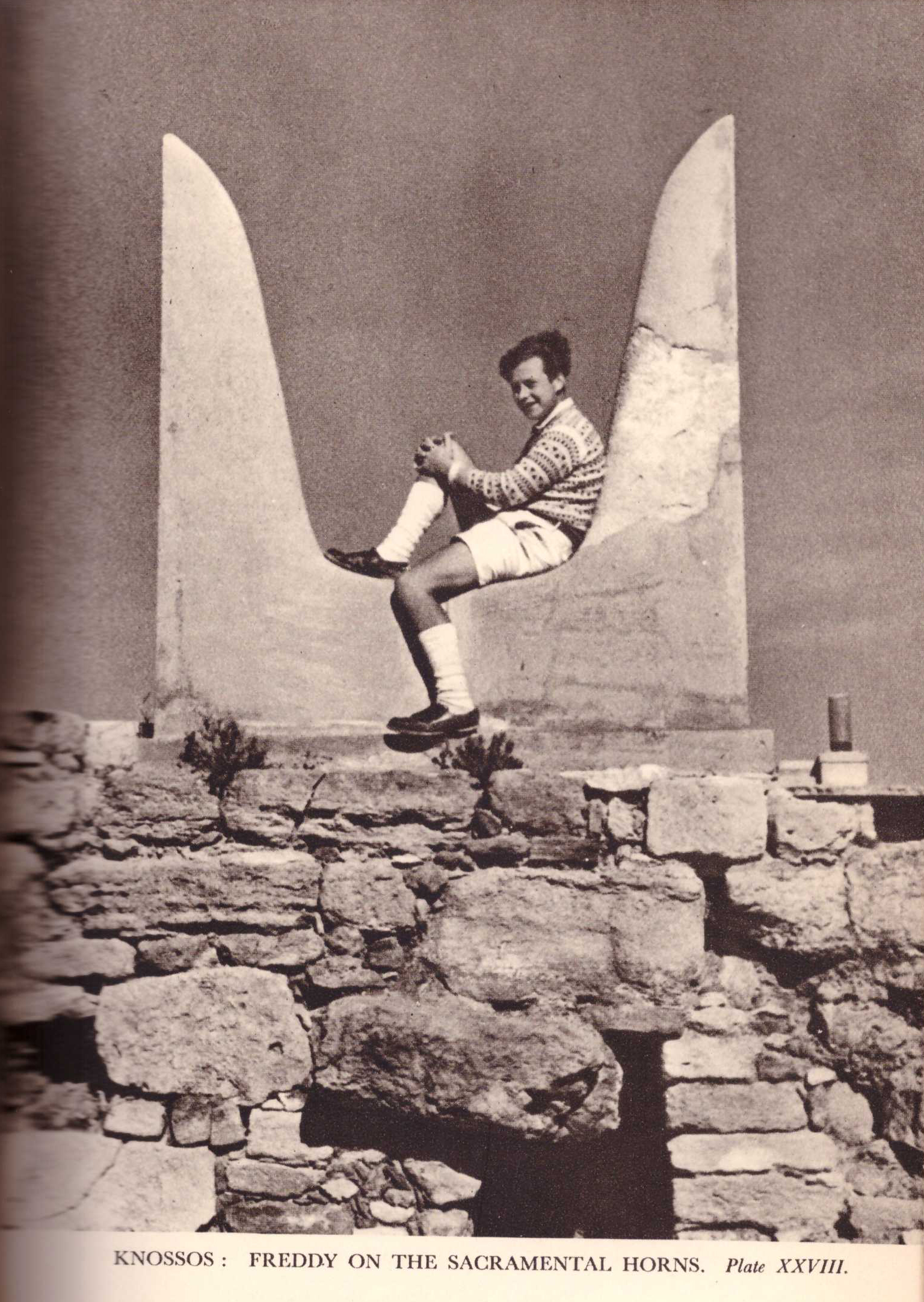
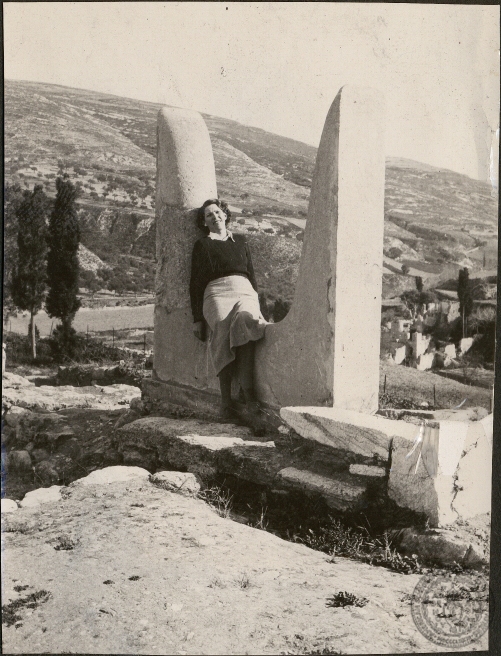
He didn’t mince his words for St. Mark’s church and the Morozini Fountain. And rightly so, for the church had been turned into a cinema. It was playing Anna Karenina with Greta Garbo during Ralph’s staying in Herakleion. He was pessimistic about the future of the Morozini fountain and said he would not be surprised if the Venetian fountain was removed one day and the sculptures chopped up and used as building material.” His comments may sound strange today but one is reminded that the Cretans destroyed the Venetian Loggia in one night in 1904, and in the 1970s they demolished the large church of San Salvador without remorse. When Ralph complained about the ruinous condition of the Loggia to the German wife of a Greek doctor, she said: “But the Greeks are quite right. They cannot bear to be reminded of the days in which they lived under a foreign yoke, and quite justly systematically destroy everything which was constructed by foreigners” (Island of Zeus, p. 109). It is true. It would take at least three generations in the Νέαι Χώραι (Macedonia and Crete) and the Dodecanese before people felt comfortable with their cities’ “other” past.
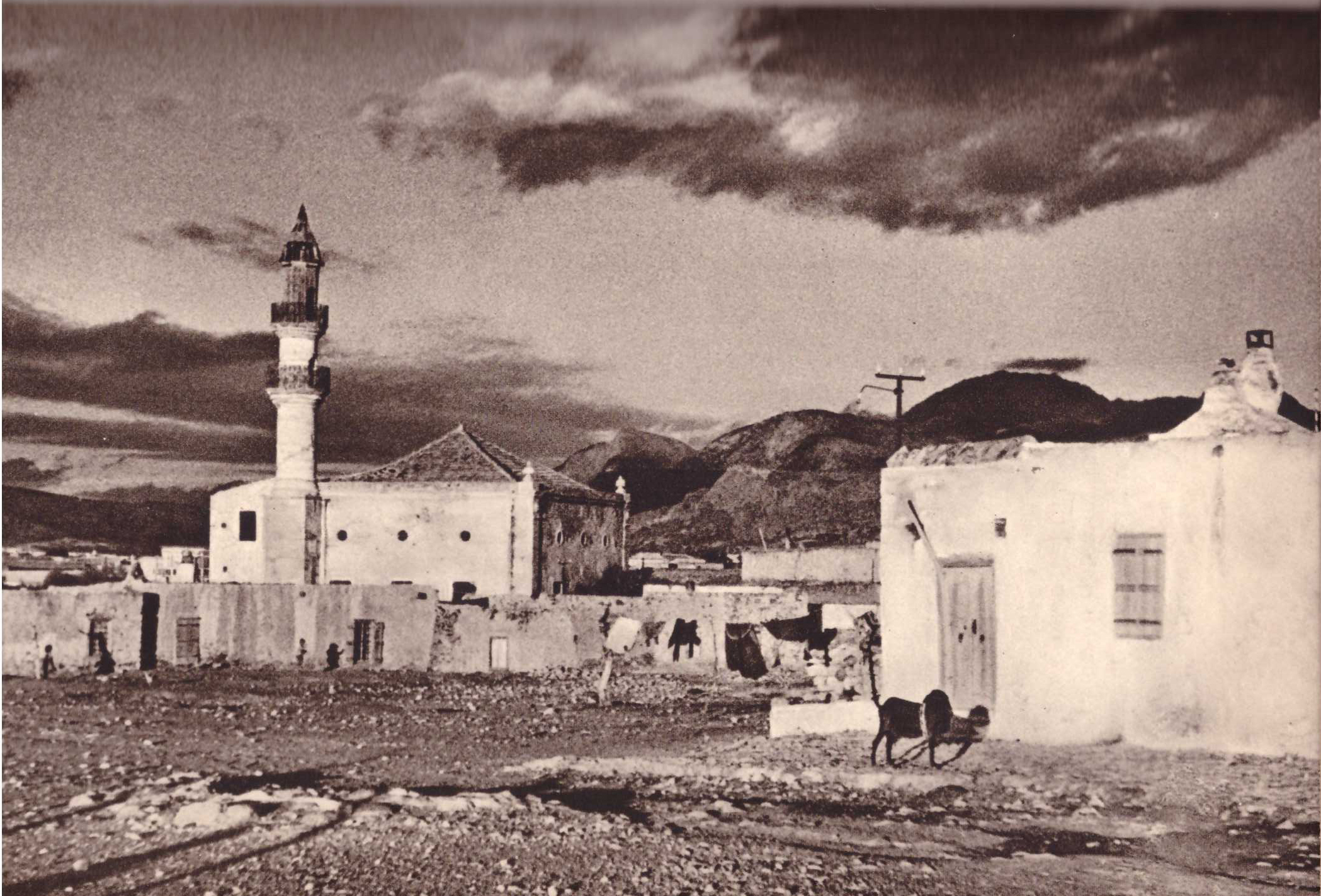
Looking for the local museum in Ierapetra, Ralph was pleased to see that the adjacent mosque had escaped demolition or change of use. “It [the museum] was on the western outskirts of the town inside the first-aid station, a simple one-storied building near a crumbling mosque with a minaret which had been overlooked by the ravaging patriots of modern Greece. Next to it was a charming Turkish fountain, surmounted by a small dome, But since the Turks have gone, water no longer flows from it” (Island of Zeus, p. 243). Built as late as 1891, the mosque served the local Muslims for a short period only. After the declaration of Crete as an autonomous state (Κρητική Πολιτεία) in 1898 and its later unification with Greece in 1908, many Cretan Muslims (Τουρκοκρητικοί) left the island in search of safer lands.
Seager’s House
On their way to East Crete, Ralph and Freddy stopped at the village of Pacheia Ammos where Richard B. Seager (1882-1925), the excavator of Pseira and Mochlos, had built his house in 1906. After Seager’s death in 1925, the house had passed on to his foreman, Nikolaos Sareidakis (Marshall and Betancourt 1997, p. 183). The house had been turned into a pension where the two men were hoping to find shelter. Unfortunately, they found it all closed. Ralph must have visited it before because he remembered “how delightful the courtyard was, full of luxurious plants and flowers, beautifully paved with pebbles, and with a well in the center. A portico ran round three sides and many huge earthenware pots reminded you of the Minoan jars in Knossos and Phaistos. Most of the bedrooms looked out to the sea and the mountains, but to pass from one room to another you had to enter the cloister. There was something magic about this courtyard, which enchanted you every time you stepped into it.”
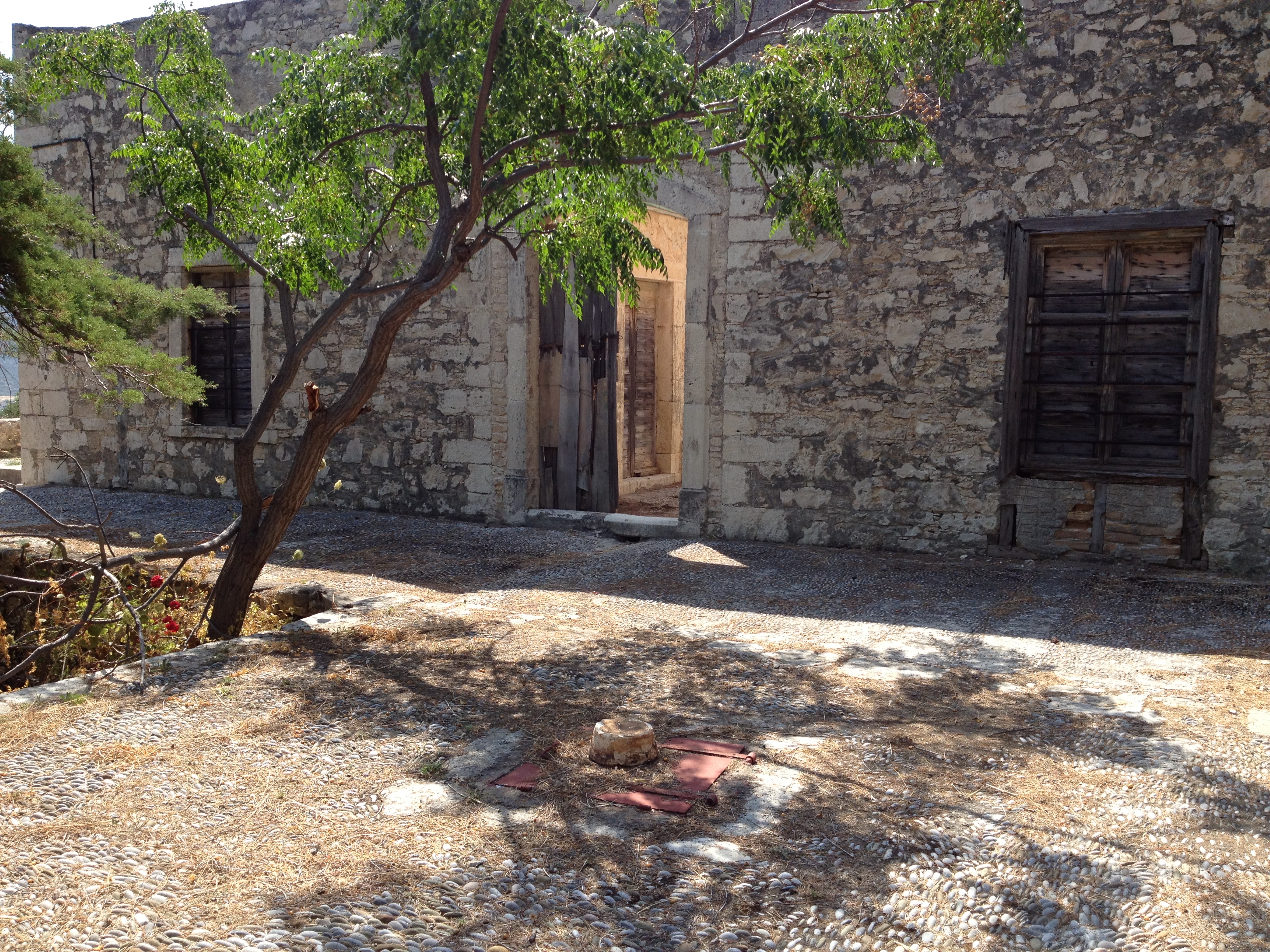
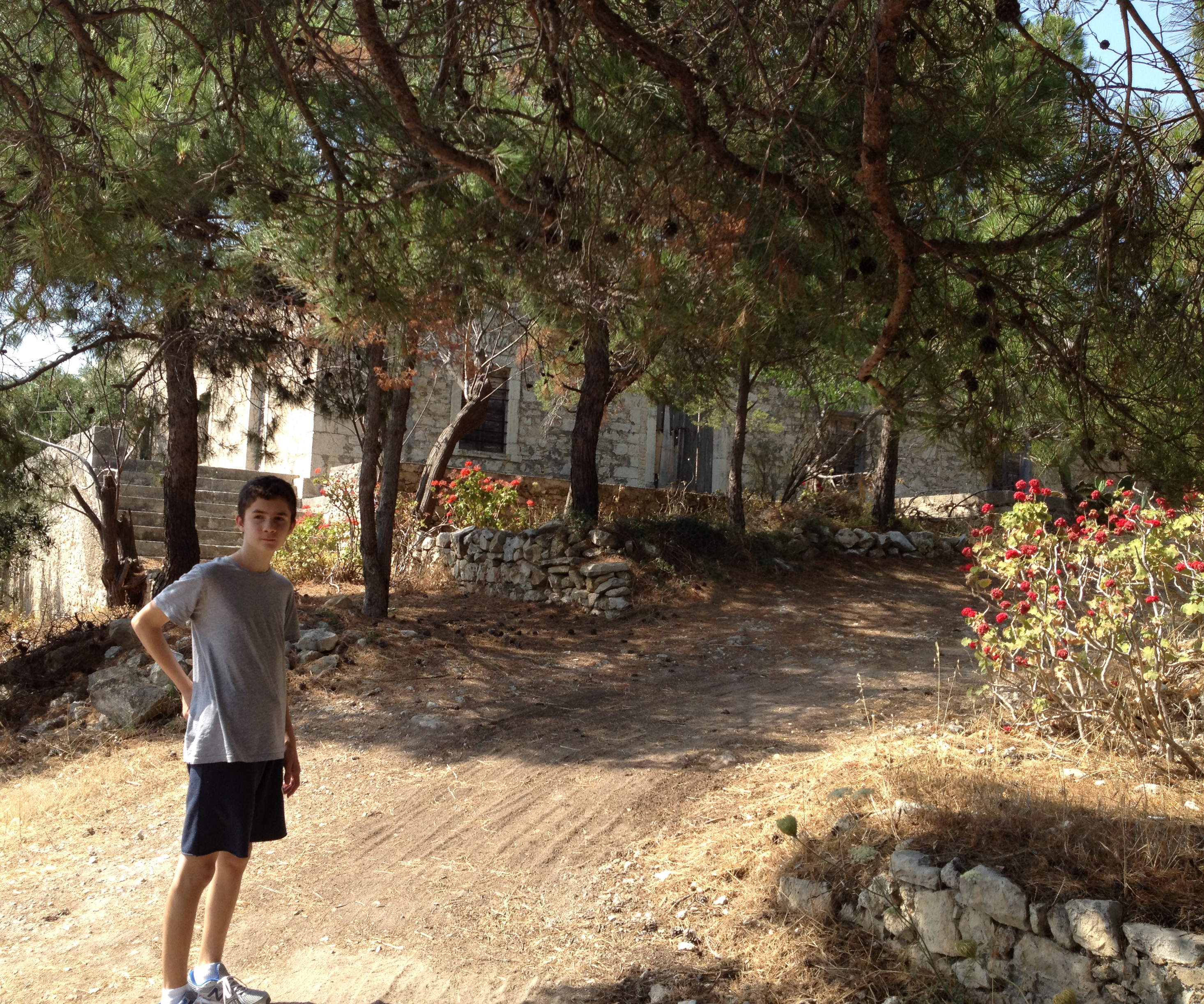
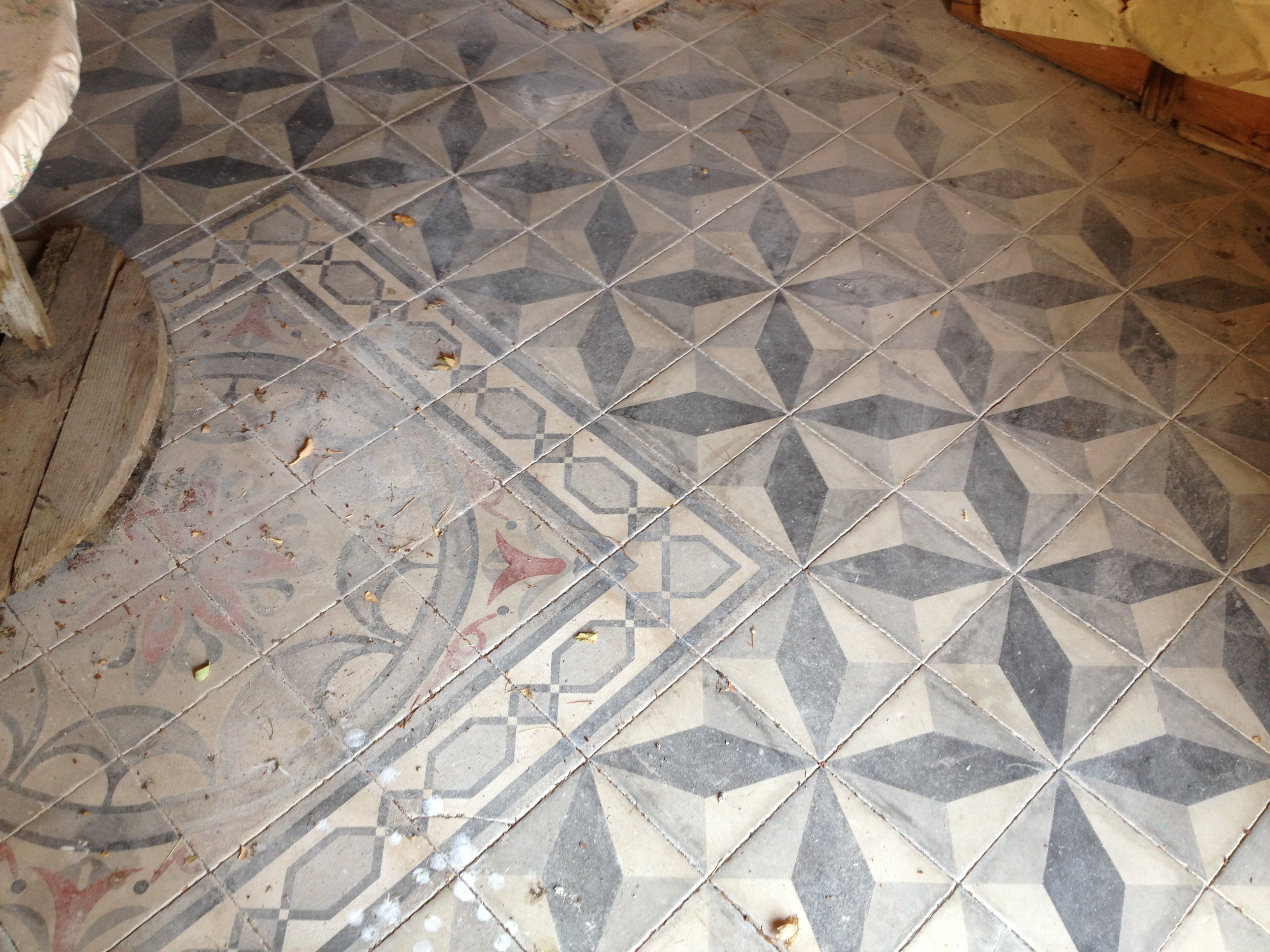
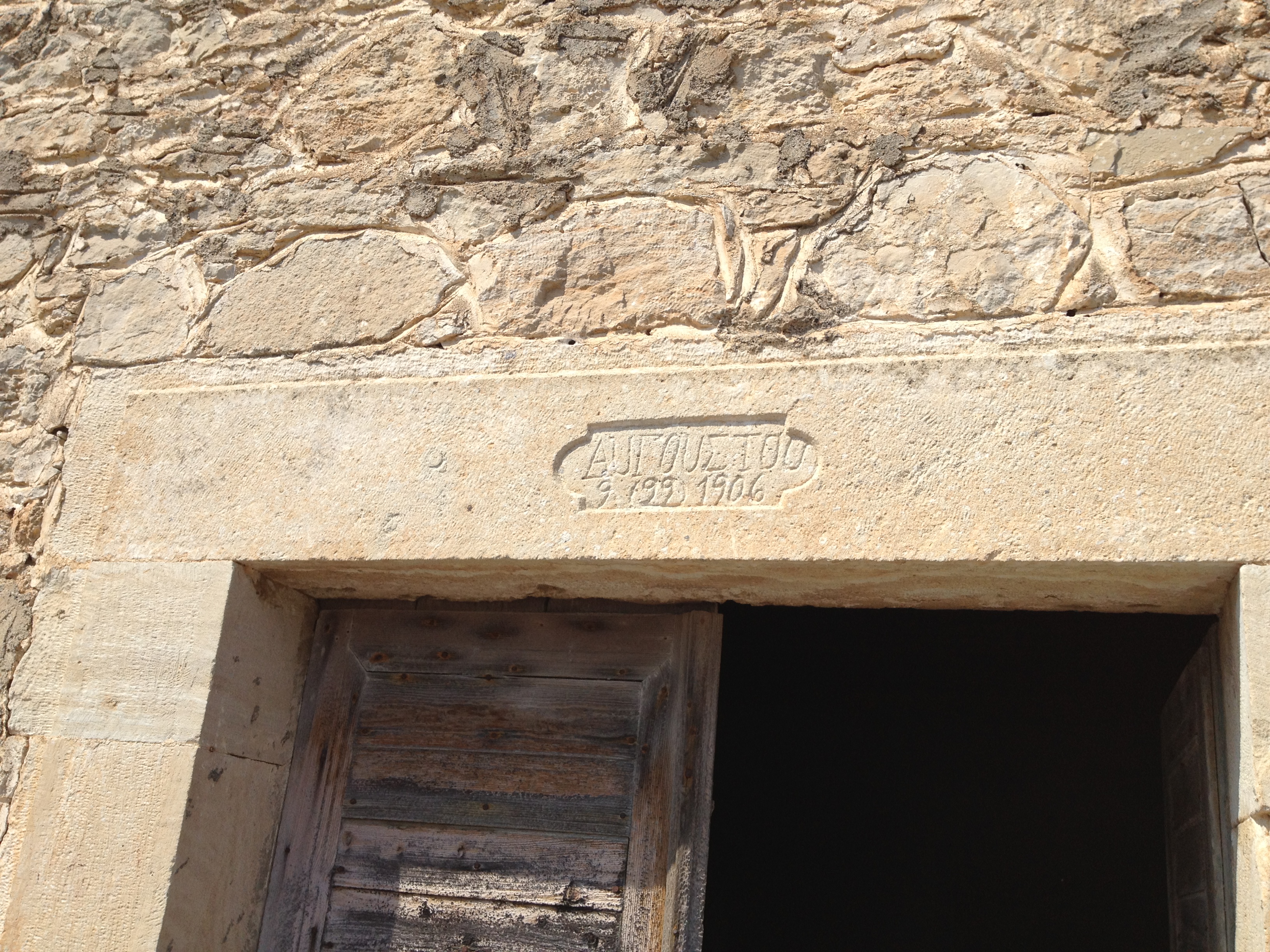
The Seager house still remains privately owned. We managed to get a small tour of its interior by its current owners about fifteen years ago. (The photos above were taken by Jack L. Davis in 2012.)
In the Spyridon Marinatos Papers in the ASCSA Archives, there is the report that young Marinatos submitted in July 1926 to the Ephor Stephanos Xanthoudides recording the objects, modern and ancient, that were found in the Seager House after its owner’s unexpected death.
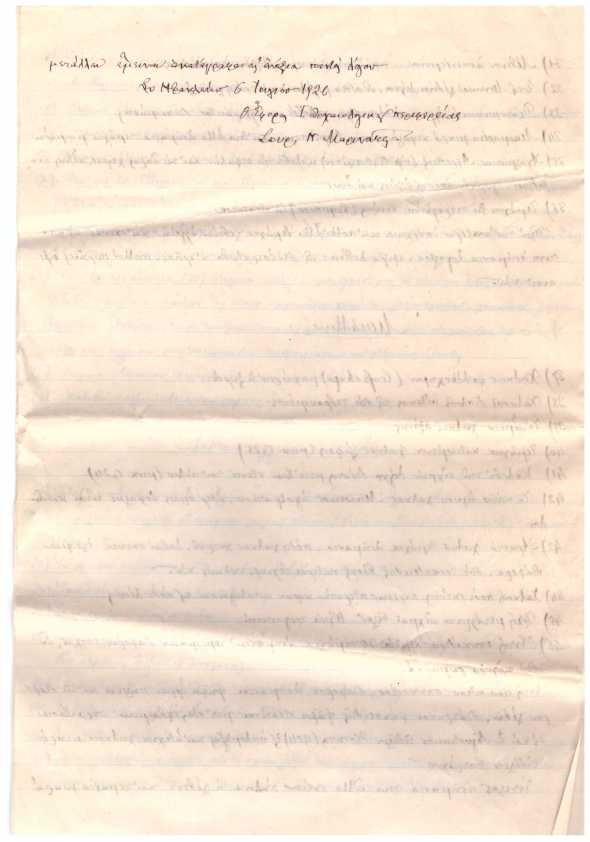
Marinatos’s report includes the following object (no. 15): «Πήλινον ελληνιστικών [χρόνων] δίωτον αγγείον εν σχήματι γελοίας μορφής κοντοχόνδρου Σειληνού με πελωρίαν κεφαλήν και κοιλίαν». In 2016, for Stella Drougou’s Festschrift titled Ηχάδιν, I published such a vessel of unknown provenance in the Ierapetra Archaeological Collection (Vogeikoff-Brogan 2016). Could it be identified with the vase that Marinatos found in Seager’s house? I am almost certain that it is! (Use the slider below to see both the Silenus vase in the Ierapetra Collection and the Marinatos report.)
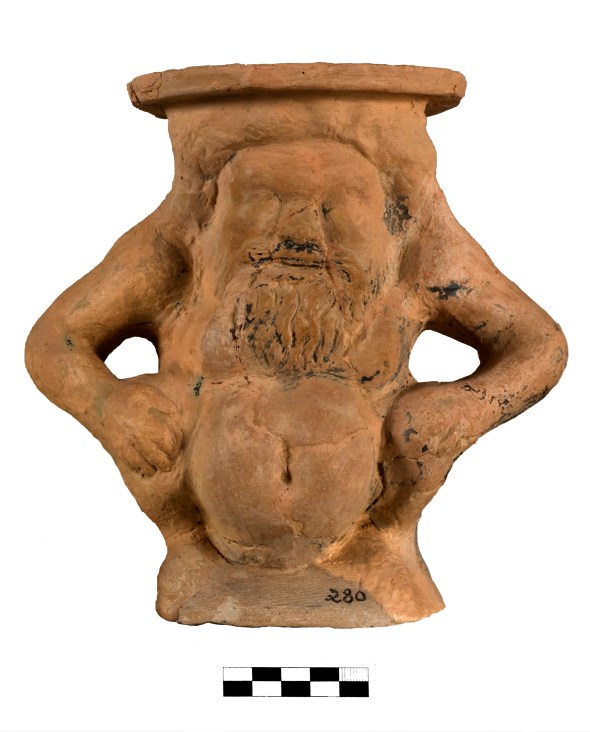
A Bes-Silenus Pastic Vase, Ierapetra Archaeological Collection (ASI 280). Photo: Chronis Papanikolopoulos. 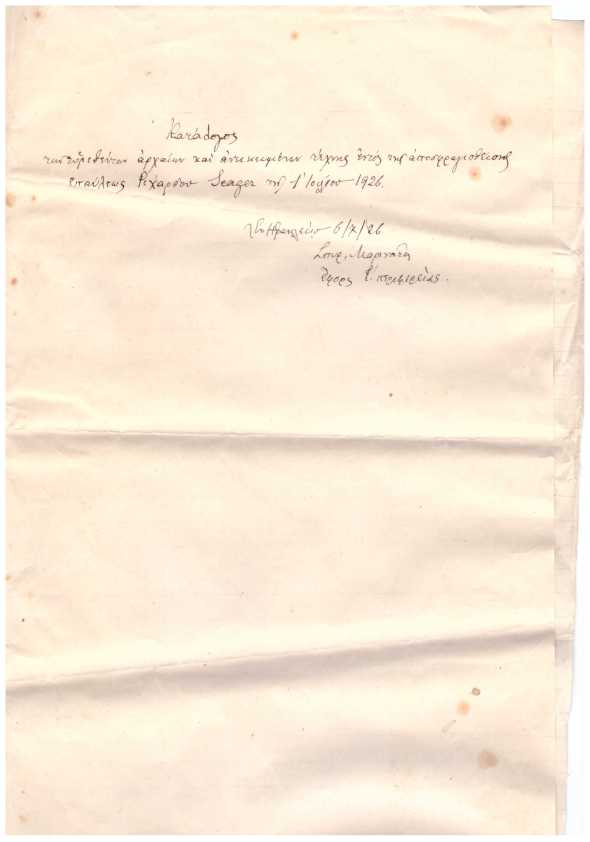
Part of Spyridon Marinatos’s report of objects found in Richard Seager’s House in 1926. ASCSA Archives, Spyridon Marinatos Papers 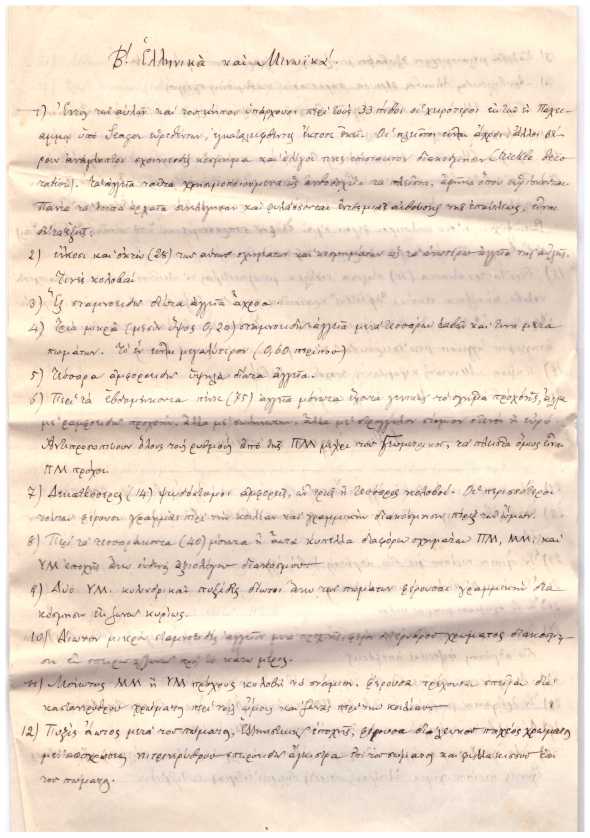
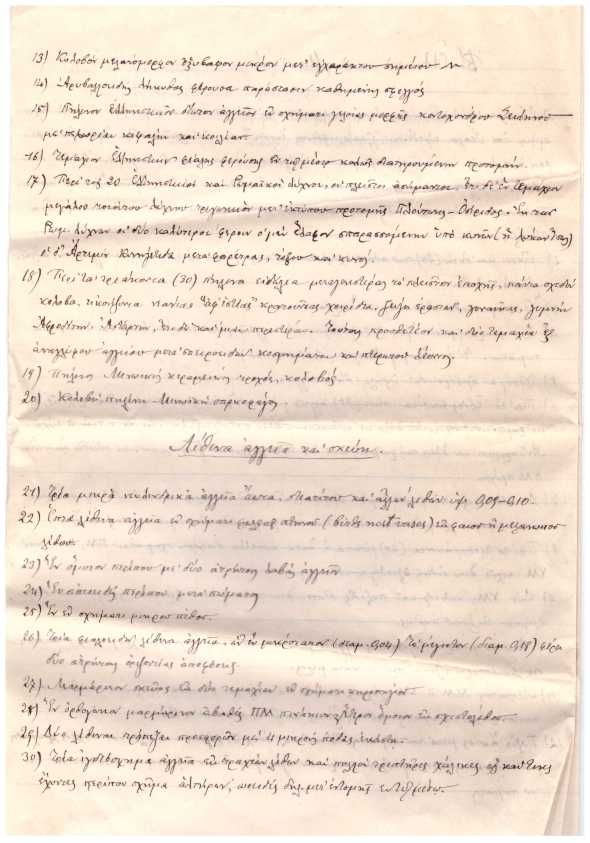
Item no. 15: Πήλινον ελληνιστικών [χρόνων] δίωτον αγγείον εν σχήματι γελοίας μορφής κοντοχόνδρου Σειληνού με πελωρίαν κεφαλήν και κοιλίαν 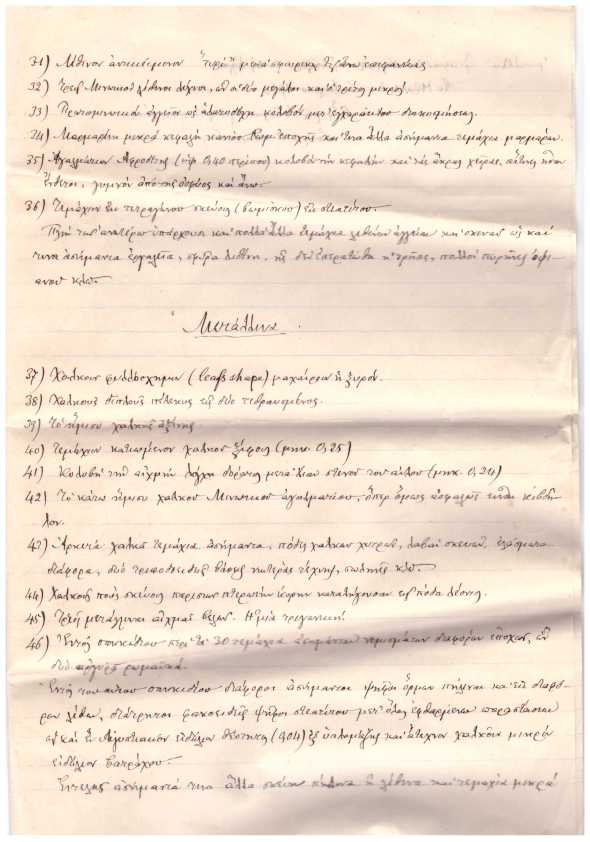
Femicides: Once Justified as Honor Killings
There was a story in Brewster’s book that left me gasping. While travelling in West Crete, Ralph spent a few days at the village of Elos near Chania. There he met a Nikolis Ziakis, “the man who chopped his three sisters into pieces with a knife.” Brewster heard the story from Nikolis himself.
Ten years earlier, Nikolis had been forced to immigrate to South America in order to support his mother and three sisters who worked on the property of a rich landowner. “They looked after his herds and collected his olives and chestnuts.” While in South America, Nikolis was frequently rebuked by his relatives who kept nagging him to come back to watch his sisters. After having saved enough money, Nikolis decided to return home. “Nobody knew I was coming.” His homecoming was not met with enthusiasm. His mother and sisters were nervous. At the local café, “all my old friends with whom I used to be inseparable appeared now cold towards me. The only questions they asked were about my two youngest sisters.”
When Nikolis demanded that his two sisters return home, his mother resisted, and the sisters delayed as much as they could. “They were obviously hiding something from me, but I could not make out what it was.” Finally, one of the villagers shouted at Nikolis: “You fool!” Haven’t you yet understood that nobody in the village here wants to have anything to do with you? You have made a fool of yourself, not only you but your whole family has.”
Finding out that one of his sisters was pregnant, he decided to cleanse his lost honor by killing all three of them:
“I went on hitting Arkhonto with my knife, and when I had done with her, I began with Dhéspoina. I don’t know how many thrusts I gave each of them.” Then he ran after his other sister, Katerina, and their mother. “I ran after them and caught Katerina under a plane tree, and there I thrust my knife into her again and again until she was dead.” When Ralph asked him if he regretted his actions, Nikolis answered: “Not in the least, but annoyed at not having been able to kill my mother too” (Island of Zeus, pp. 57-62).
After the murders, Nikοlis surrendered at the police. He was sentenced to two and a half years. But by serving his sentence in “a severer prison, where one days counts as much as two in a normal prison,” he was let out after a year and a half!
Nikolis had killed three women and an unborn baby, and the court had sentenced him to two and a half years! What happened in a remote village of Crete in the 1930s was, however, neither unique nor local. Until 1974, “it was the law in Texas that homicide was justified -not a criminal act, and therefore subject to no penalty whatever- when committed by the husband upon the person of anyone taken in the act of adultery with the wife…” (Wilson and Daly, 1992, p. 84).
The term femicide was first coined in 1976 by South African activist Diana E.H. Russel (1938-2020) in an effort to define men’s license to kill their wives, sisters, daughters, mothers even, and to be excused by the judicial system. The term was adopted in a worldwide level in 1992 following the publication of Femicide: The Politics of Woman Killing by Jill Radford and Russell as co-author.
A Lukewarm Reception
The book received lukewarm reviews. Brewster was praised for his photography and certain parts of the narrative -reviewers found Freddy’s personality and adventures charming- and his gift for retelling people’s stories. British classicist H.D.F. Kitto, for example, found the author’s complaints about the weather and his lack of money boring and uninteresting (The Classical Review 53:5/6, 1939, p. 226).
The most sympathetic review came from The Guardian: “The book is full of good things, ancient and modern. It a relief to know that Mr. Brewster, the humorous archaeologist, has survived all the perils by which he was surrounded, and we look forward eagerly to his next expedition. If there is any justice in this world he will sally forth, as one result of this book, with such a comfortable balance at the bank that he will no longer have to resort to desperate expedients” (23/6/1939, p. 7).
Even if he made any money from the book sales, it was soon without value because of the war. He found himself hiding in Budapest since neither of his two citizenships (Austrian and Italian) served him well. Brewster died of a heart attack in 1951 at the age of forty-five. His last book Wrong Passport, published posthumously (1955), is about his adventures during WW II.
References
Becker, M. J. and P. P. Betancourt, 1997. Richard Berry Seager : Pioneer Archaeologist and Proper Gentleman, Philadelphia.
Vogeikoff-Brogan, N. 2016. “A Bes-Silenus Plastic Vase in the Ierapetra Archaeological Collection: The Egyptian Connection,” in Ηχάδιν: Τιμητικός τόμος για τη Στέλλα Δρούγου, ed. M. Giannopoulou and C. Kallini, Athens 2016, pp. 808-822.
Wilson, M. and M. Daly, 1992. “Till Death Do Us Part,” in Femicide: The Politics of Woman Killing, ed. Jill Radford and Diana E. H. Russell, New York 1992, pp. 83-98.
Celebrating Christmas and New Year’s in Athens, 1895-96: From the Letters of Nellie Reed, Student of the American School of Classical Studies at Athens.
Posted: December 31, 2024 Filed under: Archaeology, Archival Research, Biography, Greek Folk Art, History of Archaeology, Modern Greek History, Philhellenism, Uncategorized, Women's Studies | Tags: American School of Classical Studies at Athens, Benjamin Ide Wheeler, Charles Edward Prior Merlin, Eben Alexander, Merlin House, Nellie Marie Reed, photography, Wilhelm Wilberg 8 Comments
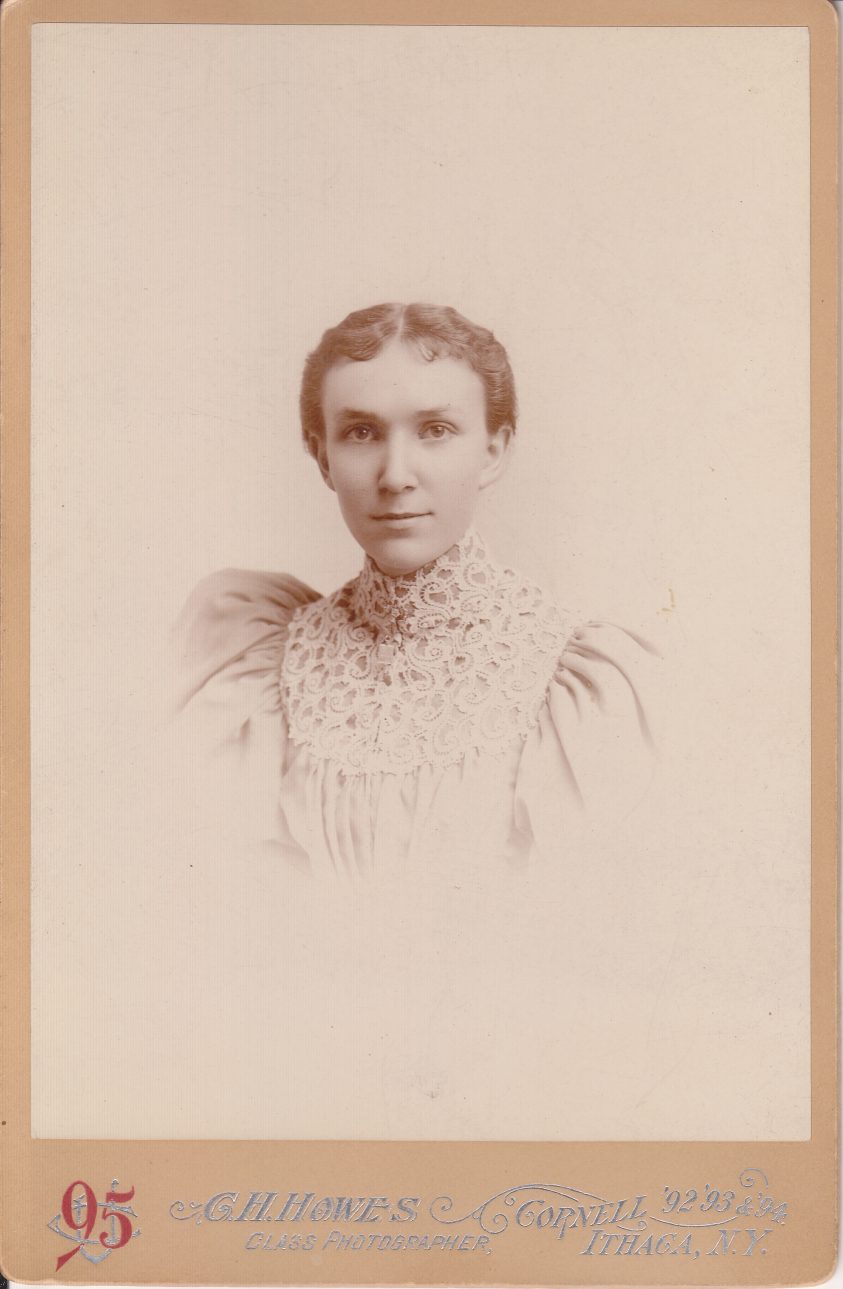
“The American in Athens at Christmas time has a distinct advantage over the rest of mankind for each of his holidays is multiplied by two. He must of course celebrate the day the dear ones at home are enjoying and he is equally desirous of helping the Greeks in their festivities. The heading of his letter, Dec. 25, is contradicted by the postmark Dec. 13, much to his confusion until he finds that in Greece Father Time lags twelve days behind his record in other lands. But one is inclined to doubt even that date, so different is the approach of the sacred festival. Windows flung wide open admit the warm southern sunshine. A walk along the streets is rewarded by glimpses into gardens full of orange trees hung with golden fruit and rose trees covered with fragrant blossoms,” wrote Nellie Marie Reed (1872-1957) sometime in early 1896, after having spent a year at the American School of Classical Studies at Athens (ASCSA or the School hereafter).
She was referring to Greece following the old (Julian) calendar, as did other eastern Orthodox countries in the 19th century. Christmas was celebrated on January 6 and New Year’s on January 13. The Gregorian calendar was adopted in Greece only in 1923. (See “An Odd Christmas” or the “Christmasless Year of 1923” in Greece .)
A graduate of Cornell University, Nellie attended the School in 1895-1896. We are fortunate to have in the School’s Archives the letters she sent to her family because they contain valuable information about her Greek experience. They were my main source of information for an essay exploring the close relations between the American School and the German Archaeological Institute in the late 19th century (On the Trail of the “German Model”: ASCSA and DAI, 1881-1918). Without her letters we would not have known that these relations were not limited to an official level but extended to informal, social gatherings between members of the two schools (the so-called “Kneipe” evenings); members of the Austrian Archaeological Station (not yet an Institute) were also part of these meetings.
Do I Really Want to Be an Archaeologist?
Posted: July 7, 2024 Filed under: Archaeology, Archival Research, Biography, Book Reviews, History of Archaeology, Mediterranean Studies, Modern Greek History, Philhellenism, Uncategorized, Women's Studies | Tags: American School of Classical Studies at Athens, Archaeology, Athens, College Year in Athens, Eugene Vanderpool, Franchthi Cave, greece, History, Karen D. Vitelli, Porto Cheli Project, travel 13 CommentsThe first time I heard her name was in 1986 at Tsoungiza, Nemea. I had just been awarded a Fulbright fellowship to go to Bryn Mawr College for graduate school. James (Jim) C. Wright, one of the cο-directors of the Nemea Valley Project and a Fulbright fellow himself extended an invitation to me, Alexandra (Ada) Kalogirou and Maria Georgopoulou, the other two Greek Fulbrighters, to join the excavation, as a way of becoming familiar with the American way of life and education system. Ada was going to go to Indiana University to study Greek prehistory with Thomas W. Jacobsen (1935-2017) and Karen D. Vitelli (1944-2023).
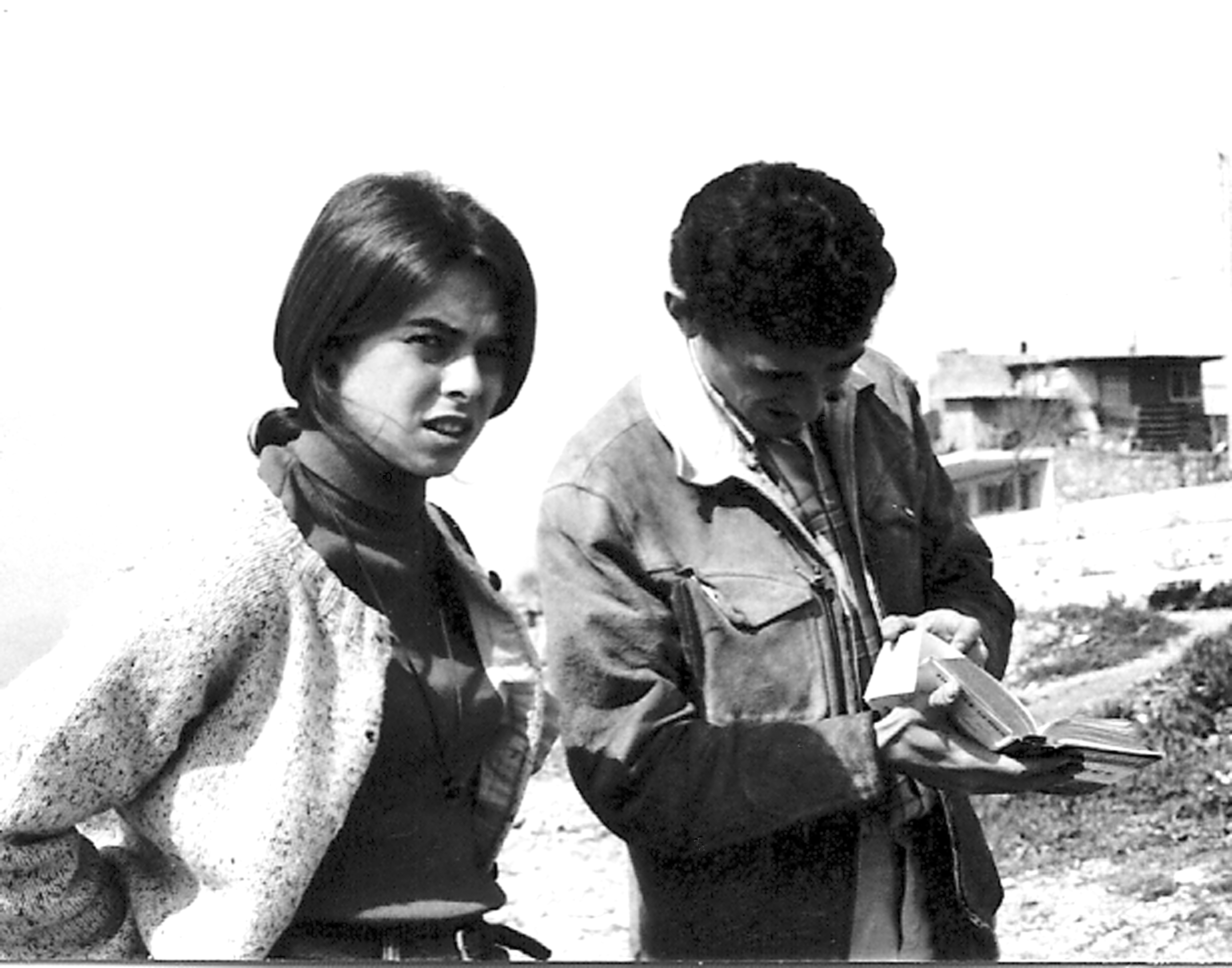
I must have heard about Vitelli on and off over the next 10-15 years, but I never met her in person. I didn’t even know what she looked like. Then, in 2010, as I was preparing an exhibition to celebrate the 130th anniversary of the American School of Classical Studies at Athens (the School, hereafter), I sent an email to various people asking for photos from the time they were students at the School. Stephen (Steve) G. Miller, former director of the School and a student at the School in the late 1960’s, sent me a few. One of the photos showed a tall, slim, dark-haired woman, who made an indelible impression on me. Several years later (2013), Kaddee (as she was known to nearly everyone) appeared at Mochlos together with her friend, archaeologist Catherine Perlès, at a wedding party for Tristan (Stringy) Carter, as guests of Tom Strasser, her former student. (By then Vitelli was Professor Emerita of Archaeology and Anthropology from Indiana University, Bloomington.) That was the first and last time I saw her in person.

 From the Archivist's Notebook