Prevailing: Bert Hodge Hill (1910-1915)
Posted: May 4, 2024 Filed under: Archaeology, Archival Research, Biography, Classics, History of Archaeology, Uncategorized | Tags: art, Athens, Bert Hodge Hill, Edward D. Perry, Elizabeth Manning Gardiner, first-world-war, George W. Elderkin, greece, James R. Wheeler, Kendall K. Smith, women 2 CommentsIn my January post I explored the first term of Bert Hodge Hill’s long directorship (1906-1926) at the American School of Classical Studies at Athens (ASCSA or the School hereafter), which was the longest of any director. After a trial period with annual directors, the School introduced the five-year term with the possibility of one renewal. Rufus B. Richardson (1845-1914), Professor of Greek at Dartmouth, was the first director to serve two terms. He moved to Greece with his wife Alice Linden Bowen (1854-1948) and their two daughters, Lucy and Dorothy, setting up a bustling household and mingling with the local high society. The wedding of his oldest daughter Lucy to Arthur Morton Lythgoe (1868-1934), an American archaeologist working in Egypt, was the event of the year (1902) in Athens, attended by the Crown Prince and Crown Princess of Greece.
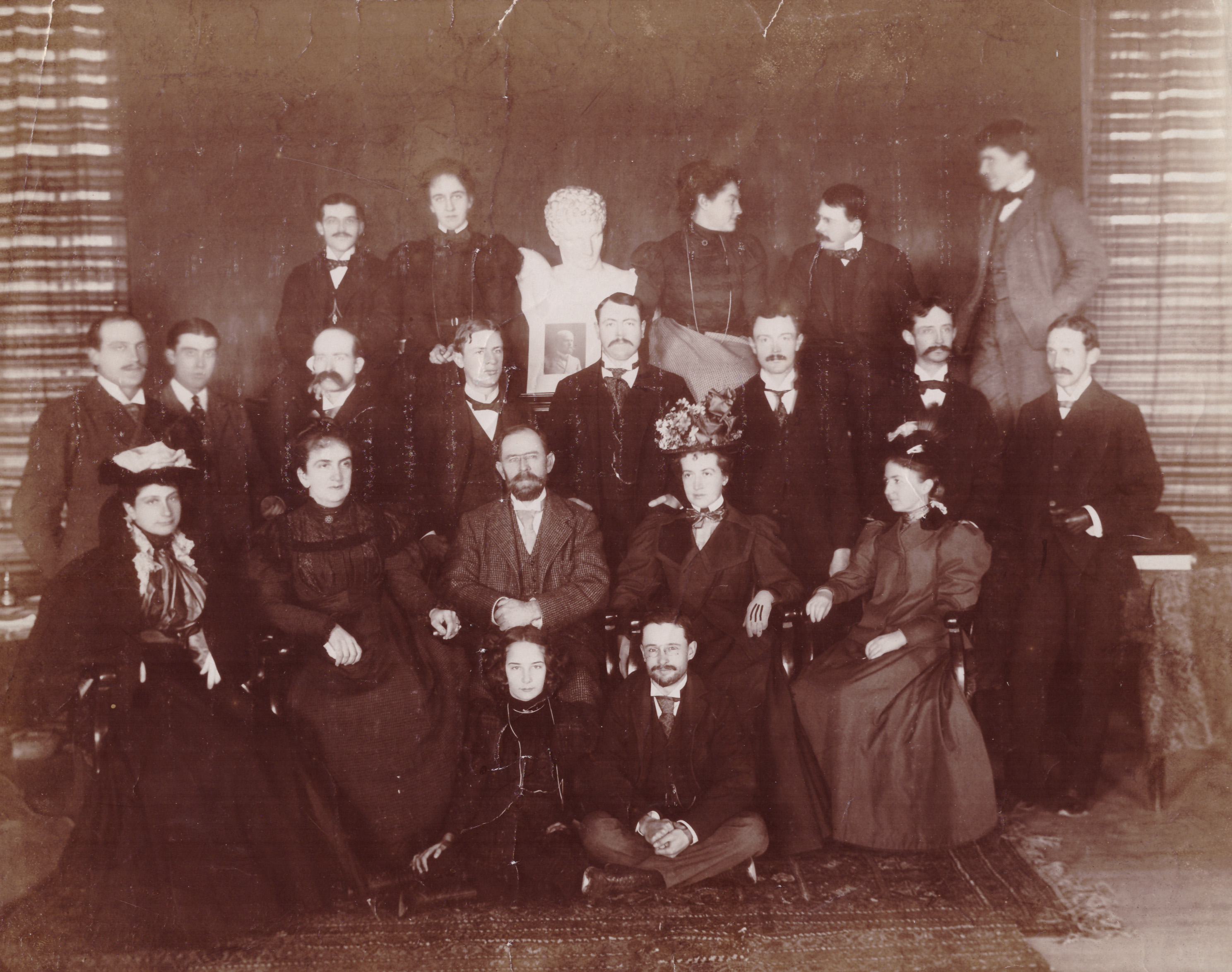
For Richardson’s successor the School appointed a young, highly promising scholar, Theodore W. Heermance, whose untimely death two years later (1905) from typhoid fever left the School in shock. One wonders what would have been the course of the School had Heermance lived longer. His successor Bert Hodge Hill was the first director at the School who was not a professor or held a Ph.D. Hill’s first term (1906-1911) was a trying experience, but he seemed to be able to deal with the challenges of an overseas post. Knowing some of Hill’s weak points –the most conspicuous being his inability to turn in anything in time– James R. Wheeler (1859-1918), the Chair of the School’s Managing Committee and Professor of Greek Archaeology and Art at Columbia University, kept a close eye on him during this first term.
Read the rest of this entry »Becoming: Bert Hodge Hill, 1906-1910 (Part I)
Posted: January 1, 2024 Filed under: Archaeology, Archival Research, Biography, Crete, History of Archaeology, Mediterranean Studies, Modern Greek History, Uncategorized | Tags: Archaeology, Athens, Bert Hodge Hill, europe, George W. Elderkin, greece, James R. Wheeler, Kendall K. Smith, Mochlos, Richard Berry Seager, Theodore W. Heermance, travel 10 Comments
The re-discovery of a small cache of old photos depicting students at the American School of Classical Studies at Athens (ASCSA or School hereafter) from 1907-08 inspired me to write about the first years of Bert Hodge Hill’s directorship at the School. [1]
The photos depict four men and one woman: George Wicker Elderkin (1879-1965), Kendall Kerfoot Smith (1882-1929), Charles Edward Whitmore (1887-1970), Henry Dunn Wood (1882-1940), and Elizabeth Manning Gardiner (1879-1958). Of the five, Elderkin, Smith, and Wood were second year students at the School. In 1908, Elderkin, who already held a PhD from Johns Hopkins (1906), succeeded Lacey D. Caskey as Secretary of the School, a position he held for two years (1908-10). Smith came to the School in 1906 holding the Charles Eliot Norton Fellowship, established by James Loeb in 1901 for Harvard or Radcliffe students. Wood, a trained architect with a BS in Architecture from the University of Pennsylvania, was the second recipient of the Fellowship in Architecture (1906-08) that was funded by the Carnegie Institution in Washington.
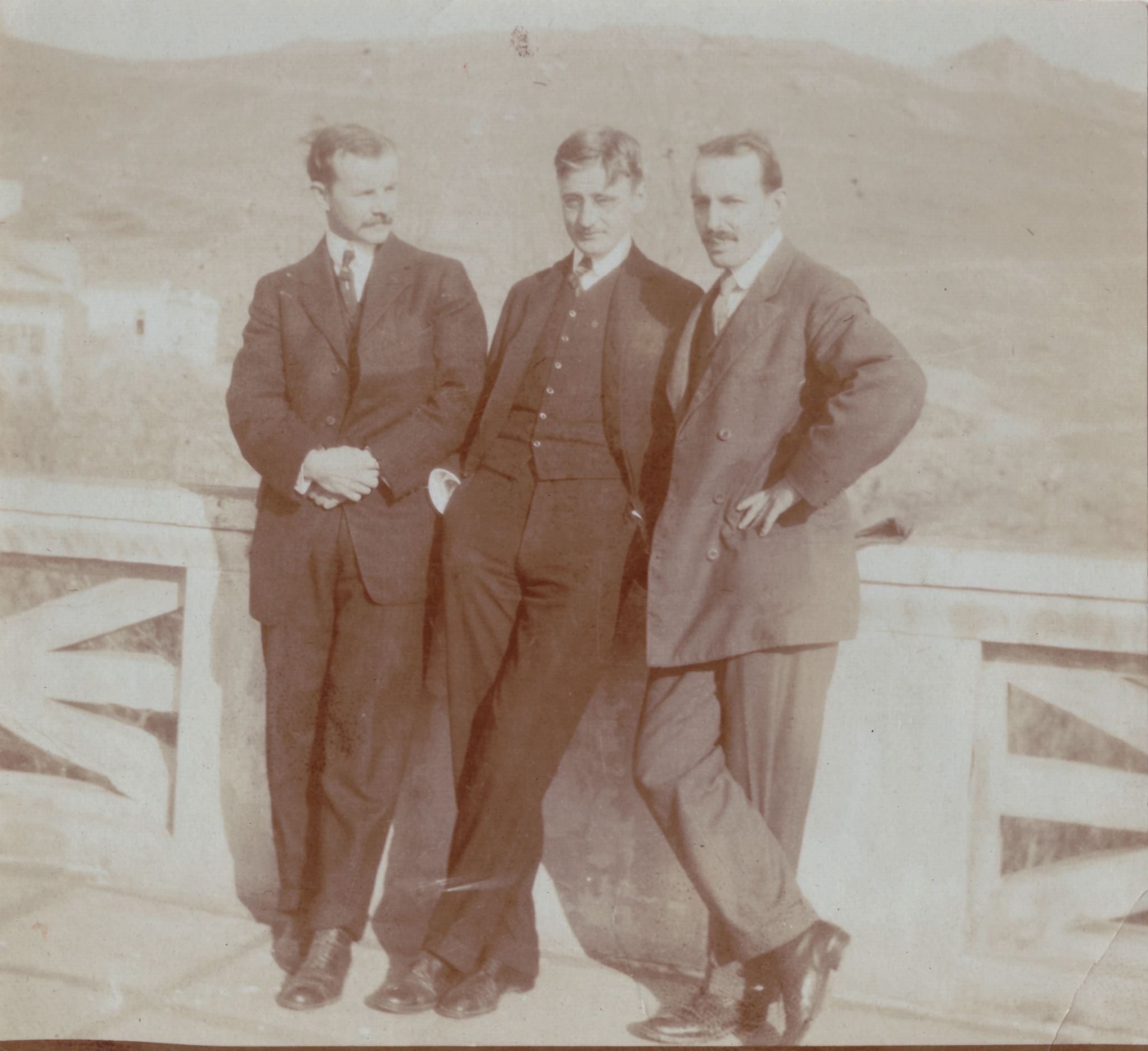
Of the new students, Whitmore, another Harvard man, was the Charles Eliot Norton Fellow for 1907, and Gardiner, the only woman in the photos, was a graduate of Radcliffe College (1901), with an MA from Wellesley (1906), and a recipient of the Alice Palmer Fellowship that supported female students.
Read the rest of this entry »Disjecta Membra: The Personal Papers of Minnie Bunker
Posted: July 8, 2023 Filed under: Archaeology, Archival Research, Biography, Classics, History of Archaeology, Mediterranean Studies, Women's Studies | Tags: Agnes Baldwin, Chaironea Lion, Charles Weller, Constitution Square, Πλατεία Συντάγματος, Minnie Bunker, Nancy Perrin Weston 9 Comments
We have been processing a large shipment of files that the Princeton office of the American School of Classical Studies at Athens (ASCSA or School hereafter) mailed to Greece during their relocation in 2021. The files contain many surprises, especially those associated with the production of the School’s Newsletter. There we found a trove of unpublished (and unknown) photos and among other material an envelope with letters, calling cards, and photos that once belonged to Minnie Bunker (1867-1959).
Minnie was a high school teacher and a student at the School in 1900-1901 who returned in 1906-1907 and again in 1911-1912. She also is no stranger to the School’s Archives which already contained a small collection of her water-damaged photographs and letters, as well as an 1894 Baedeker, which her grandniece Nancy Perrin Weston (1922-2011) mailed to Athens in the 2000’s. After her aunt’s death in 1959, Nancy also spent time in Greece, working for renowned architect Constantine Doxiadis and volunteering in the School’s Library from 1963-1964. Minnie must have transmitted her love for Greece and the School to her grandniece because in 2011, the year of Nancy’s death, the School received $25,000 from her estate.

The thrill of archival research is not limited to discovery but encompasses rediscovery. The envelope that we found in 2020 contained another small cache of Minnie Bunker papers that Weston had shipped to the School’s office in New York in 1981, when the School was actively looking for letters and photos of past students and members on the occasion of its upcoming centenary.
Brainerd P. Salmon: American Journalist (and Much More) and Friend of Greece
Posted: April 12, 2023 Filed under: Archival Research, Biography, Modern Greek History, Philhellenism, Uncategorized | Tags: Brainerd P. Salmon, Edward Capps, Eleutherios Venizelos, John Gennadius 4 CommentsIn American Influence in Greece, 1917-1929 (Kent, Ohio 1988), historian Louis P. Cassimatis refers to Brainerd P. Salmon, chairman of the American Chamber of Commerce in Greece, twice. In the Preface, by quoting a line from Salmon’s Glimpses of Greece (1928): “‘American interests in Greece are commercial, financial, educational, and at times philanthropic, but never political’.” And again, in Chapter Five under “Constantine and the Forced Loan of 1922,” when Cassimatis discusses the three-man economic and diplomatic mission that the Greek Government sent to Washington D.C. in the fall of 1921.
The mission composed of John Gennadius, former minister of Greece to Great Britain, Stamos Papafrangos, solicitor of the National Bank of Greece, and Salmon was sent to the United States by the Royalist government of Demetrios Gounaris to obtain recognition of King Constantine as head of the Greek State and request the advancement of the remaining part of the Tripartite Loan of 1918 (about 33 million dollars), which had been suspended. (Until King Constantine formally acknowledged that he had succeeded his dead son King Alexander, the United States could not honor agreements made with the previous Greek government, that of Eleutherios Venizelos.) Failing that goal, the three men had high hopes for a private loan from American banks since there were already several U.S. commercial firms active in Greece in the early 1920s (Cassimatis 1988, 166-172).
According to Cassimatis, the idea of a Greek mission to the U.S. was the “brainchild of Paxton P. Hibben” (1880-1928), a former diplomat and an Associated Press war correspondent sent to Greece in 1915, and a close friend of King Constantine (so close that, in 1920, Hibben would publish Constantine I and the Greek People, in support of Constantine’s decision that Greece should remain neutral during WW I). Hibben’s recommendations included Papafrangos, Philippos Dragoumis, Ion’s younger brother, and Alexander Mercati, “a confidant of the Royal Family” (Malakasses 1976). Gennadius, writing to Demetrios Maximos, Governor of the National Bank of Greece, described in detail his meeting with Prime Minister Gounaris in London in the fall of 1921. According to Gennadius, it was Gounaris who persistently asked him to head the Greek mission to America (ASCSA Archives, Joannes Gennadius Papers, Box 4, folder 15). Maximos must have supported the inclusion of Papafrangos, a lawyer and a high-ranking officer of the National Bank of Greece.
BPS Enters the Scene
But how did an American like Brainerd (or Brainard) Pomeroy Salmon become involved in this mission? I became interested in Salmon because his name kept popping up in the institutional records of the American School in the early 1920s. A google name search produced very little, however. Searching in www.ancestry.com and www.newspapers.com proved more fruitful. Salmon also appears in the Eleutherios Venizelos Papers at the Benaki Museum (accessed through www.searchculture.gr). The Salmon puzzle remains far from complete, but I was able to piece together certain parts of it.
Read the rest of this entry »Christmas in Athens in 1915
Posted: December 25, 2022 Filed under: Archival Research, Biography, History of Archaeology, Modern Greek History, Philhellenism, Uncategorized | Tags: Christmas 1915, John A. Huybers 12 CommentsOn February 17, 1916, The Nation published in its “Foreign Correspondence” section a long essay by John A[lfred] Huybers, titled “Christmas in Athens.” Huybers is no stranger to this blog. Three years ago, I wrote an entire post about him, “On Finding Inspiration in Small Things: The Story of a Pencil Portrait,” after discovering a pencil sketch of Bert Hodge Hill by him.
An English Australian, Huybers earned his living as an illustrator in America, and from about 1915 until his death in 1920 as a foreign correspondent for The Nation and The Christian Science Monitor in Greece. He must have been friends with many members of the American School of Classical Studies at Athens (hereafter ASCSA or the School) including Bert H. Hill, Carl W. Blegen, and Edward Capps. Capps, who became the School’s Chair of the Managing Committee in 1919, remembered Huybers in the ASCSA Annual Report for 1920-21 (p. 21) with mention of a fund created in his memory (the Huybers Fund amounted to $714.53 in 1921, which is the equivalent of about $18,000 today):
“[He] was for many years a resident of Greece, whence he sent to the American press, and particularly to the Christian Science Monitor, admirable articles on Greek affairs. He died at Phalerum in 1919 [sic]. His writings showed such admirable sanity of judgement, good information, and genuine philhellenic sympathy and understanding that his friends in America, chiefly those of Hellenic descent, desired to perpetuate his memory in connection with the School, which they highly regard as the permanent symbol in Greece of American-Hellenic unity. We are indebted to Professor A. E. Phoutrides of Harvard University, for conceiving this idea and carrying it to completion, and to His Excellency Mr. Tsamados, then Minister Resident of Greece in Washington for generous assistance. A principal fund of $545 was contributed.”
During my research on Huybers, I found sixteen of his essays in The Nation, including one about the American School, large parts of which l presented in my post of April 2019. Lately, I rediscovered in my notes another one he published in February 1916 after spending Christmas in Athens (since Greece was still following the “old calendar,” Christmas was celebrated thirteen days later, on January 6th).
Wanting to experience Christmas Eve shopping, Huybers took a walk on Athinas Street (described as Rue d’ Athènes) which was and still is the largest market: “Not merely the booths in the market, but all the surrounding shops are open, without windows. The places that are most crowded, where most business is being done, are the shops in which the different varieties of cheese and olives are sold, which, with the excellent bread, are the main staples of life in Greece.” He then proceeded to explain that sheep were not raised just for wool and meat, but also for their cheese, and one would be surprised “at the variety of delicious and wholesome cheeses made from their milk.”


 From the Archivist's Notebook