Sophia and Heinrich Schliemann: An Unusual Relationship (Pt. II)
Posted: December 26, 2025 Filed under: Archaeology, Archival Research, Biography, Exhibits, History of Archaeology, Modern Greek History, Women's Studies | Tags: family-history, genealogy, Heinrich Schliemann, History, Αγαμέμνων Σλήμαν, Ανδρομάχη Σλήμαν, Ερρίκος Σλήμαν, Σοφία Σλήμαν, Sophia Schliemann, travel 2 CommentsHappy Holidays! Inspired by the correspondence between Sophia and Heinrich Schliemann, Natalia Vogeikoff-Brogan and Leda Costaki curated, in the spring of 2025, a bilingual digital exhibition titled Sophia and Heinrich Schliemann: An Unusual Relationship (Σοφία και Ερρίκος Σλήμαν: Μια ασυνήθιστη σχέση), a version of which is presented here in two parts to reach a wider audience. Part I was published in this blog on December 6, 2025. We now continue with the second part of their captivating story.
Posted by Natalia Vogeikoff-Brogan and Leda Costaki, ca. 1,800 words, 10′ read time.
Recap (or Go to Part I)
Heinrich Schliemann came to Greece in 1869, having sold his businesses in Russia and divorced his Russian wife. Schliemann was looking for a new partner to share his dream of excavating the Homeric citadels of Troy and Mycenae, so as to prove that the Iliad was not a fairy-tale. In September 1869 Heinrich married Sophia Engastromenou. He was then 48 years old, and she was 18. Following an unsuccessful honeymoon, in the course of which the couple were on the verge of divorce, Schliemann left for Troy to start excavating. The couple did not separate, and in fact they became famous for their discoveries, remaining together till Heinrich’s death in 1890. In 1936 their children, Andromache and Agamemnon, donated their Papers to the American School of Classical Studies at Athens.
Married to a Sociopath
After their successful appearance in London, the Schliemanns left for their beloved Boulogne-sur-Mer, where they stayed for five weeks at the Hotel du Pavillon. From there, instead of returning to Greece, Schliemann established the pregnant Sophia in Paris, under the superintendence of French and Greek physicians, in order to forestall yet another miscarriage after the many she had undergone after the birth of Andromache. For the following months, up until the birth of Agamemnon in March 1878, Sophia remained alone in Paris with Andromache and their French nanny, with occasional visits from her brother Spyros and, towards the end of her pregnancy, from her mother. Heinrich paid them only one two-day visit on his way from Würzburg to Athens. He returned to Paris a week before his son’s birth on the 16th March 1878.
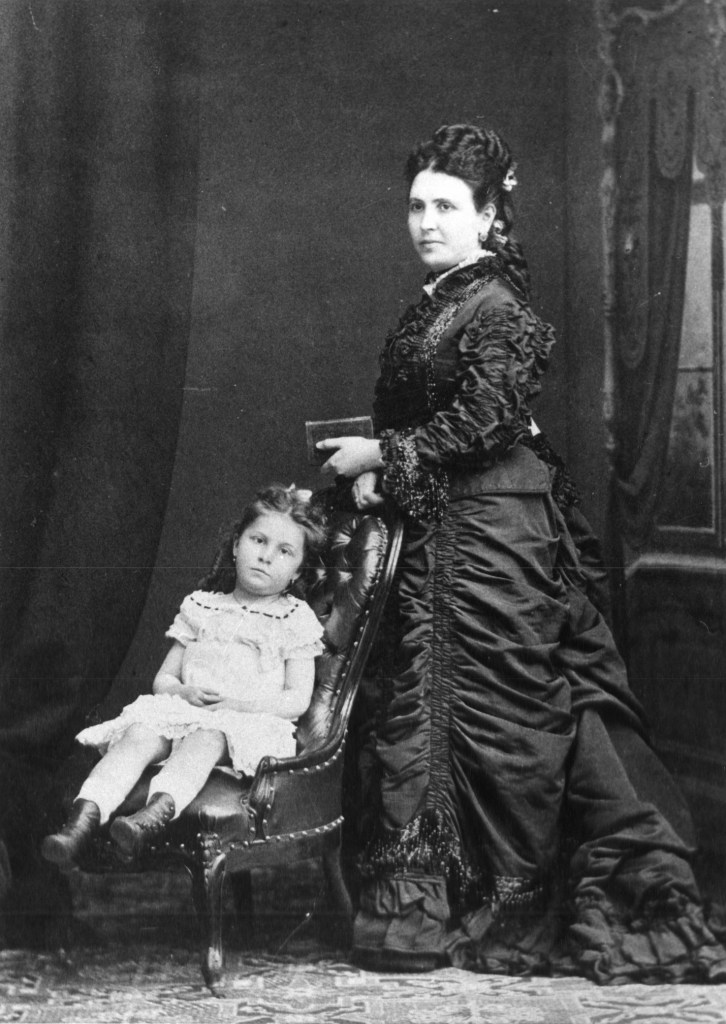
“Πώς λέγεις ότι δεν θα είσαι δια τα Χριστούγεννα μαζύ μας, είναι δυνατόν να μείνης περισσότερον των 6 ημερών εις Würzburg;”
“How can you say that you will not be with us for Christmas? Is it possible to stay longer than 6 days in Würzburg?” Sophia wrote him on December 11, 1877.
Photo: Sophia, pregnant with Agamemnon, with little Andromache in Paris, 1877. ASCSA Archives, Lynn and Gray Poole Papers.
David Traill considers that only a sociopath and egoist like Schliemann could leave his wife alone in a foreign country throughout her pregnancy (Traill 1986). Even Lynn and Gray Poole, authors of One Passion, Two Loves, who painted a very romantic picture of the relationship between Heinrich and Sophia, find Schliemann’s behavior inexplicable.
Sophia Reaches Her Limits!
Aside from Heinrich’s miserliness, another thorn in their relationship was his insistence on the curative properties of water, whether spas, cold baths or sea-bathing. He himself swam winter and summer. When in Athens he would go every morning on horseback down to Faliron. Even at Troy he never missed the chance of riding to the sea to bathe.
From 1880 the almost obligatory holidays would begin for Sophia and the children at some European spa in Germany or Austria. Schliemann was usually absent or would take the waters at some other nearby spa, as in the summer of 1883 when he was at Bad Wildungen in Germany while Sophia and the children went to Carlsbad and Franzenbad in Bohemia.
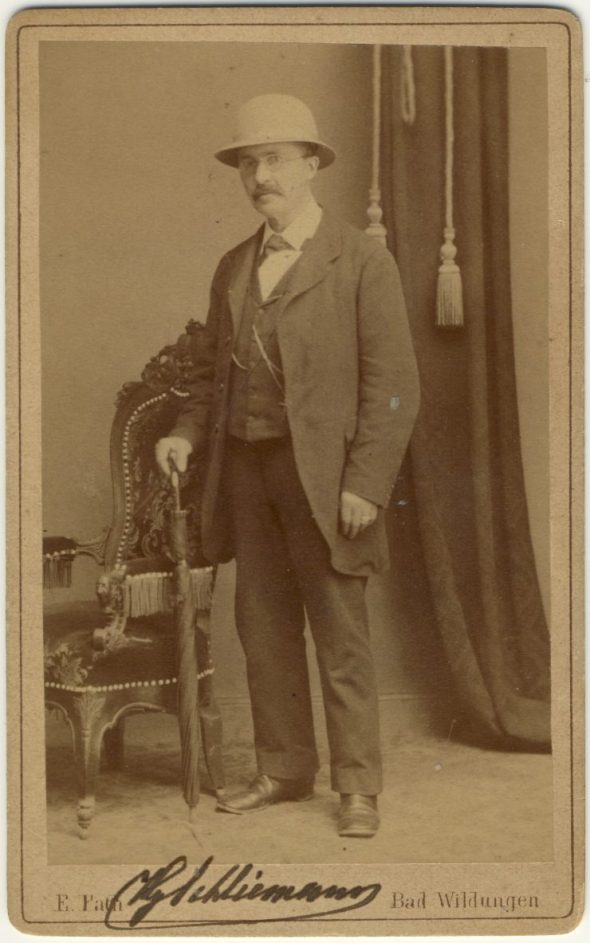
On August 22, 1883, Sophia wrote him from Franzenbad: ‘I have had enough of the baths…’ (‘Απηύδησα πλέον των λουτρών‘). Before that, she thanked him for the photograph he sent from Bad Wildungen, commenting humorously: ‘Your photograph […] is most expressive; I read my whole little Heinrich in it (‘αναγιγνώσκω μέσα εκεί όλον μου τον Ερρικάκη‘). Surely you thought of me at that very moment, for whenever you speak to me you wear that very expression.’ ASCSA Archives, Heinrich Schliemann Papers, Box 92, #703.
On July 29, 1883, with relations already strained after Schliemann had compelled Sophia and the children to spend several weeks with his family at Ankershagen, Sophia wrote to him from Carlsbad that the only way they could still find happiness was to live apart: ‘we must seek to be happy while living at a distance’ (‘πρέπει να ζητήσωμεν να γίνωμεν ευτυχείς μακράν όντες‘). And if she were ever to cease loving him, ‘you will weep greatly; no one will ever love you as I do -no one’ (‘μεγάλως θα κλαύσης, ουδείς αγαπήσει Σε ως εγώ ουδεμιά‘). She was also angered by Heinrich’s claims to others that she is supposedly ill.
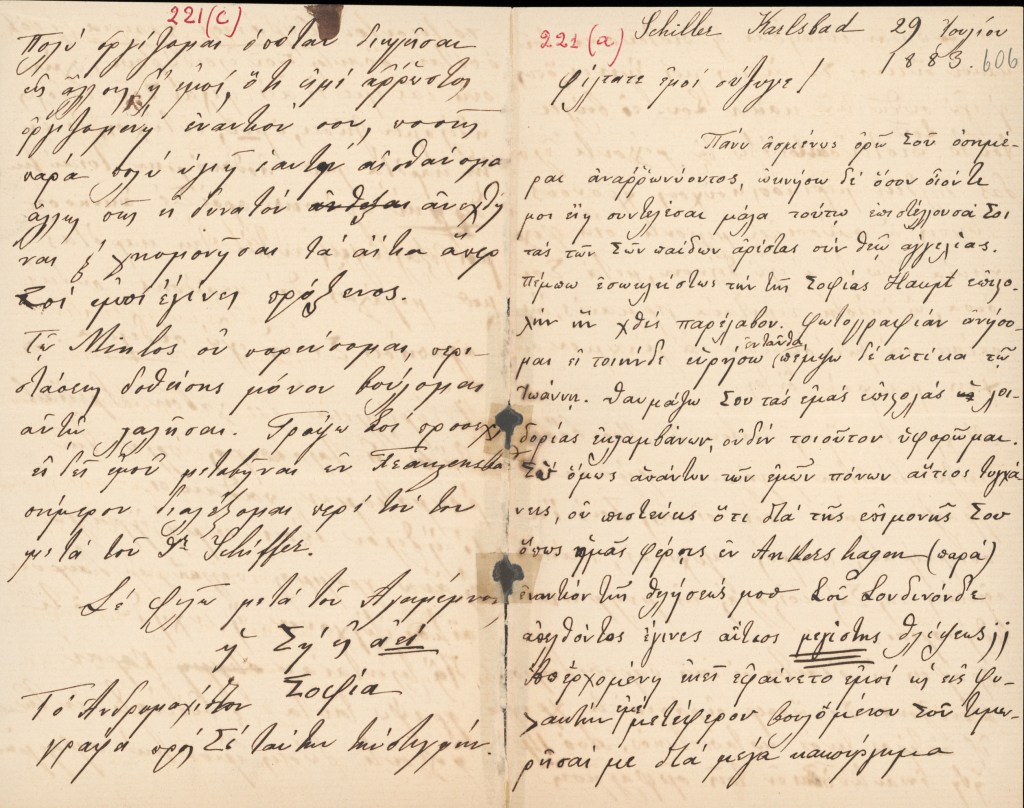
On the contrary, she felt she was in excellent health, too healthy, in fact, to keep tolerating and forgiving him:‘I feel myself far too healthy; otherwise, how could I endure and forget the causes for which you became the source of my sufferings?’
ASCSA Archives, Heinrich Schliemann Papers, Box 92, #606.
Sophia’s most significant revolt happened at the end of 1885, when Schliemann was on holiday in Cuba, and she took it upon herself to make the important decision to cut short Andromache’s studies at a Lausanne school for girls and return to Athens. Sophia disagreed with the progressive principles of the school. Deep down, it is possible that she could not stand the idea of yet another ‘banishment’ from her beloved Athens.
One year later, at the end of summer 1886, having once more endured a ‘banishment’ to European watering places far from the sea she adored, she decided, without his approval, to take the children and go to Ostend on the Belgian coast.
“My dear papa”
With Schliemann absent for long periods, Sophia had the primary role in the upbringing and supervision of their children. In the Heinrich Schliemann archive there are more letters from Andromache, who was the eldest, and fewer from the younger Agamemnon. Sophia always gave Heinrich news of the children, and sometimes made them add one or two lines to her own letters.
At the beginning of 1886, with his mother’s help, seven-year old Agamemnon (known as ‘papa’s child’ for he had taken after his father’s character), thanked his father, who was away on a trip to Cuba, for the rare stamps he sent, and expressed his regret that he was not yet old enough to travel with him. In the same envelope, Sophia enclosed another letter from little Memekos (his nickname) written in German so that Heinrich could witness his son’s progress.
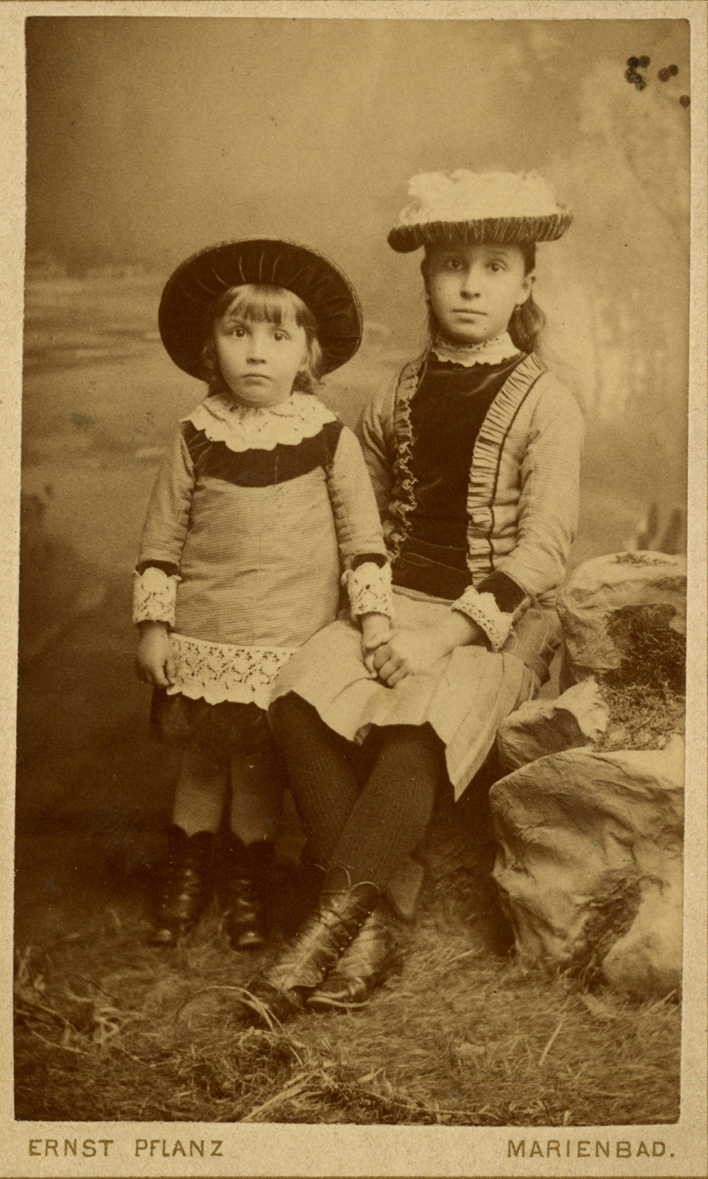
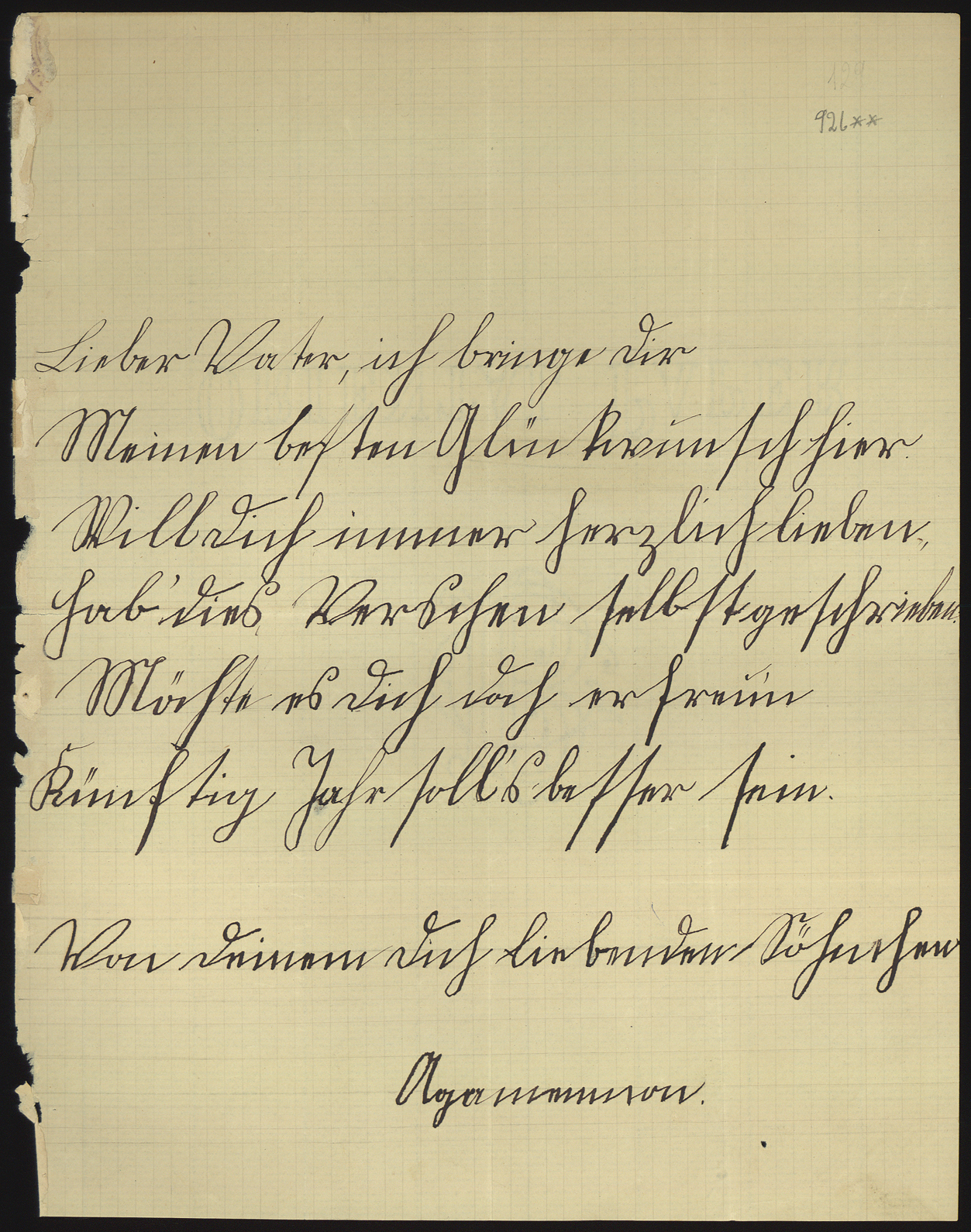
Agamemnon and Andromache, ca. 1883. Agamemnon’s German letter to his father, 1886 (ASCSA Archives, Heinrch Schliemann Papers, Box 97, #926d).
On December 8, 1886, writing from Cairo, Schliemann praised his daughter Andromache for her good English: ‘I had the very greatest pleasure in receiving your charming letter […], the more so as it is written in good English and shows that you have made great progress […]. In the same letter he informed her of the excavation of the Great Sphinx at Giza: The great sphinx is now being excavated, and its colored paws have already come to light […].’
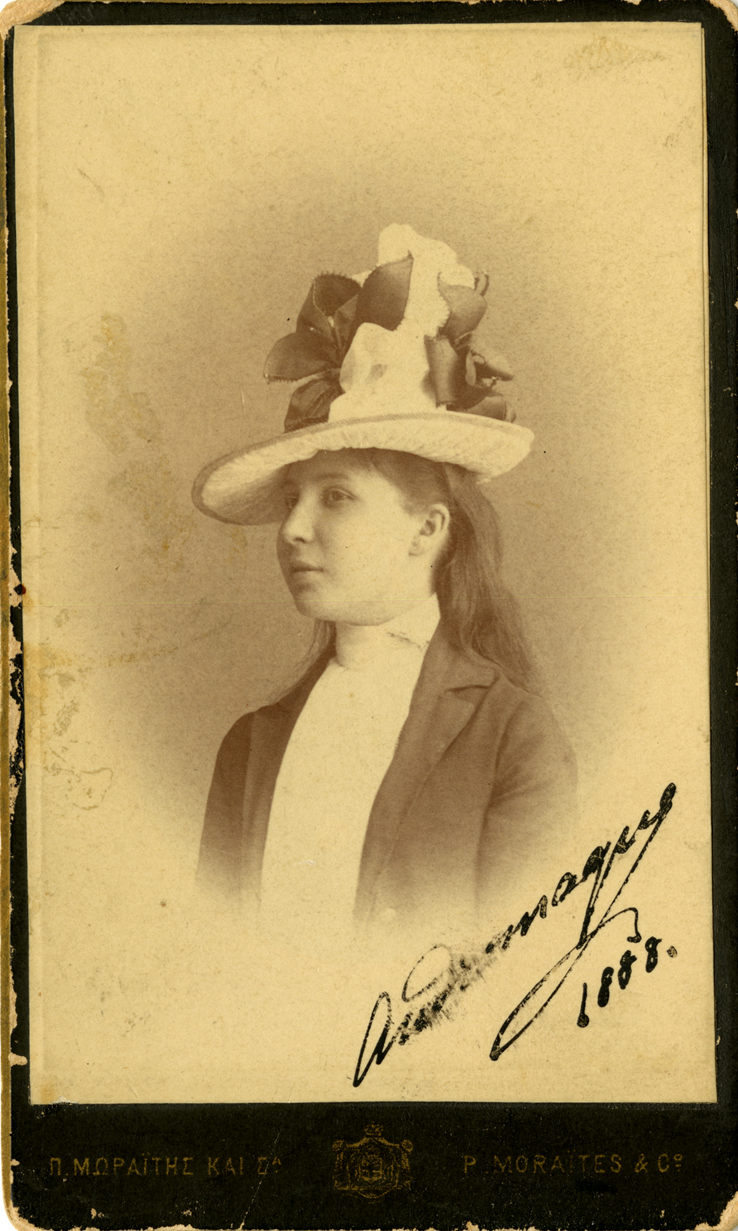
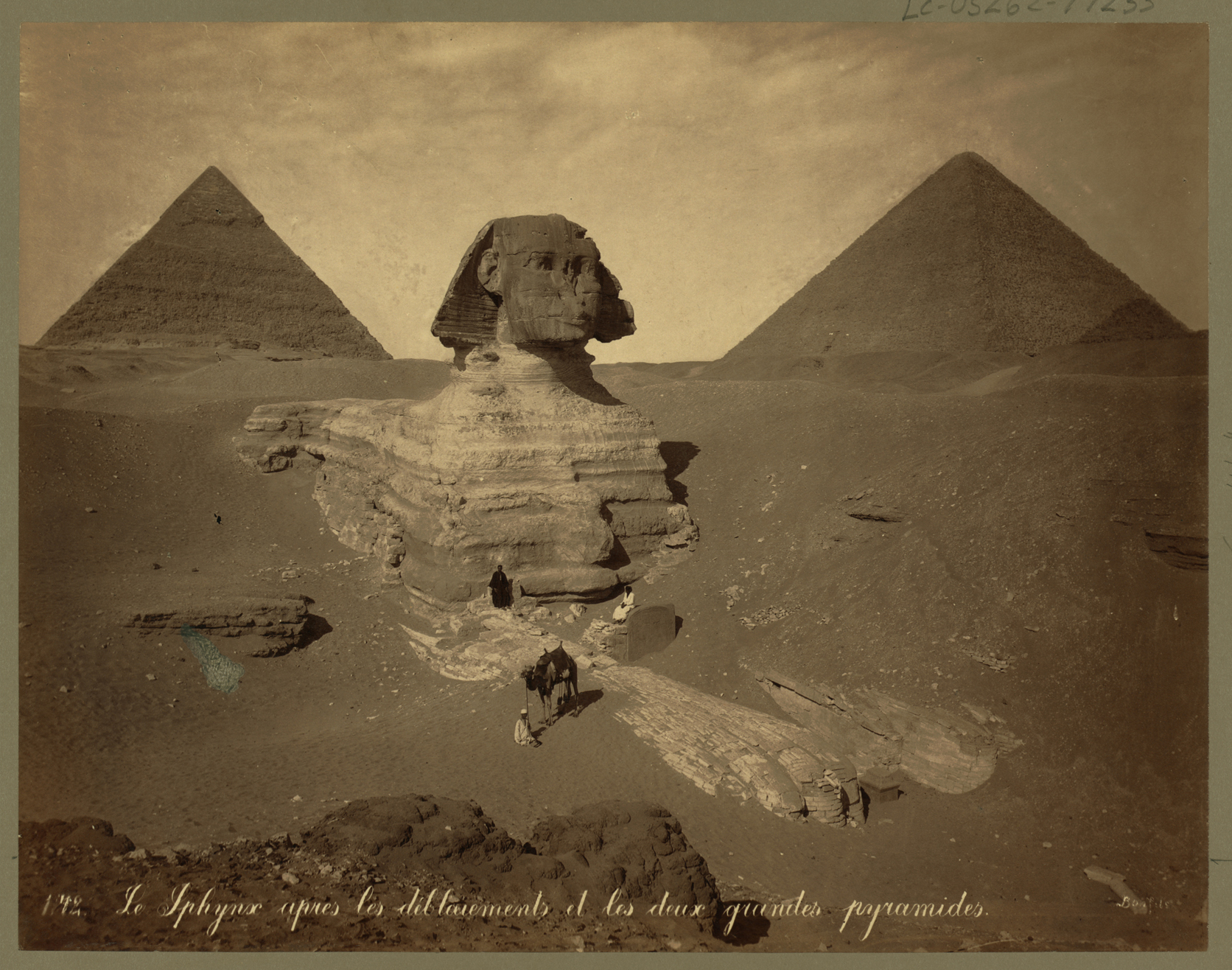
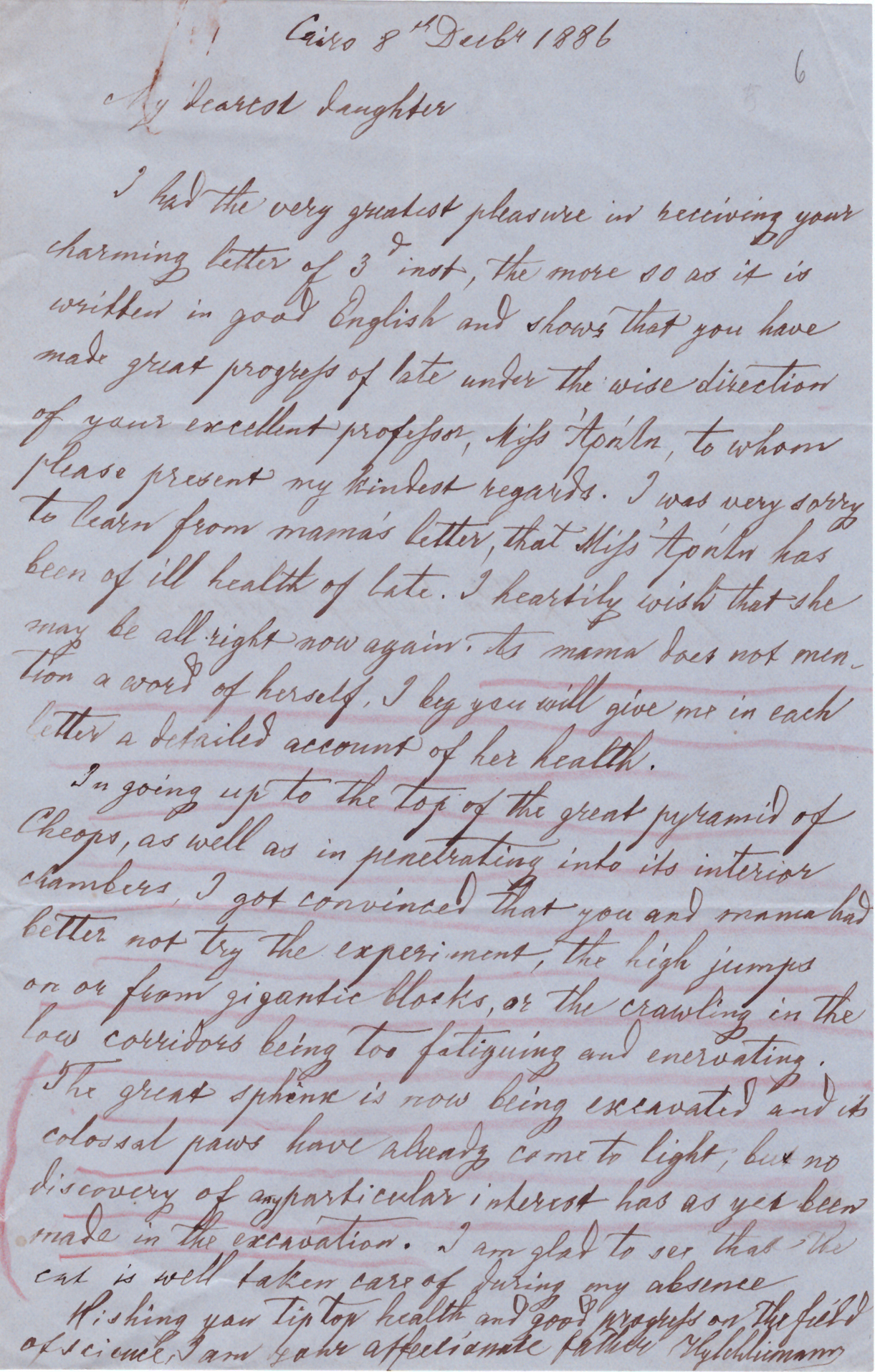
Andromache Schliemann, 1888; Schliemann witnessed the excavation of the Great Sphinx (Source: Bonfils Wikipedia Commons); Schliemann to his daughter, Dec. 8, 1886. ASCSA Archives, Heinrich Schliemann Papers
Schliemann also had three children from his first marriage with the Russian Ekaterina Lyschina: Sergei (1855-1939), Natalya (1858-1869) and Nadezhda (1861-1935). Schliemann was on his honeymoon with Sophia when he heard of the death of his daughter Natalya. In a letter to her father Sophia described that painful time: when the news arrived, ‘for three days he resembled a dead man’.
In the Heinrich Schliemann archive there are about 115 letters from Nadezhda and 411 from Sergei, which prove that Schliemann maintained close contact with the children of his first marriage. Since most of them, with very few exceptions, are written in Russian, we cannot reach a clear understanding of the relations between them. But it seems that Sophia had a good relationship with Heinrich’s children, at any rate with Sergei.
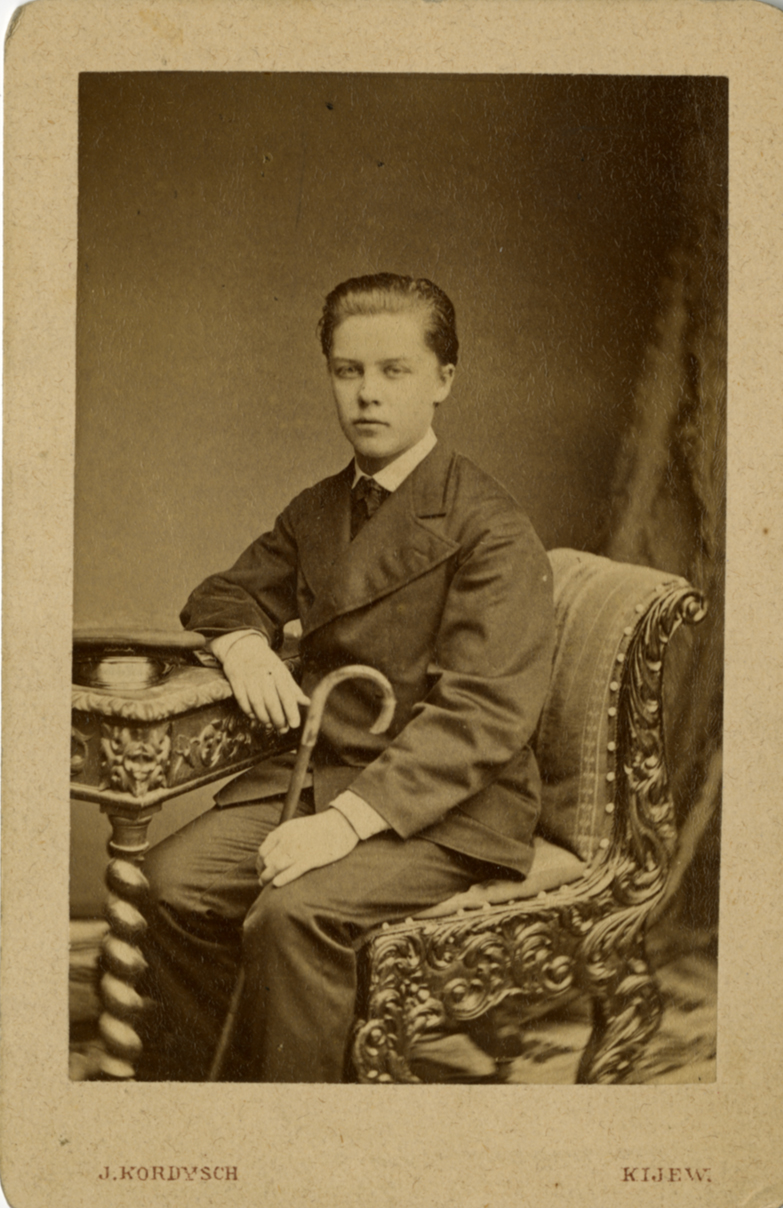
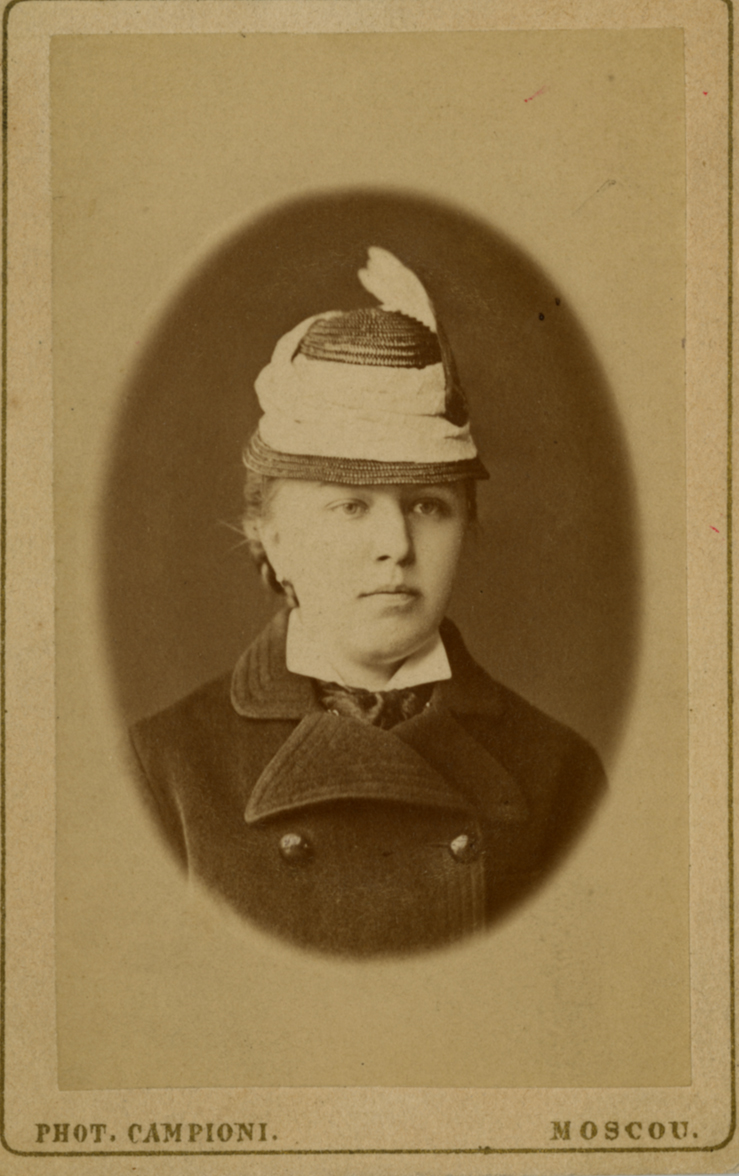
Sergei Schliemann, 1872; Nadezhda Schliemann, 1870s. Source: ASCSA Archives, Melas Family Papers.
“What God Has Joined Together”
The construction of the Iliou Melathron mansion took three years (1878-1880). It was Heinrich’s life’s dream, but not Sophia’s, who was emotionally attached to their first house in Mouson Street (Οδός Μουσών). The size and magnificence of the new house reminded her more of a museum than a home.
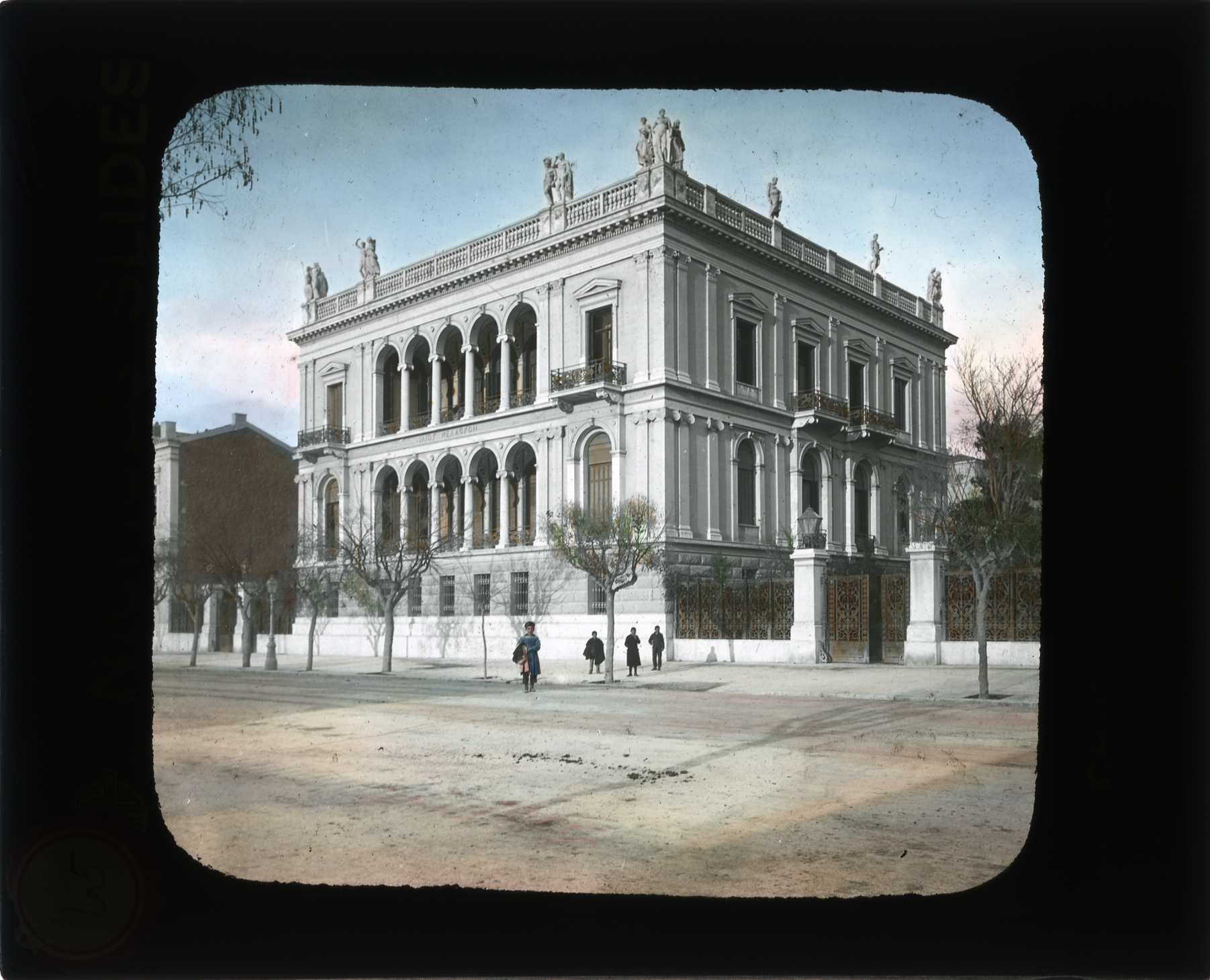
In an undated letter, likely written in 1879, while theIliou Melathron was still under construction, Heinrich wished that he and Sophia would celebrate there their silver and gold wedding anniversaries, ‘but also the weddings of our children, in health, in harmony, and in happiness’ (‘αλλά και τους των ημετέρων παίδων γάμους, υγιαίνοντες, ομοφρονούντες τε και ευδαίμονες’) [ASCSA Archives, Sophia Schliemann Papers #130].
On September 21, 1890, Schliemann celebrated their 21st wedding anniversary in Athens without Sophia and the children, whom he had sent to an Austrian spa. Alone and lost in thought, he reviewed the two decades of their married life, concluding that Sophia had been a beloved companion and partner, and a worthy mother:
‘[…] I see that the Fates have healed many of our wounds, but have also bestowed on us many joys; and as we tend to see the past through rose-colored spectacles, forgetting its sufferings and recalling only its moments of joy, I cannot praise our marriage sufficiently. For you have never ceased to be for me my beloved wife (άλοχος προσφιλής), a pure-minded companion (εταίρος αγαθός) and trustworthy guide in difficulties (κυβερνήτης εν ταις δυσκολίαις πιστός), as well as a gentle fellow-traveller and remarkable mother (συνέμπορος φιλόφρων και μήτηρ των ου τυχουσών)’ (ASCSA Archives, Heinrich Schliemann Papers, Copybook 43, 20).
Schliemann died of postoperative complications at Christmas in 1890 at Naples, on his way back to Greece. Only shortly before, he had sent two telegrams to Sophia, asking them to wait for him for the Holidays: ‘Come state? Arriverò sabbato mattina.’
After Heinrich’s death, Sophia lived in the Iliou Melathron until 1926, when she moved to Palaio Faliro. The Iliou Melathron was for many years a social and intellectual landmark of Athens, where Sophia and her daughter Andromache presided hospitably over Schliemann’s posthumous fame.
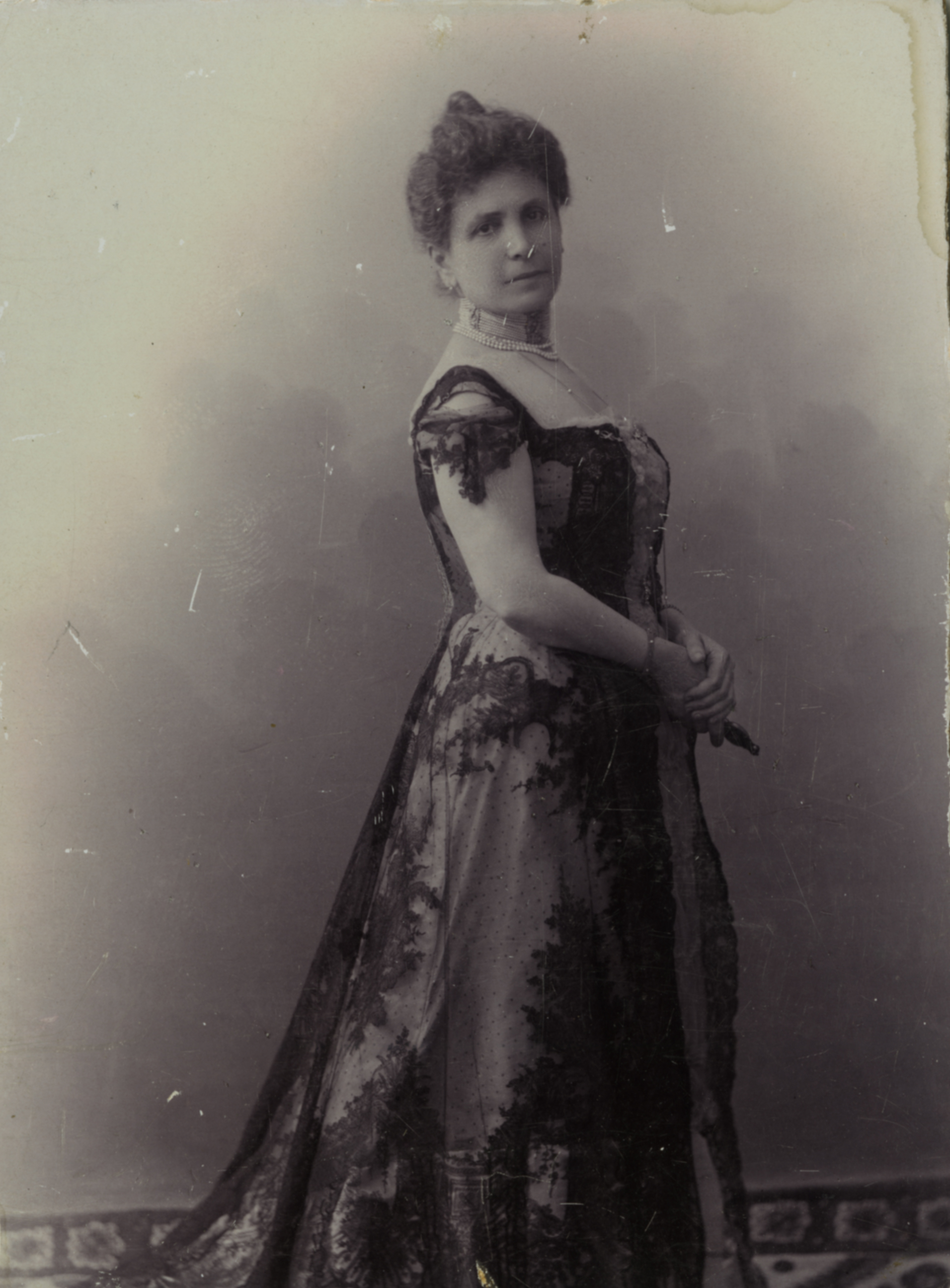
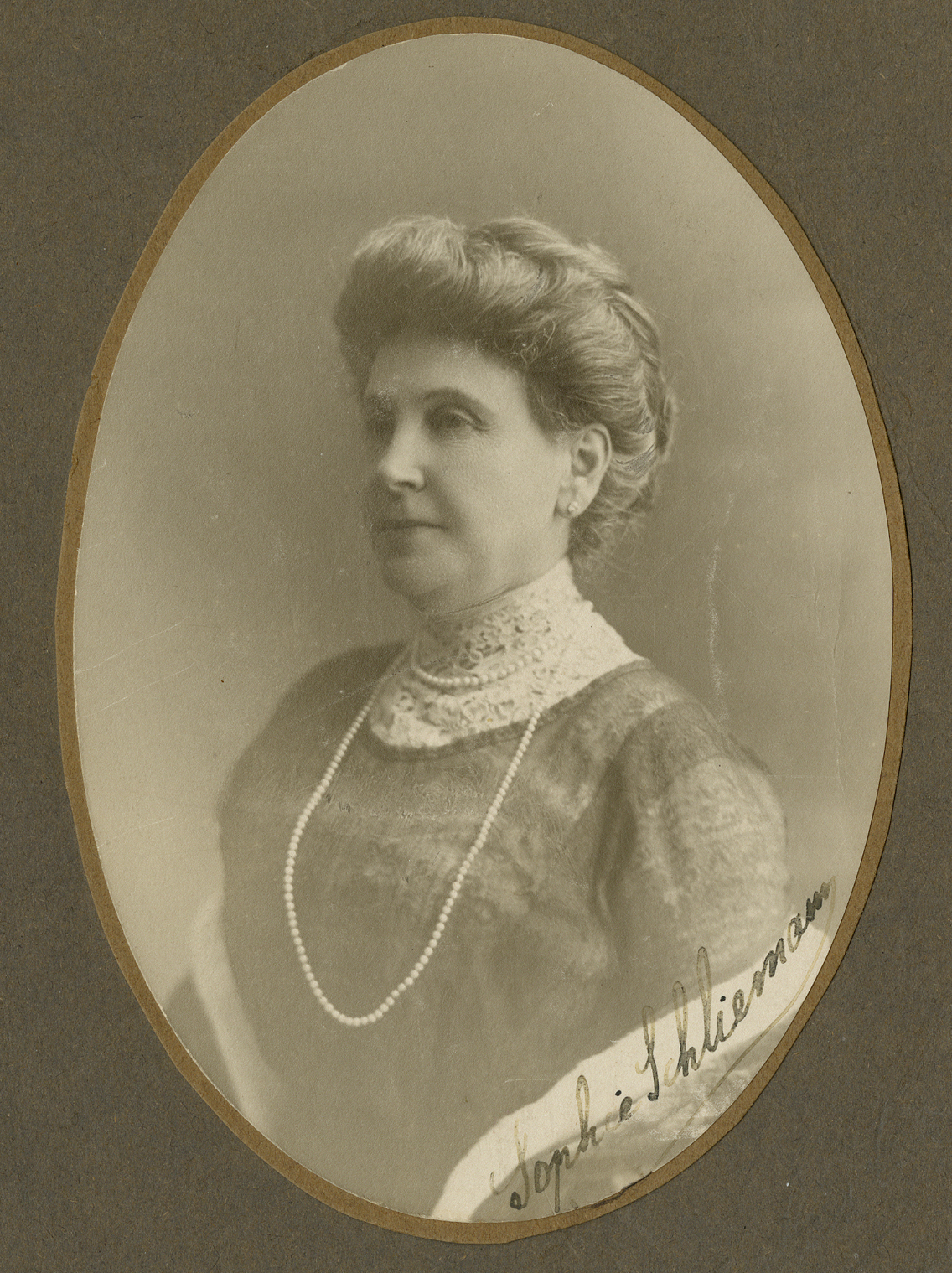
Sophia Schliemann, ca. 1880s, and at an older age.
References
Poole L. and G. 1967. One Passion, Two Loves: The Schliemanns of Troy, London.
Trail, D. A. 1986. “Schliemann’s Acquisition of the Helios Metope and his Psychopathic Tendencies,” Myth, Scandal, and History: The Heinrich Schliemann Controversy and a First Edition of the Mycenaean Diary, ed. W. M. Calder III and D. A. Traill, Detroit, 48-80.
Sophia and Heinrich Schliemann: An Unusual Relationship (Pt. I)
Posted: December 6, 2025 Filed under: Archaeology, Archival Research, Biography, History of Archaeology, Modern Greek History, Philhellenism, Women's Studies | Tags: daily-readings, ESPA 2021-2027, family, genealogy, Heinrich Schliemann, History, Ερρίκος Σλήμαν, Σοφία Σλήμαν, Sophia Schliemann, travel 9 CommentsIn 2024-2025 the American School of Classical Studies at Athens (ASCSA) implemented the project “Highlighting the Cultural Content of the American School of Classical Studies at Athens with the Help of Artificial Intelligence.” This initiative, within the framework of the Digital Transformation ESPA 2021–2027 Program of the European Union, included the digitization of roughly 80,000 documents from Heinrich Schliemann’s correspondence in the ASCSA Archives (now available online). The program also involved the creation of narrative digital exhibitions. Inspired by the correspondence between Heinrich and Sophia Schliemann, Natalia Vogeikoff-Brogan and Leda Costaki staged a bilingual digital exhibition titled Sophia and Heinrich Schliemann: An Unusual Relationship (Σοφία και Ερρίκος Σλήμαν: Μια ασυνήθιστη σχέση), a version of which is presented here in two parts to reach a wider audience.
Posted by Natalia Vogeikoff-Brogan and Leda Costaki, ca. 2,738 words, 14′ read time
Heinrich Schliemann (1822-1890) came to Greece in 1869, having sold his businesses in Russia and divorced his Russian wife. Schliemann was looking for a new partner to share his dream of excavating the Homeric acropolises of Troy and Mycenae, so as to prove that the Iliad was not a fairy-tale.
In September 1869 Heinrich married Sophia Engastromenou. He was 48 years old, and she was 18. Following an unsuccessful honeymoon, in the course of which the couple were on the verge of divorce, Schliemann left for Troy to start excavating. The couple did not separate, and in fact they became famous for their discoveries, remaining together till Heinrich’s death in 1890. In 1936 their children, Andromache and Agamemnon, donated their archive to the American School of Classical Studies at Athens.
The following story draws from a digital exhibition that the Archives of the American School of Classical Studies at Athens (ASCSA) prepared following the digitization of Schliemann’s correspondence funded by an European Union grant (ESPA 2021-2027) to the American School. The exhibition aimed at providing a visual record of the Schliemanns as a couple, using photographs and letters from the archive, and complementing the publications by Eleni Bobou-Protopapa, Sophia Engastromenou-Schliemann: Letters to Heinrich (2005) and Danae Κoulmasi, Schliemann and Sophia: A Love Story (2006).
An Arranged Marriage: Bride and Groom on the Verge of Divorce
On the 1st September 1869, Heinrich Schliemann, a wealthy German businessman, married Sophia Engastromenou in Athens. Heinrich was 48 and Sophia was 18. It was an arranged marriage, and a second marriage for Schliemann, who had just divorced his Russian wife of 20 years, Ekaterina Lyschina. Schliemann, having liquidated his business enterprises in Russia, was seeking a new way of life, in order to prove that the Homeric cities of Troy and Mycenae were real and not mythical. The choice of a Greek wife was part of this ‘dream’. The couple signed a pre-nuptial agreement to the effect that during Heinrich’s lifetime Sophia would have no claim on his fortune.
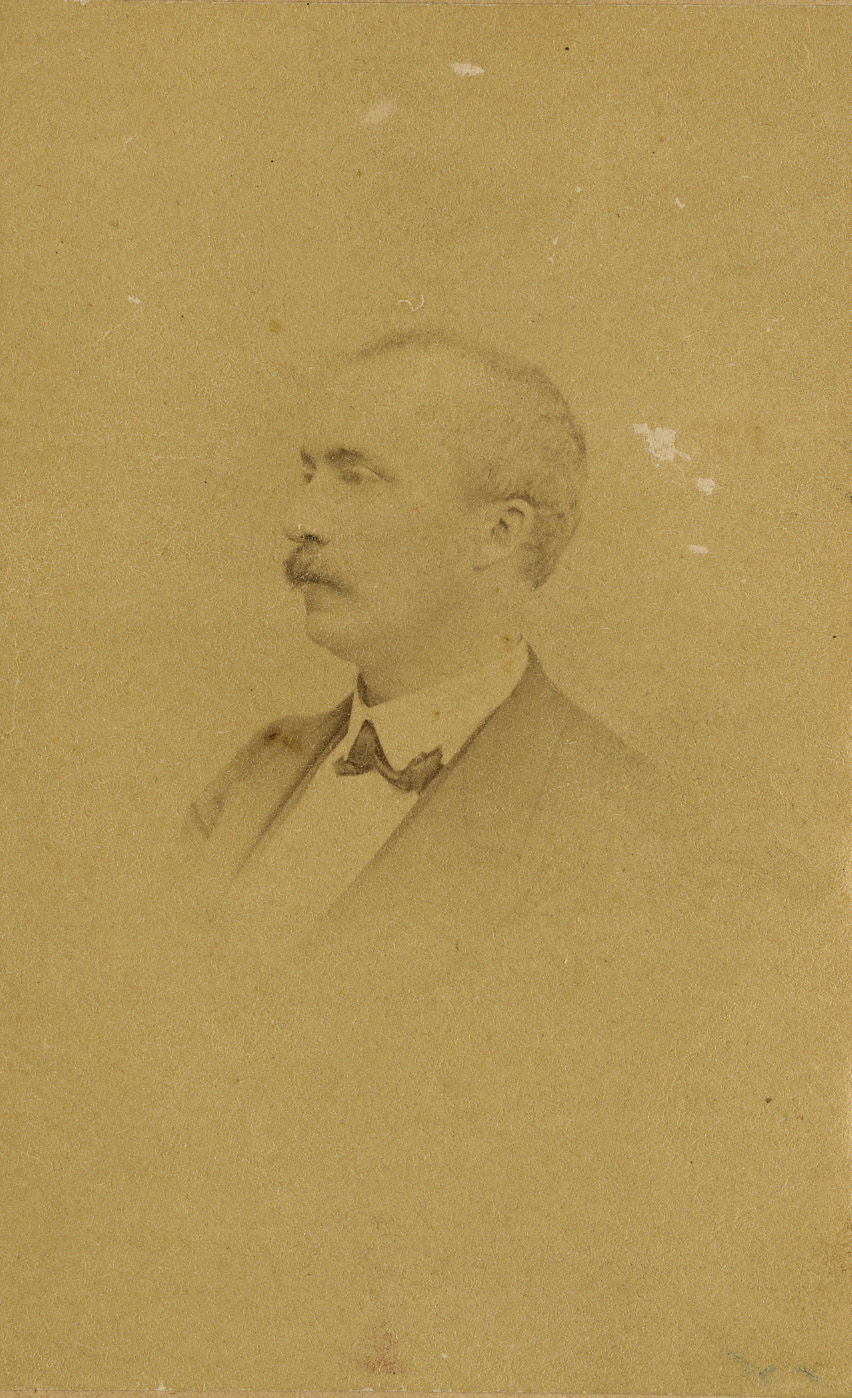
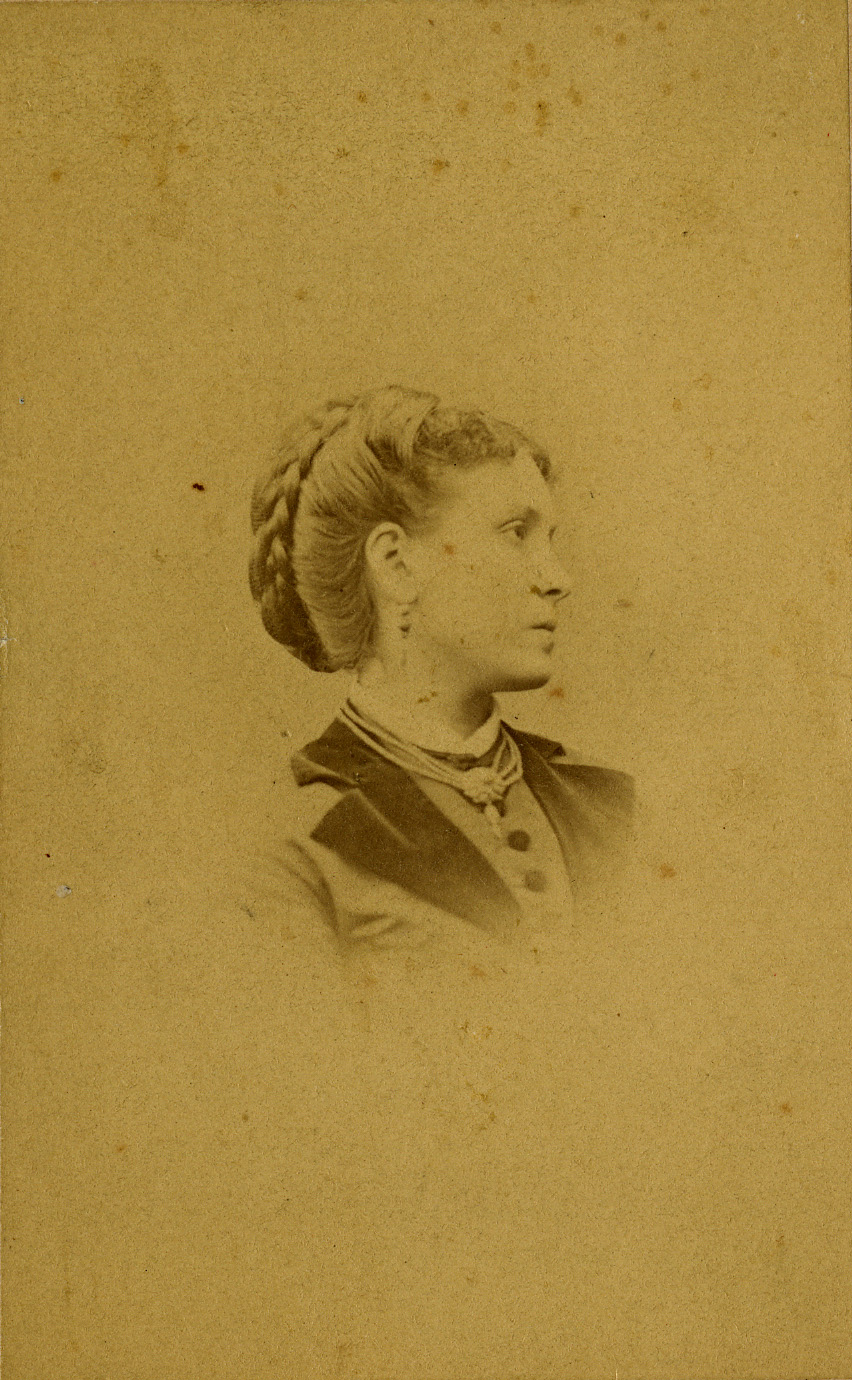
After an extended and disastrous honeymoon in Europe, during which Heinrich tried unsuccessfully to present the inexperienced Sophia to Parisian high society, the couple returned to Athens on the 19th February 1870, ready to divorce. Sophia’s letters to her family from Paris make reference to the couple’s busy social life, but reading between the lines it is clear that on the one hand Sophia was unable to respond to her husband’s excessive demands, and on the other that she was bitterly homesick for Greece and her family. On arriving in Greece, Heinrich was confronted by Sophia’s mother and elder brother, who accused him of not having presented his wife with a single jewel of any value.
Dreading the scandal of a divorce, and with Schliemann having already left for Troy for preliminary trial digs, Sophia’s family moderated their combative stance. Since the Ottoman authorities had not granted him formal permission to excavate Troy, Heinrich soon returned to Greece.
In the belief that his young wife was ill, he took her on another journey to Europe, to the Schweizermühle sanatorium in Germany. There Sophia was diagnosed with ‘hysteria,’ a favorite medical diagnosis at the time for women who had difficulty adjusting to the demands of married life.
The couple returned to Athens on the 2nd June 1870, and Schliemann was due to embark for France the next day. In a letter that he gave Sophia when they landed, but which he had written on board, he represented himself as the victim of the marriage and Sophia as the bad wife, a victim of her family’s decisions. However, what we glean from a reading of the letter is that Heinrich felt uncomfortable in the face of the unexpected disobedience and the emergent powerful personality of his young wife.
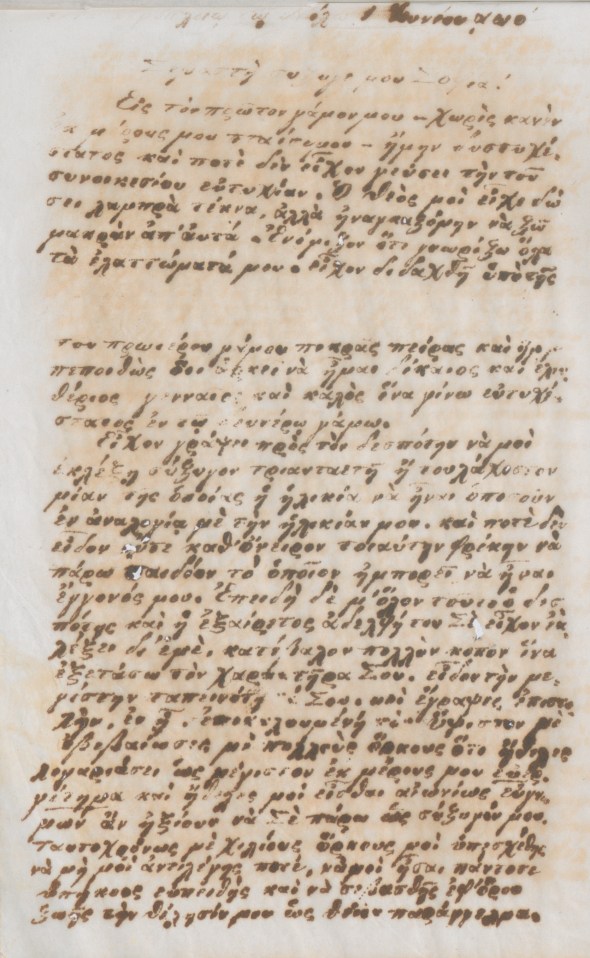
According to the letter Heinrich handed to Sophia as soon as they returned to Athens, Sophia had vowed to him before their marriage that she would always be grateful (αιωνίως ευγνώμων), and she promised με χιλίους όρκους (swearing a thousand oaths) that she would never contradict him (να μη μοι αντιλέγης ποτέ) and that she would always be obedient and respect his will forever […].
ASCSA Archives, Heinrich Schliemann Papers, Copybook BBB 29.
Medical Advice
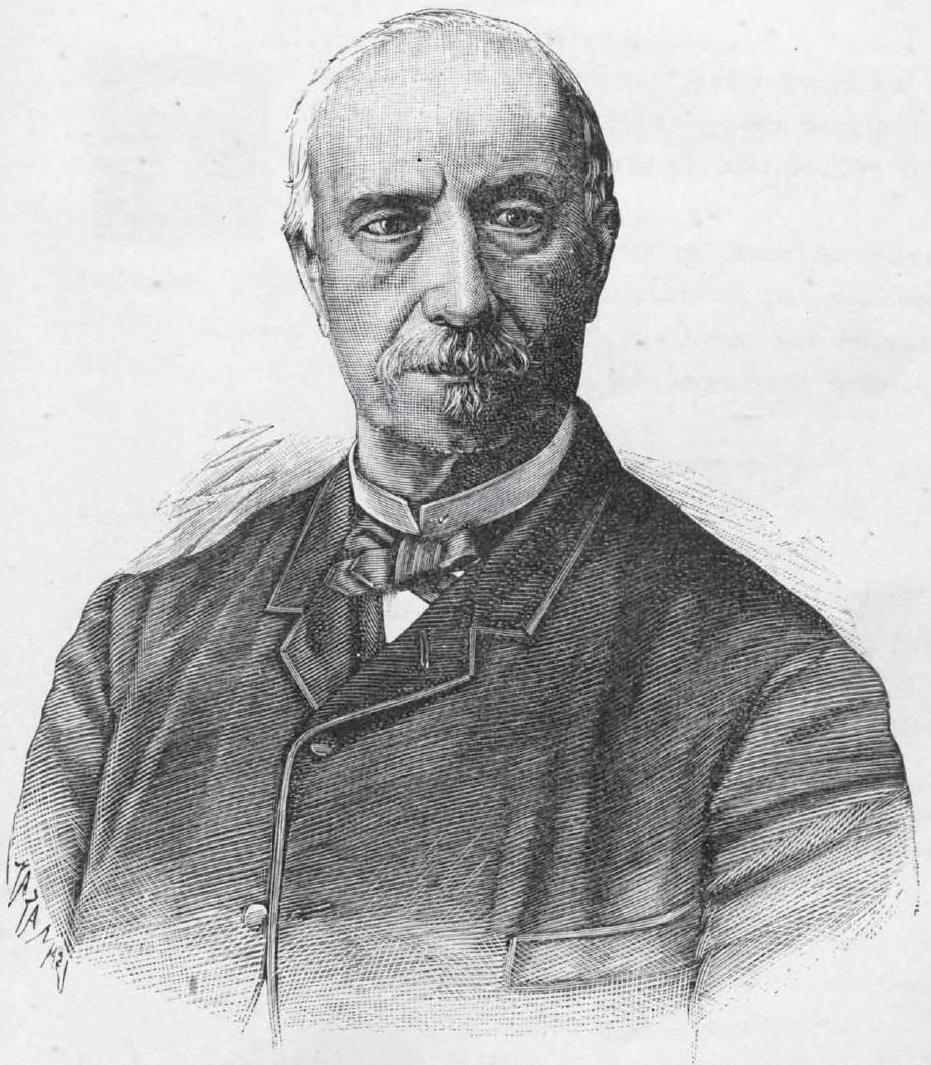
Doctor Miltiadis Venizelos (1822-1887), who was the same age as Schliemann and in charge of the mentally and physically distraught Sophia, in two letters written on the 22nd and 23rd June 1870, tried to persuade Schliemann to abandon the idea of divorce. For one thing, a second divorce would irrevocably blight his reputation, and for another he was in large part responsible for the situation, as he should have foreseen that marriage to such a young girl would not be easy (‘την διαφοράν ταύτη ώφειλες Συ να προΐδης’). Thus, it was not Sophia alone who was to blame, and who according to Venizelos was a woman ‘with a good heart, a healthy mind and a high spirit.’ Contrary to the diagnosis of the German doctor at the Schweizermühle sanatorium, the Greek physician did not attribute Sophia’s behavior to hysteria. Schliemann should show greater patience and try harder to make Sophia happy, the implication being that many problems would be solved if she got pregnant.
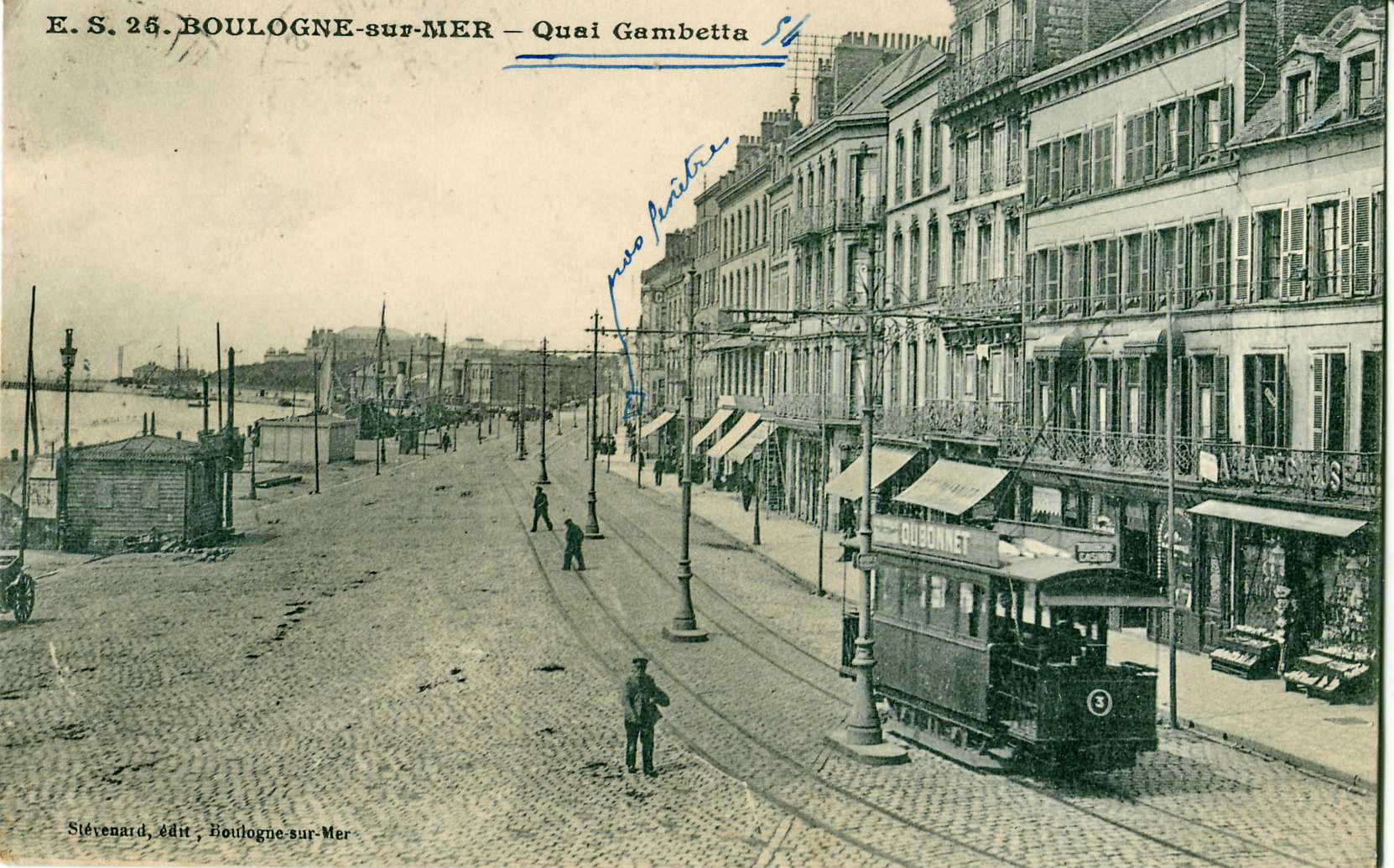
Schliemann followed the Greek doctor’s advice, with positive results. Koulmasi (2006, 64-65) believes that the change in Schliemann’s behavior had another more fundamental cause. Schliemann ‘wanted to keep the dream alive… he still saw Sophia as an inalienable part of his life and work.’ In July 1870 Heinrich and Sophia went to Paris and thence to the north coast of France, where they spent August in Boulogne-sur-Mer, and Sophia relaxed beside the sea she adored. During the months that followed, Schliemann, who was again away on his business travels, was transformed into an affectionate husband, sending her loving letters with words of advice and caution: Sophia was pregnant.
Nine months later, on the 25th April 1871, their first child Andromache was born. Heinrich and Sophia would find refuge in peaceful Boulogne-sur-Mer many times in the course of their twenty years of marriage. In the summer of 1877, the successful appearance of the Schliemann couple at the Royal Institute of Archaeology in London was followed by six weeks of holiday at Boulogne-sur-Mer. A few months later, on the 16th March 1878, Sophia gave birth to their second child, Agamemnon.
Ερρικάκι and Σοφιάκιον
Sophia and Heinrich exchanged hundreds of letters in the course of their twenty-one years of marriage, far more than most couples at the time. Heinrich’s frequent and lengthy absences from the family hearth, whether for excavations or for other reasons, and the obligatory summer breaks for Sophia, usually without Heinrich, in various European watering places, were the main reasons for such frequent correspondence.
Most of Sophia’s letters to Heinrich have been published by Eleni Bobou-Protopappa (2005). Heinrich’s letters to Sophia have not been published separately. Koulmasi in her book (2006) quotes extracts from his letters, but as they are not referenced it is very difficult to locate them in the archive.
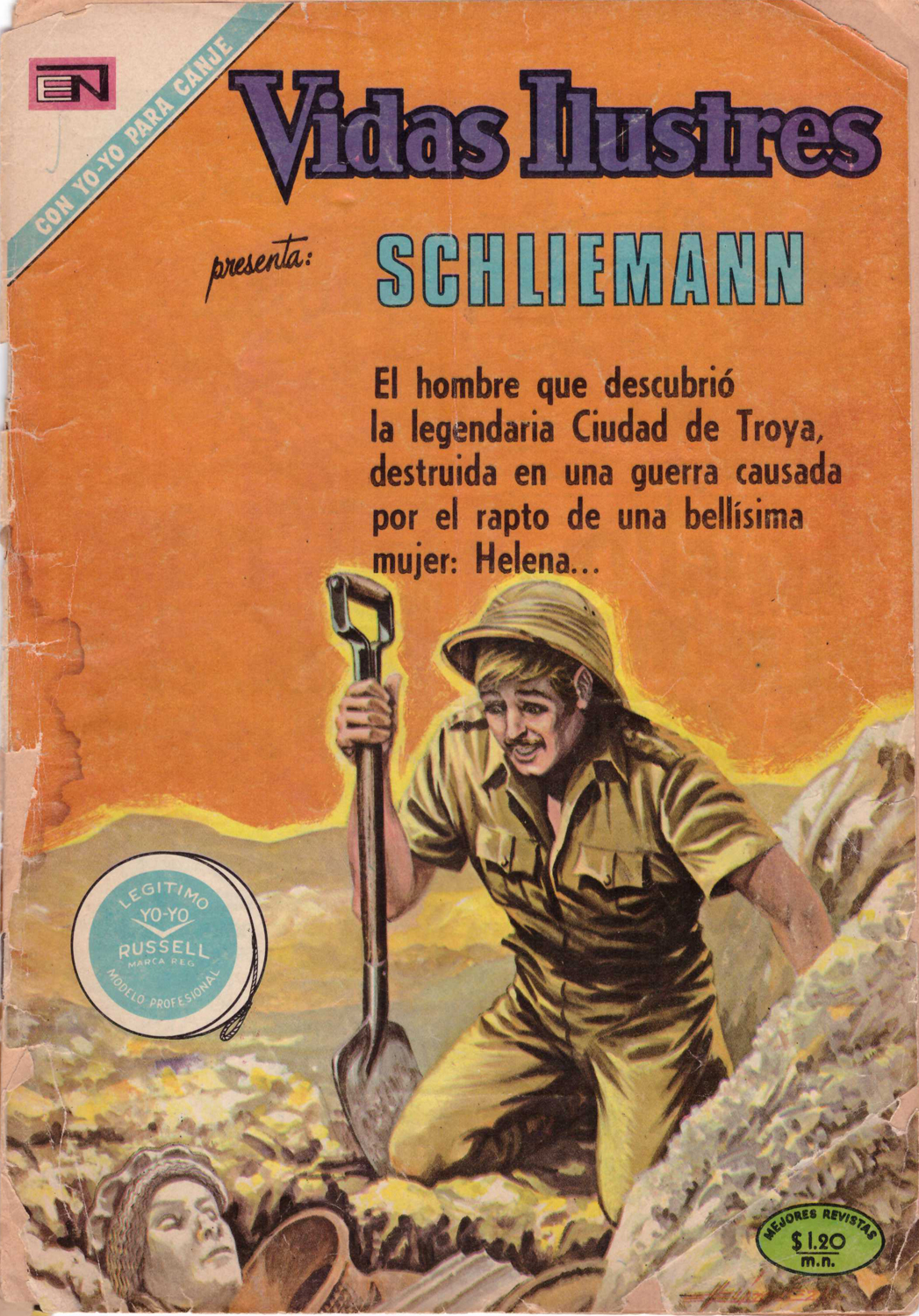
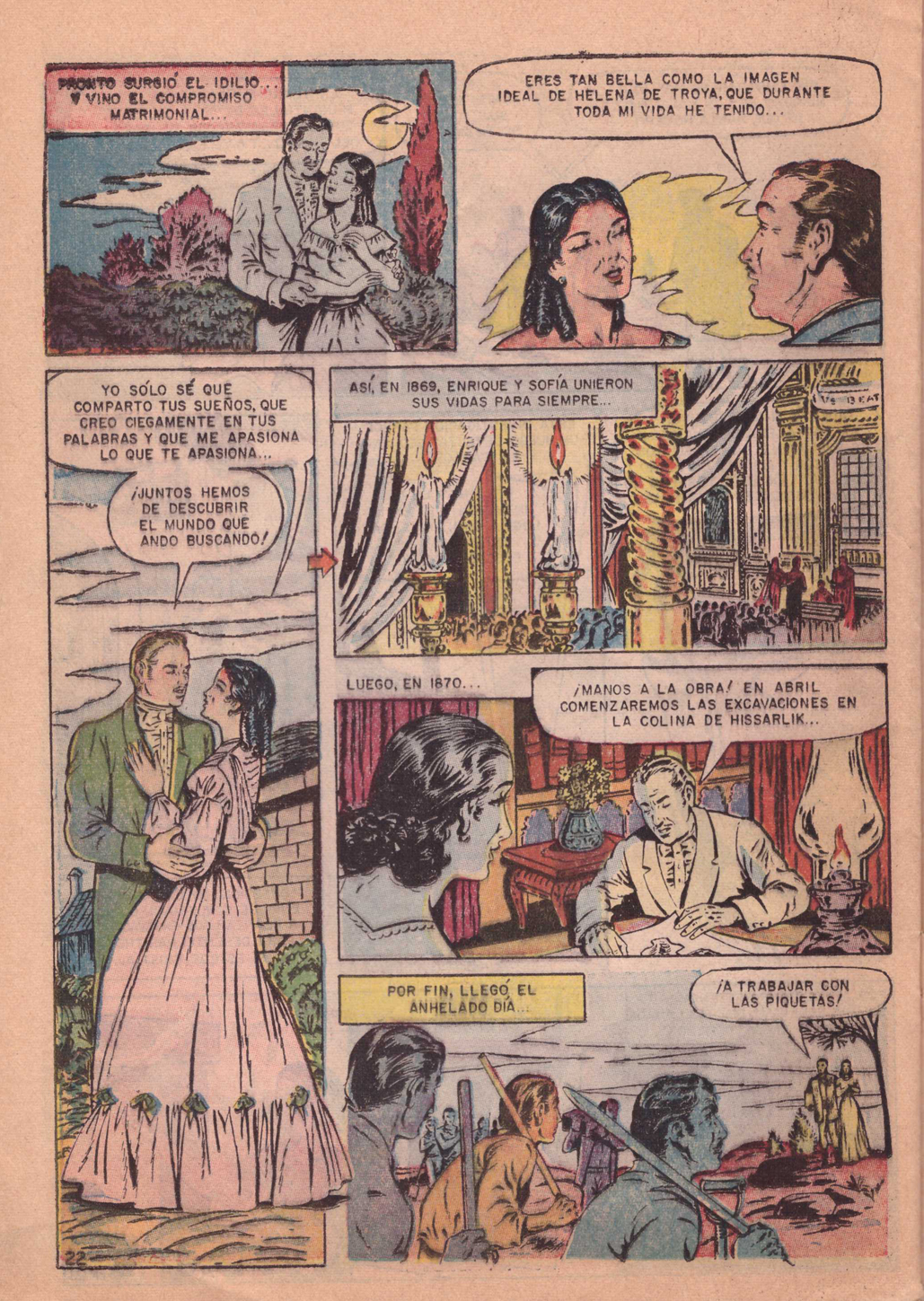
Popularized version of the lives of Heinrich and Sophia, in comic-book form (Spanish), February 17, 1971. ASCSA Archives, Curtis Runnels Papers.
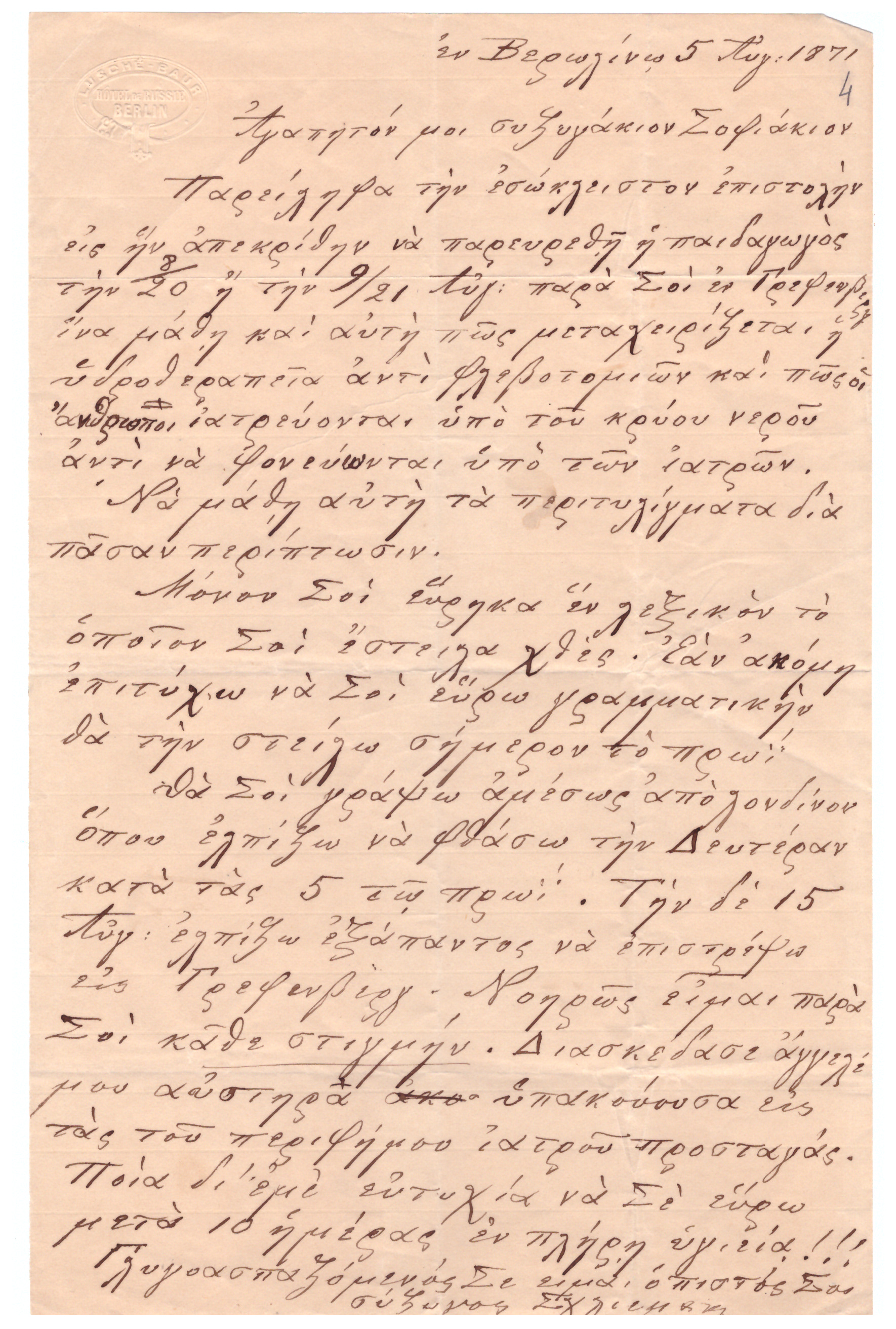
After the turmoil of their first months of marriage, their trip to Boulogne-sur-Mer in August 1870, Sophia’s pregnancy and the birth of Andromache in April 1871, we observe a striking improvement in the couple’s relationship. In the Sophia Schliemann archive are preserved ten letters from Heinrich, sent during a 6-month period between August and December 1871. In one of his letters from this period he addresses her ‘Αγαπητόν μοι συζυγάκιον Σοφάκιον’ (‘my dear little wife, little Sophia’ – our [unfair] translation).
Sophia is a little more conventional in her expressions: ‘My dear and much-loved husband’ (Ακριβέ και περιπόθητέ μου σύζυγε) on the 25th April 1872, the day of Andromache’s first birthday when Schliemann was away at Troy, and also ‘My dear husband Errikaki’ (Αγαπητέ μοι σύζυγε Ερρικάκι) [28th September 1875], ‘My beloved Errikaki’ (Φίλτατέ μοι Ερρικάκι) [4th October 1875], a time when their relations were again strained. She usually ends her letters either with her name and surname, or ‘with love from Your faithful wife Sophia’ or ‘The children and I embrace You’ (18th July 1883).
Koulmasi lays special emphasis on the couple’s private life, and despite the difference in age and the prudishness surrounding sexuality in the 19th century, it would seem that there was a strong sexual bond between them. Although there are hints of this here and there in their letters, most of the information comes from the correspondence between Heinrich and the doctor/anthropologist Rudolf Virchow (1821-1902), a contemporary of Schliemann and a family friend. Both Sophia and Heinrich turned to him for advice when they encountered problems in their relationship (Koulmasi 2006, 224-228). On April 3, 1880, Schliemann confided to Virchow that he experienced problems of periodic impotence (especially when he was devoted to the study and publication of his excavations) which caused strain in the couple’s relationship. In response to Virchow’s earlier advice that Schliemann and Sophia should not sleep together for a while, Schliemann replied that this was impossible with a Greek wife, who, in order to sleep, always lay down in her husband’s arms.
‘I am endeavoring to make Sophia an archaeologist’
If there was one thing that Schliemann wanted more than Sophia, it was her active participation in his excavations. This was quite unusual at a time when the roles of the spouses were distinct and married women were not involved in their husbands’ professional life. Sophia refused to accompany Schliemann in the autumn of 1871 for his first official digs at Troy, with the excuse that Andromache was too little to be left in the care of others. Schliemann did not write to her for a while, and when he decided to reply (in French, not in Greek) he reminded her of how hurt he was by her refusal to go with him to Troy.
After the 1871 excavations, Schliemann returned to Troy in April 1872. By late May, Sophia had gone to join him, leaving one-year-old Andromache with her parents. At first, Schliemann set her to oversee two workers, but later he placed her in charge of an excavation trench. It is clear he wanted Sophia with him at the dig and not in some subsidiary role in the house at the site. He not only relied on her to write his Greek reports about the excavation but had no hesitation in giving her credit for them.
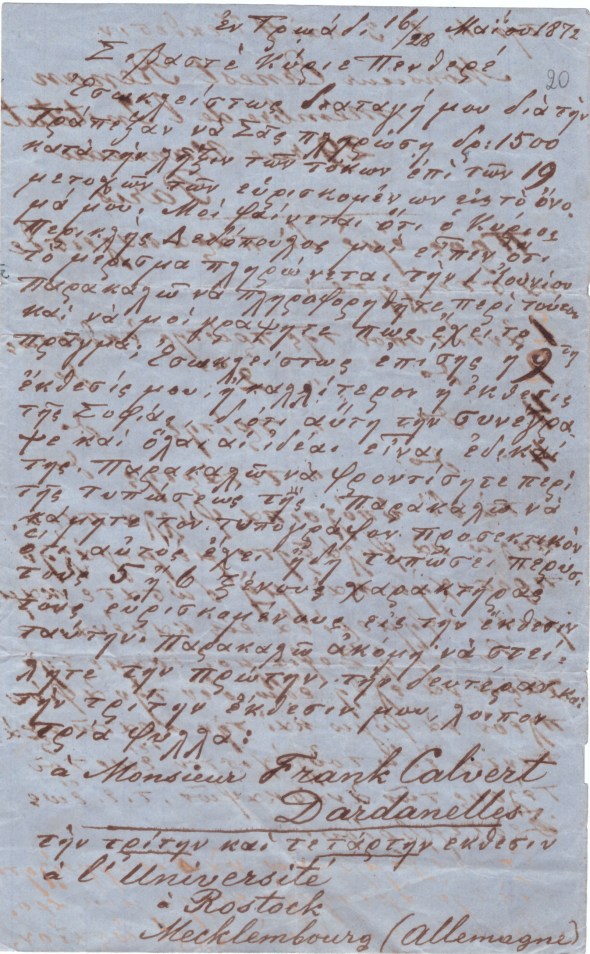
In a letter that Schliemann sent to his father-in-law on May 16/28, 1872, he praised Sophia for the composition of the 9th Troy report which would be printed in the Greek newspapers: ‘Find enclosed my 9th report, or better Sophia’s report, since she wrote it and all the ideas are hers (και όλαι αι ιδέαι είναι εδικαί της).’
The excavations at Troy were continued in February 1873, with cold and bad weather. Sophia traveled to Troy in April, intending to stay with him for the duration of the dig. This time he put her in charge of the excavations at Pasha Tepe (Koulmasi 2006, 129), but the news of her father’s death obliged her to leave Troy at the beginning of May. At the end of May, Schliemann discovered the Treasure of Priam. He did not share what was possibly the most important moment of his life with Sophia, even though in his books he asserted that she was with him at the discovery. Much ink has been spilled by researchers in their attempt to explain why Schliemann pretended that Sophia was present when the Treasure was discovered. The most likely answer is in a letter he sent to the Director of the British Museum, Charles Newton, on the 27th December 1873 (the letter is in the Museum Archives and was published by Lesley Fitton).
On acc[oun]t of her father’s sudden death Mrs Schliemann left me in the beginning of May. The treasure was found end of May; but since I am endeavouring to make an archaeologist of her, I wrote in my book that she had been present and assisted me in taking out the treasure. I merely did so to stimulate and encourage her, for she has great capacities. So f[or] i[nstance] she has learned Italian here in less than two months (Fitton 2012).
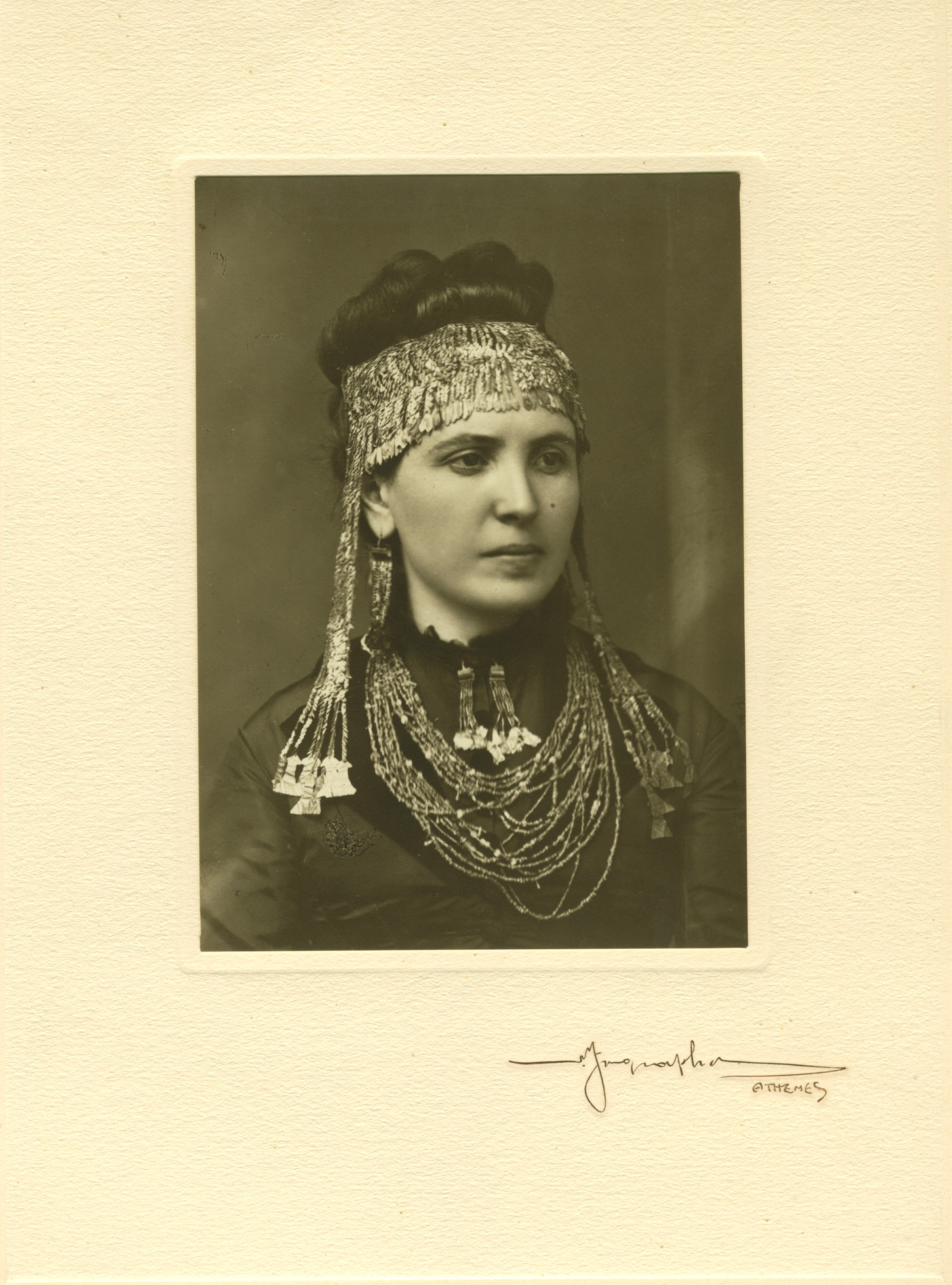
On the hard cover of the diary of the excavations at Troy for the year 1873, Schliemann wrote ‘Henry und Sophia’, even though she was only with him at the dig for a few days that year. Sophia never refuted Schliemann, even after his death. In fact, sometime between 1873 and 1877 Sophia posed for a photograph as Helen of Troy, wearing part of the so-called Treasure of Priam. She would be identified by this image not just during her lifetime but after it (Stager 2022). It is the most used photograph on the covers of books dealing with Heinrich Schliemann and the excavations at Troy.
Insofar as she was able, particularly before the birth of their second child in 1878, Sophia accompanied Heinrich to the excavations and actively participated in the laborious everyday life of the site. It should be noted (and has gone relatively unremarked by the researchers) that Sophia suffered many miscarriages during her life. At Mycenae she was with him at the discovery of the intact shaft graves of Grave Circle A in 1876. Once again, Schliemann drew attention to her presence, showing her participation in the excavation.
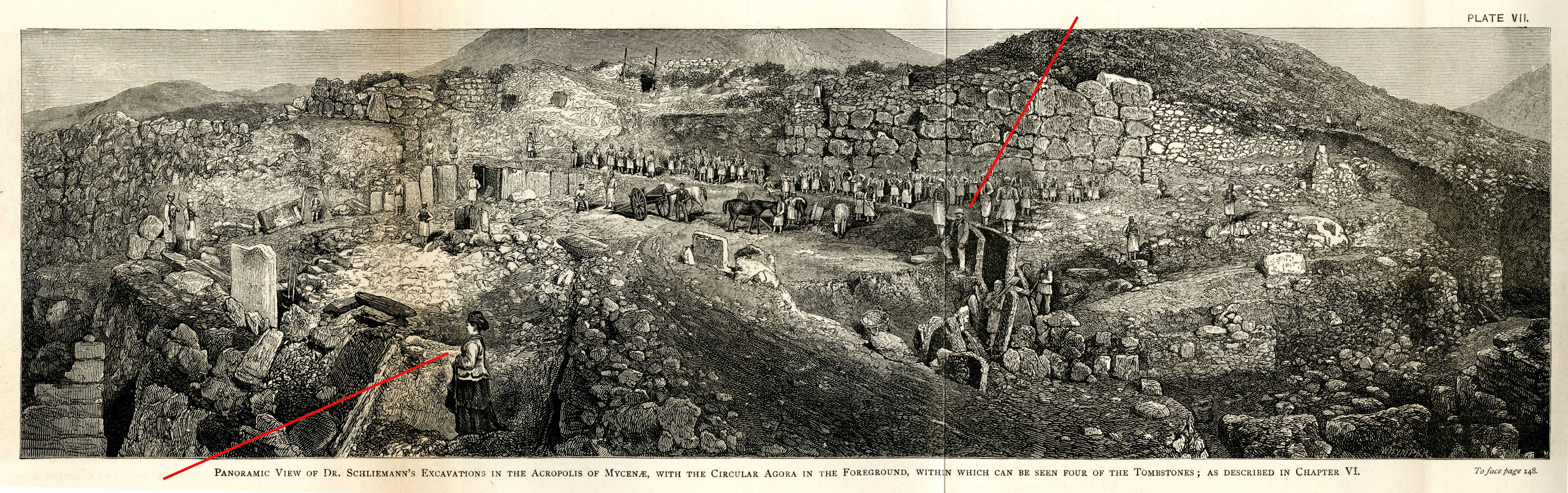
On the other hand, he chose to downplay the role of the archaeologist Panayotis Stamatakis who had been sent by the Archaeological Society to oversee the excavations at Mycenae. We learn from Stamatakis’s diaries (Vasilikou 2011) that in some cases Sophia conducted herself with a regal haughtiness that astounded Stamatakis, who wrote in a letter to Stephanos Koumanoudis, secretary to the Archaeological Society:
My relations with Mr Sch. remain broken off, and we communicate through the overseers. His lady has returned here from Athens, but it would be better if she had not come. For she has been the cause of everything and I much fear the same will happen again (Vasilikou 2011, 203).
TO BE CONTINUED
REFERENCES
Bobou-Protopappa, E. 2005. Sophia Engastromenou-Schliemann: Letters to Heinrich, Athens.
Fitton, L. 2012. “‘The help of my dear wife’: Sophia Schliemann and the discovery of Priam’s Treasure” in Archaeology and Heinrich Schliemann. A Century after his Death. Αssessments and Prospects. Myth – History – Science, ed. G. S. Korres, Ν. Karadimas & G. Flouda, Athens, 421-424. https://www.aegeussociety.org/images/uploads/publications/schliemann/Schliemann_2012_421-424_Fitton.pdf
Koulmasi, D. 2006. Σλήμαν & Σοφία: Μια ιστορία αγάπης, Athens.
Stager, J. 2022. “Sophia’s Double: Photography, Archaeology, and Modern Greece,” Classical Reception Journal 20, 1-42.
Vasilikou, Ν. 2011. Το χρονικό της ανασκαφής των Μυκηνών 1870-1878, Athens.
At Home with the Schliemanns: The “Iliou Melathron” as a Social Landmark
Posted: January 6, 2022 Filed under: Archaeology, Archival Research, Arts and Crafts Movement, Biography, History of Archaeology, Modern Greek History, Philhellenism, Women's Studies | Tags: Charles Wesley Bradley, Ernst Ziller, Heinrich Schliemann, Iliou Melathron, Sophia Schliemann 8 CommentsHeinrich Schliemann, the famous excavator of Troy, Mycenae, and other Homeric sites, was born in Germany on January 6, 1822–the Epiphany for western Europe and Christmas Day for other countries such as Imperial Russia and Greece which still used the Old (Julian) Calendar until the early 20th century. A compulsive traveler, Schliemann rarely returned to Athens before late December or early January, just in time to celebrate both his birthday and Christmas on January 6th.
From today and throughout 2022, many institutions in Europe, especially in Germany but also in Greece, will be commemorating the bicentennial anniversary of his birth. The Museum of Prehistory and Early History of the National Museums in Berlin is preparing a major exhibition titled Schliemann’s Worlds, which is scheduled to open in April 2022. Major German newspapers and TV channels are in the process of producing (or have already produced) lengthy articles and documentaries about Schliemann and his excavations at Troy in anticipation of the bicentennial anniversary, and Antike Welt has published a separate issue, edited by Leoni Hellmayr, with eleven essays about various aspects of Schliemann’s adventurous life.
The American School of Classical Studies at Athens, where Heinrich’s and Sophia’s papers have been housed since 1936, in addition to contributing to all the activities described above, will be launching an online exhibition, The Stuff of Legend: Heinrich Schliemann’s Life and Work, on February 3, 2022, showcasing material from the rich Schliemann archive.

Schliemann’s Culinary Adventures in Italy
Posted: March 3, 2019 Filed under: Archaeology, Archival Research, Biography, Book Reviews, Food and Travel, History of Archaeology | Tags: Caffè Greco, Heinrich Schliemann, Italian food, Massimo Cultraro, Umberto Pappalardo 4 Comments
Heinrich Schliemann, a man of the world, ca. 1870. ASCSA Archives, Heinrich Schliemann Papers.
A day does not go by in the Archives of the American School of Classical Studies at Athens (ASCSA) without an inquiry about the Heinrich Schliemann Papers. More than one third of the collection has been digitized and made available for research online; still, these inquiries keep coming from all over the world, including destinations as remote as Japan and Cuba. Though unquestionably a legendary figure, Schliemann’s popularity is largely due to the richness of his personal archive, which remains an inexhaustible source of information for a wide range of audiences: historians, archaeologists, fiction and non-fiction writers, even film producers. (I have written about Schliemann before [Schliemann of Troy: The Story of a Linguistic Genius] and have hosted two posts by Curtis Runnels [Who Went to Schliemann’s Wedding? and, “All Americans Must Be Trojans at Heart”: A Volunteer at Assos in 1881 Meets Heinrich Schliemann], the author of The Archaeology of Heinrich Schliemann: An Annotated Bibliographic Handlist [2007].)
To the rich list of books and articles that have been written about Schliemann I would like to add the recent publications by Umberto Pappalardo, who has been studying Schliemann’s activities in Napoli and on the island of Motya, and Massimo Cultraro’s new book with the sibylline title L’ ultimo sogno dello scopritore di Troia: Heinrich Schliemann e l’ Italia (1858-1890). Before them, in 2012, Elizabeth Shepherd published a comprehensive article about Schliemann’s wanderings in Italy in the fall/winter of 1875, especially his interest in the site of Populonia. Schliemann travelled to Italy seven times, first as a tourist (1858), and later, especially after the discovery of Troy (1871-1873), as a celebrity and potential excavator. He even drew his last breath in the streets of Naples one morning in December 1890. Yet, until recently, Schliemann’s Italian days remained understudied. Read the rest of this entry »
Who Went to Schliemann’s Wedding?
Posted: November 1, 2016 Filed under: Archaeology, Archival Research, Biography, History of Archaeology, Intellectual HIstory, Philhellenism | Tags: Heinrich Schliemann, Robert Porter Keep, Samuel Darwin Wilcox, William J. Stillman 7 CommentsPosted by Curtis Runnels
Curtis Runnels, Professor of Archaeology at Boston University, here contributes to From the Archivist’s Notebook a story about the accidental discovery of an original letter by Heinrich Schliemann at an Antiquarian Book Fair in Boston. The letter was found inside an old Greek-English lexicon that Runnels bought for his book collection. In addition to doing fieldwork and publishing extensively on Palaeolithic archaeology in Greece, Runnels is also the author of The Archaeology of Heinrich Schliemann: An Annotated Bibliographic Handlist (Archaeological Institute of America; available also as an ebook from Virgo Books).
Experienced booksellers and collectors always look through old books that come into their possession to see what might have been left between the pages. Some people make collections of their finds, which range from the curious to the valuable. It can be an exciting business: almost anything may turn up in a book, from gold coins and paper money to love letters and flowers—even a strip of bacon (cooked or uncooked, one wonders). It was a matter of habit, therefore, that induced me to leaf through an old Greek-English lexicon that I purchased last November at the Boston International Antiquarian Book Fair. Of all the finds I have made in old books, this was perhaps the best: a letter written by Heinrich Schliemann. It was tucked inside the first volume of A Lexicon of Modern Greek-English and English-Modern Greek by N. Contopoulos, which was published in two volumes in 1867 [volume 1] and 1869 [volume 2] in Smyrna by B. Tatikidou (vol. 1) or B. Tatikianou (vol. 2). Read the rest of this entry »

 From the Archivist's Notebook