Letters From a New Home: Early 20th Century Athens Through the Eyes of Zillah Dinsmoor
Posted: February 1, 2014 Filed under: Archaeology, Archival Research, History of Archaeology, Modern Greek History | Tags: American School of Classical Studies at Athens, William Bell Dinsmoor, Zillah Pierce Dinsmoor 4 CommentsJacquelyn H. Clements here contributes to the Archivist’s Notebook a fun essay about living in Greece in the early 1910s. She draws her inspiration from the letters that a young bride, Zillah Pierce Dinsmoor, sent from Athens to her mother in America. Jacquelyn, who is completing her doctoral thesis in Classical Archaeology at Johns Hopkins University, is also an aspiring photographer. She would like to live in Greece in the future and model herself after Alison Frantz, the well-known American archaeologist and photographer. You can look at Jacquelyn’s photography at: http://www.jacquelynclements.com
Students and scholars who study at the American School of Classical Studies at Athens (ASCSA) have often been accompanied by their spouses, significant others, and children who live with them here in Athens. In the early 20th century, Zillah Pierce Dinsmoor was one of these women who traveled to Athens along with her husband, architect William Bell Dinsmoor. During her time abroad, Zillah wrote frequent letters to her mother, Emma E. Pierce, back home in Massachusetts. Zillah’s correspondence from a foreign land provides a unique picture of life in Athens in the early 20th century, and a life at the American School that bears many resemblances, as well as striking differences, to our life here today.

Zillah Pierce Dinsmoor on the balcony of the Director’s House at ASCSA, ca. 1910 (Dinsmoor Family Papers, ASCSA Archives). Click to enlarge
In my Regular year at the ASCSA (2010-2011), I began volunteering in the School’s Archives along with fellow students William Bruce and Katie Lamberto. Our task was to undertake the tedious project of transcribing Zillah’s letters, and like any major archival project, it was faced with some trepidation, at least on my part. Her letters fill five boxes with multiple folders apiece, comprising hundreds of crumbling papers written in florid handwriting, sometimes encircling the borders of the pages when she ran out of room. In two years of transcribing Zillah’s letters, I’ve managed to read about seventy. Her musings are filled with detailed descriptions of daily life in Athens with “Billy,” (as she refers to her husband William) and their travels, both within Greece and also to England, France, and trans-Atlantic voyages. On occasion, I have been treated to photographs, placards, and small sketches as well, in addition to the occasional caret of commentary by Billy, his streamlined penmanship contrasting sharply to Zillah’s flowing cursive. Read the rest of this entry »
“An Odd Christmas” or the “Christmasless Year of 1923” in Greece
Posted: December 25, 2013 Filed under: Archaeology, Modern Greek History | Tags: Carl W. Blegen, Christmas 1923, Julian Calendar 5 CommentsThe story that follows was written by the American archaeologist Carl W. Blegen (1887-1971) at an unknown time, most likely to be read at the Literary Club of Cincinnati. It was recently re-discovered by Professor Jack L. Davis of the University of Cincinnati among the papers of Blegen’s close friend and co-digger at Pylos, Marion Rawson. In his own phlegmatic style, Blegen narrates a major change that took place in Greece exactly ninety years ago: the country’s switch from the Julian to the Gregorian calendar. I thank Jack for sharing Blegen’s manuscript with me.
1923 was a difficult year in the political history of Greece. In the aftermath of the Asia Minor Disaster in the late summer of 1922, Greece witnessed the influx of more than a million refugees, the abdication of King Constantine, and the establishment of a revolutionary regime by colonels Nikolaos Plastiras and Stylianos Gonatas in September of 1922. On November 28, 1922, six politicians including two former prime ministers were executed at Goudi, an act that shocked Europe and America. Blegen had known some of them personally. In July 1923, the Lausanne Treaty delimited the borders of Turkey, Greece and Bulgaria, and by the end of the year, the revolutionary regime of Plastiras and Gonatas was finally able to restore some semblance of political order and lead the country to elections.
1923 was also a tumultuous year in Blegen’s personal life. In January he was engaged to Elizabeth Denny Pierce, who broke the engagement (and his heart) a few months later. That summer and fall found Blegen somewhat disillusioned as he tried to win Elizabeth back, which he eventually did, albeit under certain conditions that would irrevocably alter the course of his life.
“An Odd Christmas” by Carl W. Blegen
“In spite of a reputation for violence, disorder and general lawlessness, the people of the Balkan countries have always been with relatively few exceptions a quiet, respectable, and until recently, a highly conservative folk. Most of them were content to accept what was handed down to them by their fathers, and on the whole they have held soberly and tenaciously to their own local traditions. Especially in matters concerning their religious faith and in the relations between church and State they have stood firmly against the encroachments of the modern age and have usually resisted the introduction of any change. This attitude has been particularly well illustrated in their retention of the old calendar, which to westerners long constituted a chronic and perennial source of difficulty and confusion. For the Eastern Orthodox Church continued stubbornly to adhere to the Julian system through many centuries after the Catholic Church and west European nations had adopted the Gregorian modification. Read the rest of this entry »
An Archival Paradox, the Expédition de Morée, and a Mysterious Love Affair
Posted: December 1, 2013 Filed under: Archaeology, History, Modern Greek History, Philhellenism | Tags: Antoine-Charles-Félix Hecquet, Edgar Quinet, Expédition Scientifique de Morée, Gennadius Library, Helléniade, Jacques-Louis Lacour, Lettres de Laetitia et de Ludovic, Marceline Desbordes-Valmore, Miichelle Cheyne, Navarino, Nicolas Joseph Maison, Peloponnese, Pierre Peytier, Prosper Baccuet, Pyracmond ou Les Créoles, René Taillandier 4 CommentsJack L. Davis, Carl W. Blegen Professor of Greek Archaeology at the University of Cincinnati and former director of the American School of Classical Studies at Athens (2007-2012), here contributes to the Archivist’s Notebook an essay about literary activities of members of the Expédition de Morée and his recent discovery of an unknown epistolary novel by Jacques-Louis Lacour.
In 1984, in the years of the Nemea Valley Archaeological Project, a friend gave me Kyriakos Simopoulos’s monumental Ξένοι ταξιδιώτες στην Ελλάδα as a birthday present. It is a work extensively based on research conducted in the Gennadius Library. Later I discovered Simopoulos’s equally impressive Πώς είδαν οι ξένοι το ’21. The final chapter of Πώς είδαν was for me an invaluable introduction to the greatest military and scientific mission ever dispatched to Greece by a western European power: the Expédition de Morée.
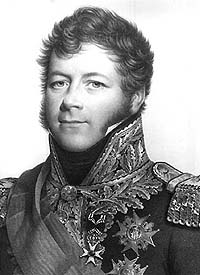
General Nicolas Joseph Maison
A French fleet left Toulon in the summer of 1828, and on August 30, Lieutenant General Nicolas Joseph Maison landed with 14,000 troops at Petalidi near Kalamata, preferring not to expose his force to Ibrahim Pasha’s cannon fire at Navarino. Thus began a four-year military intervention that laid infrastructure for an independent Greek state.
The French maintained a military presence in the Peloponnese until August of 1833. The fighting soon complete, they turned their energies to reconstruction: roads, hospitals, a postal service, and repairs to fortresses. And in late 1828, scholars and scientists arrived — an Expédition Scientifique de Morée organized in three sections: “Archéologie”; “Histoire Naturelle” (later called “Sciences Physiques”); and “Architecture et Sculpture.” Read the rest of this entry »
Revisiting George Cram Cook and Other Delphic Surprises
Posted: October 15, 2013 Filed under: Archaeology, Classics | Tags: American School of Classical Studies at Athens, Delphi, Elias Venezis, George Cram Cook, Judith Binder, Nilla Cook, Richard Mark Hillary, Susan Glaspell, Wolfgang Binder 8 Comments
George Cram Cook’s grave. Click to enlarge photo
Back in August, when I wrote about the unusual life of George Cram Cook and his death and burial at Delphi, I promised to add a photo of his grave. Artemis Leontis of Michigan University kindly sent me her own photos of Cook’s and Eva Palmer’s tombs at Delphi, but I hesitated to post them because I felt that I had to visit Cook’s grave myself. Moreover, as an archaeologist, I was curious to examine the ancient block that had been used for his headstone. Susan Glaspell in The Road to the Temple described it as “one of the great fallen stones from the Temple of Apollo” (1926, p. 343). But by the time Elias Venezis referred to Cook’s grave in his American Earth, the block had assumed the shape of a column “συντροφευμένος από μια κολόνα του Ιερού των Δελφών” (1955 [1977], 301). Was it a block or a column drum?
On September 24, Tom Brogan and I drove to Delphi to hear the papers of Tom Levy and his team at a conference on virtual reality in archaeology. Before going to the conference center, we made a brief stop at the local cemetery, which is located above modern village near the southwest edge of the ancient site. Several foreigners are buried in the northwest corner of the cemetery. It wasn’t hard to locate Cook’s grave, two burials to the right of Eva Palmer Sikelianou’s. With a broom that I borrowed from a nearby grave, I cleaned the surface of the marble plaque and revealed this inscription: Read the rest of this entry »
The Modern Greek Exam, “Professor Blank’s” Method, and Other Stories from the 1930s
Posted: October 1, 2013 Filed under: Archaeology, Classics, Education, Women's Studies | Tags: American School of Classical Studies at Athens, David M. Robinson, Edward Capps, LaRue Van Hook, Lawrence Durrell, Marian Welker, Richard Stillwell, Samuel E. Bassett 9 CommentsAfter publishing Jack Davis’ essay about the recent history of the ASCSA admission exams and while I was reflecting on Donald Haggis’ reference to the Modern Greek exam, defunct since WW II, I recalled a passage in Lawrence Durrell’s Prospero’s Cell (1947). While writing about his life in pre-WWII Corfu, Durrell painted a perceptive, if not-so-flattering, image of the foreign archaeologist in Greece: “Like earnest mastodons petrified in the forests of their own apparatus, the archaeologists come and go, each with his pocket Odyssey and his lack of Modern Greek. Diligently working on the refuse heaps of some township they erect on the basis of a few sherds or a piece of dramatic drainage, a sickly and enfeebled portrait of a way of life.”
Durrell’s criticism and the recent discussion of exams in this blog enticed me look more carefully than I had ever previously done at the pre-WWII fellowship exams. Here, I should emphasize that these were FELLOWSHIP exams. Before WW II there were no admission exams. Candidates sat competitive examinations only for fellowships. Harold Fowler (1904-1917), Samuel Bassett (1917-1936), Benjamin Meritt (1931-1932), and others served as Chairmen of the Committee on Fellowships (only in 1950 was its name changed to the Committee on Admissions and Fellowships). Students were admitted on the basis of their credentials; although a knowledge of Classical Greek “was expected and assumed…in exceptional cases, a student ignorant of the Greek language [was] accepted as regular member of the School if he [was] qualified to pursue special studies in some field (e.g., architecture or art) where a knowledge of the Greek language [was] not absolutely necessary (ASCSA Handbook of Information, 1932, p. 16). Those competing for fellowships in Archaeology were examined in Modern Greek, but not in Ancient.
What were these exams like? Below I reproduce, as an example, the Modern Greek exam of 1936, which to my surprise also included a passage to be translated from English to Greek, as well as the requirement to translate an essay by poet Kostis Palamas from Greek to English. The passage for translation from English is amusing and imagines a conversation between an American archaeologist and a Greek boatman, the latter complaining about Edmond About’s unflattering portrayal of Greece (La Grèce contemporaine, 1858) and hoping that his American passenger will steer a different course! Read the rest of this entry »

 From the Archivist's Notebook