The Forgotten Olympic Exhibition: Georg Alexander Mathéy’s Contribution to the 1936 Summer Olympics in Berlin.
Posted: August 2, 2022 Filed under: Archival Research, Art History, Biography, Exhibits, History of Archaeology, Modern Greek History, Philhellenism | Tags: Georg Alexander Mathéy, Polyxene Roussopoulos Mathéy, Walter Hege 3 CommentsBY ALEXANDRA KANKELEIT
Alexandra Kankeleit is a German-Greek archaeologist and historian. She has been researching German archaeology in Greece during the Nazi period for several years. Since July 2021 she has been working for the CeMoG (Centrum Modernes Griechenland) at the Freie Universität Berlin, where she will teach a seminar on the 1936 Summer Olympics in the upcoming winter semester. Here she contributes an essay about the German artist Georg Alexander Mathéy (1884-1968), who lived in Greece in the 1930s and whose work was displayed in the Summer Olympics of 1936.
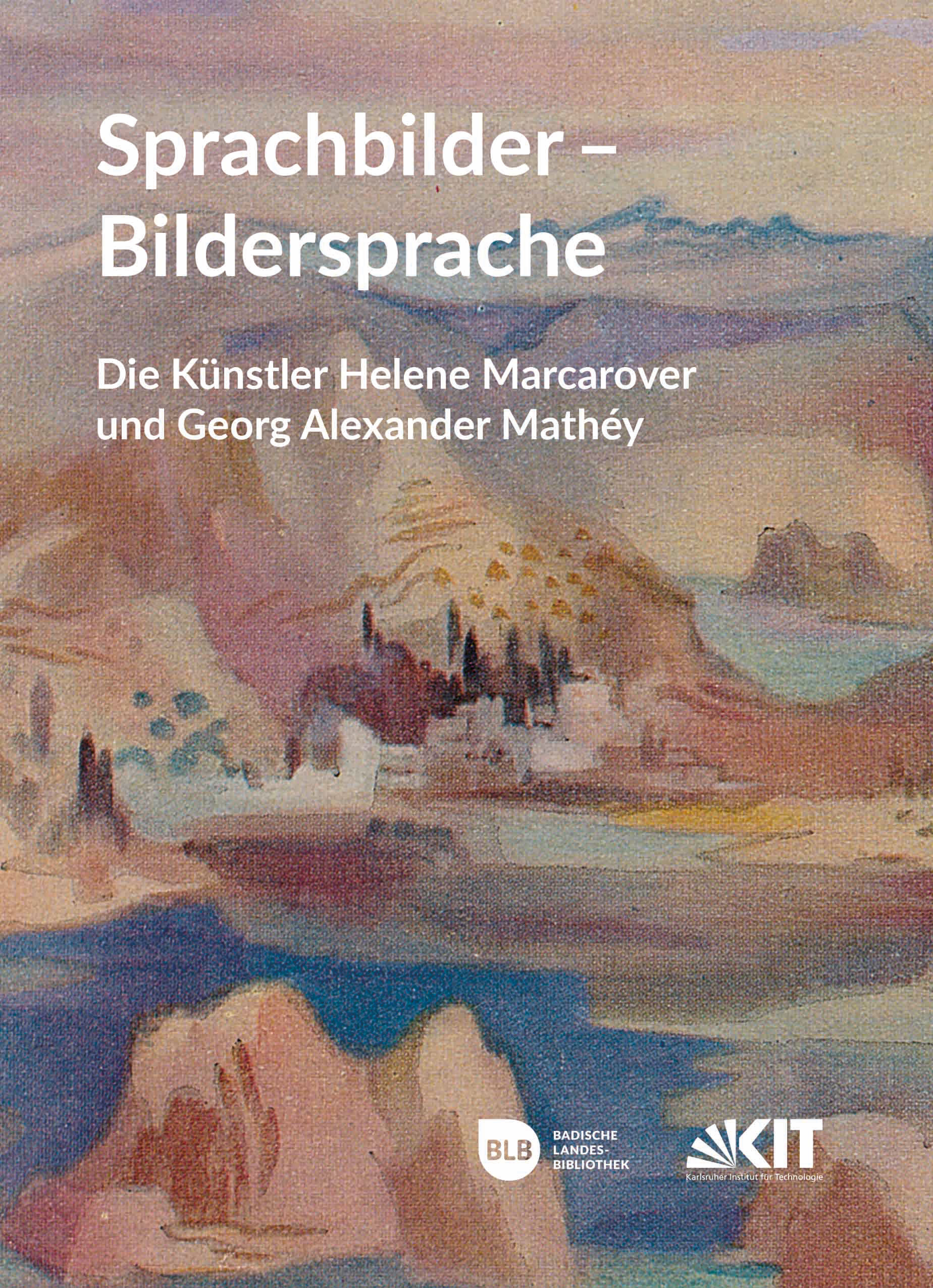
The Badische Landesbibliothek in Karlsruhe (BLB) has held a large part of the estate of painter and writer Georg Alexander Mathéy (1884-1968) since 1993. In 2017, the BLB organized an exhibition, titled Sprachbilder – Bildersprache: Die Künstler Helene Marcarover und Georg Alexander Mathéy, to showcase the works of Mathéy together with those of another artist, the painter and poet Helene Markarova (1904-1992). Both artists, whose work was shaped by the two wars, by migration and alienation, were able through literature to transform images into words, and vice versa. A wonderful accompanying publication provides insights into Mathéy’s life and creative work (Axtmann – Stello 2017).
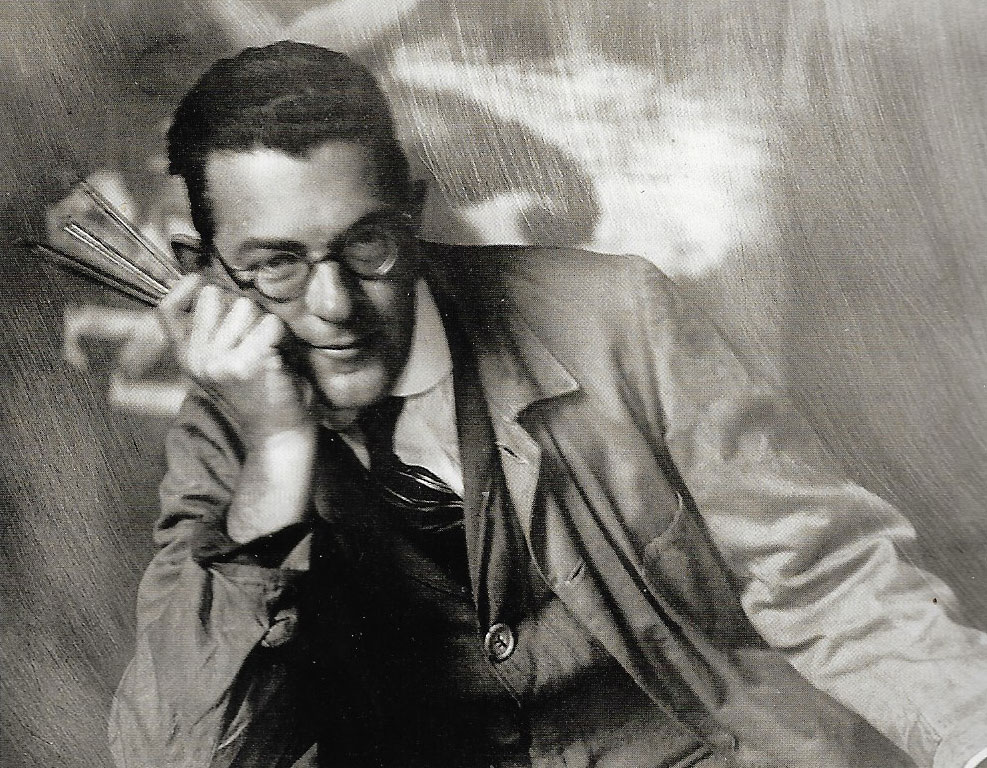
Trained as an architect in Budapest, Mathéy made his name as an illustrator of numerous books and magazines, achieving commercial success already at a young age. He also designed stamps, textiles, and a Rosenthal coffee service. Two of his stamp designs are still remembered today because of their intense colors and memorable motifs: the “bricklayer” (1919) and the “post horn” (1951). They can be described as classics of German stamp design.


In addition to this modern, highly reductivist formal language, Mathéy also mastered other, more traditional media, primarily in his large-scale watercolors and oil paintings.
I became interested in Mathéy’s largely forgotten contribution to the 1936 Summer Olympics in Berlin. The starting point is material from the archives of the BLB, which provided new and important information about Mathéy. (I would like to thank the director of the BLB, Julia Hiller von Gaertringen, for her interest and active support in my project. A detailed German version of this article can be found on the BLBlog.) Further information can also be found in an unpublished research paper on Georg Alexander Mathéy, which the designer Ulrike Jänichen completed in 2003 under the direction of Professor Mechthild Lobisch at the Burg Giebichenstein Kunsthochschule in Halle. She kindly made her work available to me.
The Charioteer of Delphi in the Clutches of WW II
Posted: March 16, 2022 Filed under: Archaeology, Archival Research, Biography, Classics, History of Archaeology, Modern Greek History | Tags: Alexandros Kontoleon, Antonios Keramopoulos, Delphi Charioteer, Hans von Schoenebeck, Ηνίοχος των Δελφών, Vasileios Petrakos, Wilhelm Kraiker 7 CommentsBY ALEXANDRA KANKELEIT
Alexandra Kankeleit, an archaeologist who specializes in the study of Roman mosaics, has also been part of an extensive project of the German Archaeological Institute (Athens and Berlin), titled The History of the German Archaeological Institute at Athens during the National Socialist Era. As part of the project, she has examined a host of bibliographic and archival sources in both countries that document activities of German archaeologists in Greece from 1933 until 1944. Here she contributes an essay about the adventures of the Delphi Charioteer during the German Occupation in Greece.
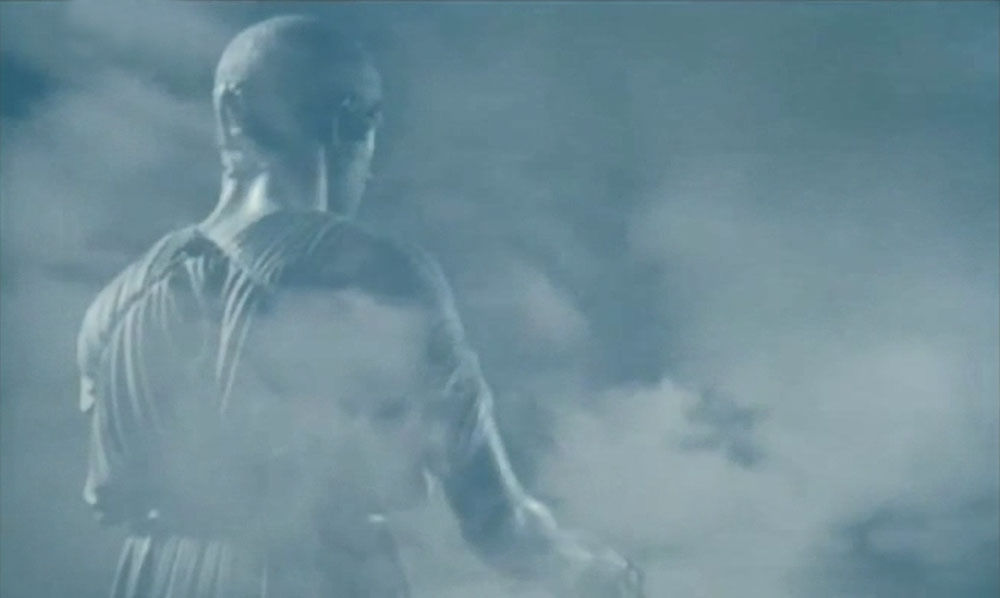
The Charioteer of Delphi (Ο Ηνίοχος των Δελφών) is one of the best-preserved and most important bronze statues of ancient Greece. Since its discovery in 1896, it has been one of the main attractions of the Archaeological Museum in Delphi. As a symbol of ancient civilization and the eventful history of Greece, it is still a frequently recurring motif in the visual and performing arts (Figs. 1-2).

During the 1936 Summer Olympics in Berlin, the Charioteer was promoted together with the Discobolus of Myron and the Boxer of the Quirinal as the prototype of the Greek athlete in antiquity (see Olympia Zeitung 3, July 23, 1936, p. 46). Thus, his face adorned the covers of catalogs and propaganda material circulated in 1936 on the occasion of the Olympiad (Figs. 3-4).

German scholars also increasingly turned their focus on the Early Classical masterpiece. In his Habilitation “Der Wagenlenker von Delphi” (The Charioteer of Delphi), the archaeologist Roland Hampe (1908-1981) pursued his goal of reducing the many “ambiguities, misunderstandings, differences of opinion” concerning the monumental bronze group. His manuscript was completed in August 1939 and published as a monograph in 1941 (Hampe 1941).
Read the rest of this entry »The Cretan Idyll of Harriet Boyd and Charles Henry Hawes
Posted: February 12, 2022 Filed under: Archaeology, Archival Research, Art History, Biography, Classics, Crete, Greek Folklore, History of Archaeology, Modern Greek History, Philhellenism, Women's Studies | Tags: Charles Henry Hawes, Crete, Harriet Ann Boyd 6 CommentsBY CURTIS RUNNELS – PRISCILLA MURRAY
Curtis Runnels, Professor of Archaeology at Boston University and an expert in Palaeolithic archaeology in Greece, and his wife Priscilla Murray, an anthropologist and Classical archaeologist, here contribute to From the Archivist’s Notebook a story about their purchase of a sketchbook from the early 20th century with watercolors depicting places and people on Crete.
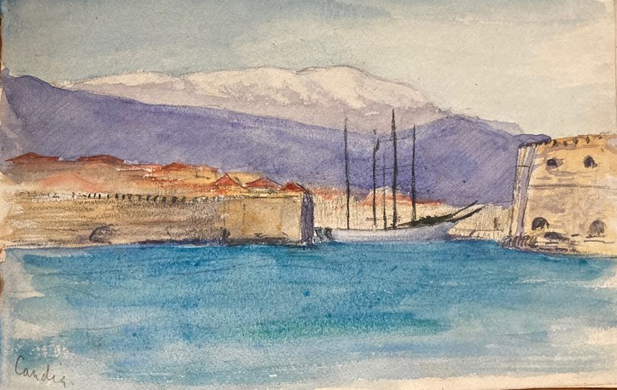
We visited an antiquarian bookfair in Concord, New Hampshire, about twelve years ago and a booth belonging to a dealer from Vermont, who specialized in original artwork, caught our eye. Sorting through piles of miscellaneous materials, we found a few things relating to Greece, and a small (8 by 4 inches; 20 x 10 cm) artist’s sketchbook grabbed our attention. It was displayed on a table opened to a watercolor view that seemed familiar. Surely it was the entrance to the harbor at Herakleion on Crete! And indeed, penciled in one corner was the inscription “Candia,” the older name for the city which both confirmed the identification and provided a clue that the sketchbook, as dealers in antiques like to say, “had some age.” There were other artworks in the sketchbook that are dated to April 1905, and still others with various dates in 1915, and one dated to 1916. The artwork from 1905 was the most interesting for us. Turning the pages of the sketchbook we saw line drawings of dancers at Knossos and a man drawing water from a well in Siteia, pastels of houses labeled Knossos and “Sitia, as well as watercolors and line drawings of Mykonos, Ios, and other Cycladic islands, Sounion, and Athens. The unknown artist was interested particularly in the new Minoan finds from Knossos as is evident from the line drawings of wall paintings and artifacts in the “Candia Museum.”
Although there is no artist’s signature, we guessed that the artist must be someone interesting, perhaps even someone we would recognize. After all, how many Americans or British travelers (the fact that the titles are in English is the reason for assuming the nationality of the artist) were sufficiently interested in Knossos and the Minoans to visit Crete in 1905 at a time when there was much unrest on the island? We bought the sketchbook and took it home to do more research.
At Home with the Schliemanns: The “Iliou Melathron” as a Social Landmark
Posted: January 6, 2022 Filed under: Archaeology, Archival Research, Arts and Crafts Movement, Biography, History of Archaeology, Modern Greek History, Philhellenism, Women's Studies | Tags: Charles Wesley Bradley, Ernst Ziller, Heinrich Schliemann, Iliou Melathron, Sophia Schliemann 8 CommentsHeinrich Schliemann, the famous excavator of Troy, Mycenae, and other Homeric sites, was born in Germany on January 6, 1822–the Epiphany for western Europe and Christmas Day for other countries such as Imperial Russia and Greece which still used the Old (Julian) Calendar until the early 20th century. A compulsive traveler, Schliemann rarely returned to Athens before late December or early January, just in time to celebrate both his birthday and Christmas on January 6th.
From today and throughout 2022, many institutions in Europe, especially in Germany but also in Greece, will be commemorating the bicentennial anniversary of his birth. The Museum of Prehistory and Early History of the National Museums in Berlin is preparing a major exhibition titled Schliemann’s Worlds, which is scheduled to open in April 2022. Major German newspapers and TV channels are in the process of producing (or have already produced) lengthy articles and documentaries about Schliemann and his excavations at Troy in anticipation of the bicentennial anniversary, and Antike Welt has published a separate issue, edited by Leoni Hellmayr, with eleven essays about various aspects of Schliemann’s adventurous life.
The American School of Classical Studies at Athens, where Heinrich’s and Sophia’s papers have been housed since 1936, in addition to contributing to all the activities described above, will be launching an online exhibition, The Stuff of Legend: Heinrich Schliemann’s Life and Work, on February 3, 2022, showcasing material from the rich Schliemann archive.

Of American Expat Thanksgivings in Greece
Posted: November 23, 2021 Filed under: Archaeology, Archival Research, Food and Travel, History of Archaeology, Mediterranean Studies, Modern Greek History, Philhellenism, Uncategorized | Tags: Brunilde Sismondo Ridgway, Henry S. Robinson, Lloyd Costen, Natalie Murray Gifford, Richard H. Howland, Zillah Pierce Dinsmoor 10 Comments
I still remember my first Thanksgiving at the American School of Classical Studies at Athens (the ASCSA or the School hereafter) in 1989. We had just returned from a ten-day trip through the Corinthia with Mr. Williams [Charles K. Williams, the Director of the Corinth Excavations], which also marked the end of the School’s fall program. We only had a few hours to rest and get ready for the big event: cocktails at 8 followed by dinner at 8.30. I had never seen Loring Hall so crowded and festive. Director William (Willy) Coulson and his wife Mary Lee were the hosts. Eight large tables filled the dining room; more were in the salonaki for families with young children. In later years as the numbers of guests increased, the party would take over the saloni for dinner and dancing afterwards.
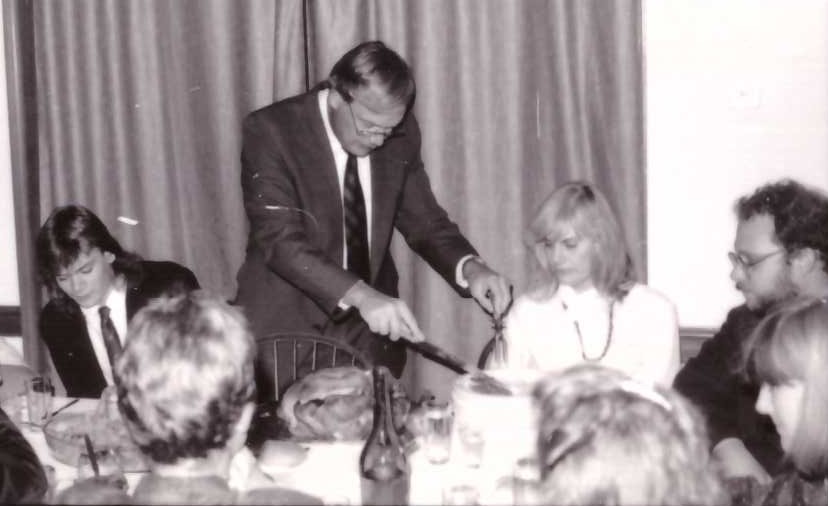
I attended many of the School’s Thanksgivings, and these events were the source of many fond memories. When our son was born in 1999, we skipped the party but took him (then barely 6 months old) earlier in the day to see the roasted turkeys in Sakis’s kitchen. We eventually stopped going because of conflicts with our son’s schedule and our desire to start our own family tradition for the holiday.
Read more: Of American Expat Thanksgivings in Greece Read the rest of this entry »
 From the Archivist's Notebook