Recalling a Museum Theft
Posted: April 21, 2022 Filed under: Archaeology, Archival Research, Art History, Classics, History of Archaeology, Mediterranean Studies, Philhellenism | Tags: Athenian Agora Excavations, Charles H. Morgan, Christine Alexander, Eugene Vanderpool, Homer A. Thompson, Γιάννης Μηλιάδης, John L. Caskey, John Meliades 4 Comments“Sadly, the best candidate for him, the beautifully carved [head] 3, facing right, was stolen from the Agora’s dig house in 1955, while the Stoa of Attalos was under construction.” This sentence caught my attention while reading “Classical Sculpture from the Athenian Agora, Part 2: The Friezes of the Temple of Ares (Temple of Athena Pallenis),” published in Hesperia 88 (2019) by Andrew Stewart and seven co-authors (E. Driscoll, S. Estrin, N. J. Gleason, E. Lawrence, R. Levitan, S. Lloyd-Knauf, and K. Turbeville). Further below in the catalog entry for the head, the exact date of the theft is also mentioned: August 22, 1955.
Stewart et al. refer to a fragmentary male head of high craftsmanship that was found in the Athenian Agora near the northeast corner of the Temple of Ares in 1933. Carved around 430-425 B.C. and identified as Hermes, the small head (H.: 0.147m) is one of forty-nine half-size marble fragments which once decorated the friezes of the Temple of Ares in the Agora (originally the Temple of Athena Pallenis at Pallene). A plan of the Agora with the findspots of the sculptures is included in the Hesperia article, and is also available at https://ascsa.net.


Thefts occur in even the best guarded museums and libraries. Every institution has its own story (or stories) to share or hide. And at least some thefts are committed by those who have “hands-on” access to the collections. A recent example was the return of two valuable journals of Charles Darwin, which were stolen two decades ago from the library of Cambridge University. Others remain lost–the paintings stolen from the Isabella Gardner Museum in Boston in 1990, or the Telephus head, an original by Skopas, removed from the Tegea Museum in 1992.
But back to the little head of Hermes that was inventoried as S 305. I was curious to discover more about its theft. A search in the Archives of the American School of Classical Studies at Athens (ASCSA or the School hereafter) yielded considerable information about the event and its aftermath.
Read the rest of this entry »Of American Expat Thanksgivings in Greece
Posted: November 23, 2021 Filed under: Archaeology, Archival Research, Food and Travel, History of Archaeology, Mediterranean Studies, Modern Greek History, Philhellenism, Uncategorized | Tags: Brunilde Sismondo Ridgway, Henry S. Robinson, Lloyd Costen, Natalie Murray Gifford, Richard H. Howland, Zillah Pierce Dinsmoor 10 Comments
I still remember my first Thanksgiving at the American School of Classical Studies at Athens (the ASCSA or the School hereafter) in 1989. We had just returned from a ten-day trip through the Corinthia with Mr. Williams [Charles K. Williams, the Director of the Corinth Excavations], which also marked the end of the School’s fall program. We only had a few hours to rest and get ready for the big event: cocktails at 8 followed by dinner at 8.30. I had never seen Loring Hall so crowded and festive. Director William (Willy) Coulson and his wife Mary Lee were the hosts. Eight large tables filled the dining room; more were in the salonaki for families with young children. In later years as the numbers of guests increased, the party would take over the saloni for dinner and dancing afterwards.
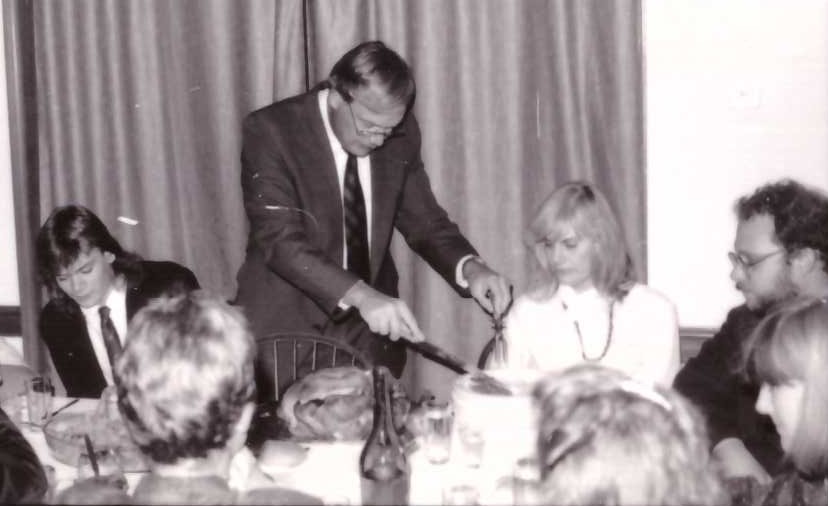
I attended many of the School’s Thanksgivings, and these events were the source of many fond memories. When our son was born in 1999, we skipped the party but took him (then barely 6 months old) earlier in the day to see the roasted turkeys in Sakis’s kitchen. We eventually stopped going because of conflicts with our son’s schedule and our desire to start our own family tradition for the holiday.
Read more: Of American Expat Thanksgivings in Greece Read the rest of this entry »The Cretan Diaries of Colonel Émile-Honoré Destelle (1897-1898)
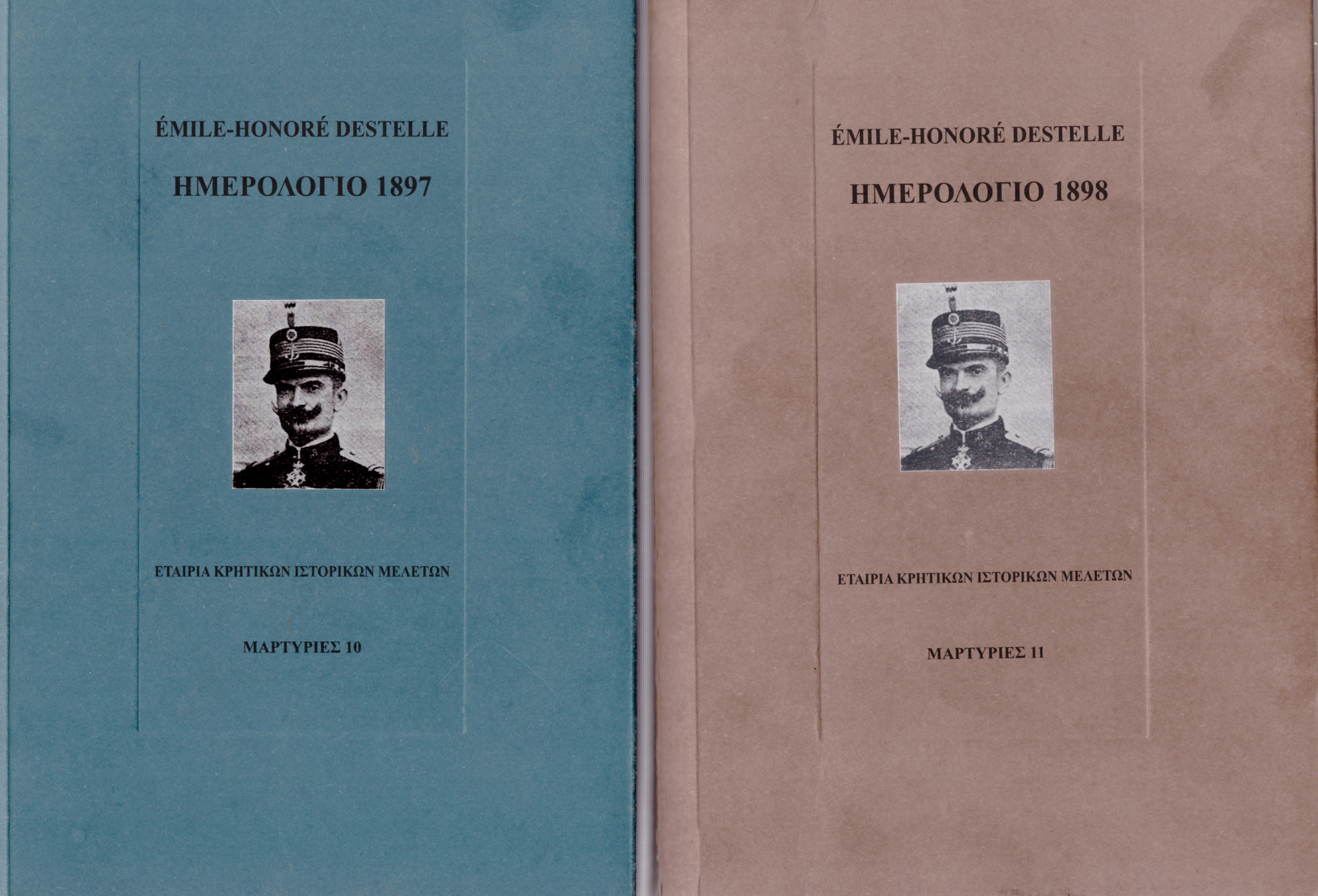
Posted: September 3, 2021 Filed under: Archaeology, Archival Research, Biography, Book Reviews, Crete, Food and Travel, Greek Folklore, History of Archaeology, Mediterranean Studies, Philhellenism | Tags: Émile-Honoré Destelle, Cretan Revolt 1896, Ierapetra, Pacheia Ammos, Siteia 3 CommentsFollowing the Cretan revolt of 1896, six Great Powers (Austria-Hungary, France, Germany, Italy, Russia, and England) sent a squadron of warships to Crete in early 1897 to maintain the fragile peace between the Muslim and the Christian communities. France appointed Admiral Édouard Pottier (1839-1903) to lead her naval forces. The French division included Colonel Émile-Honoré Destelle (1856-1944), who brought previous experience in the colonies of New Calydonia and Madagascar. The Colonel disembarked on Crete in February of 1897 to supervise the administration of the eastern part of the island.

I would not have known about Destelle had I not come across the publication of his military diaries from 1897 and 1898 on a recent visit to the Historical Museum in Herakleion (a must for anyone visiting Crete). Edited by his grandson Jean-Pierre Destelle and translated into Greek by Emmanuela Tzedaki with a thorough commentary by Maria Sorou, and published by the Society of Cretan Historical Studies in 2018-2019, Destelle’s diaries document in great detail his administrative activities, as well as everyday life in East Crete just before the island was declared an autonomous state under the protection of the Great Powers. For me, after excavating and traveling in the regions of Siteia and Ierapetra for the past three decades, Destelle’s descriptions offered unique glimpses into Crete’s pre-industrial past. (The Destelle family maintains an excellent web page.)
Destelle’s diaries became my evening companion during my six weeks on Crete this summer, while participating in the Mochlos excavations. I was digging a Hellenistic fort on the summit of Mochlos, trying to understand how it functioned and which city it served, and Destelle was describing the daily activities of an army camp in the same region more than a hundred years ago. I mined the pair of books for ethnographic information, especially communications, since transportation on Crete before the early 20th century was hardly any different from that of ancient times.
“Metropolitan Transportation”: Sardis, Colophon, and the Asia Minor Disaster of 1922
Posted: July 3, 2021 Filed under: Archaeology, Archival Research, Biography, History of Archaeology, Mediterranean Studies | Tags: Aristides Stergiadis, Bert Hodge Hill, Colophon Excavations, Edward Capps, George Horton, Αριστείδης Στεργιάδης, Sardis Excavations 6 CommentsBY JACK L. DAVIS
Jack L. Davis, Carl W. Blegen Professor of Greek Archaeology at the University of Cincinnati and a former director of the American School of Classical Studies at Athens (2007-2012), here writes about the politics behind two American excavations in Asia Minor during the tumultuous years of the Greek-Turkish War of 1919-1922, and their connection to the acquisition of Greek antiquities by American museums.
For the paltry sum of $125, anyone can buy a pair of graceful bookends modeled on a column of the Temple of Artemis at Sardis from the gift shop of the Metropolitan Museum (Met) of New York. The Met describes them as follows:

An eye-catching pair for home or office, our bookends celebrate the magnificent Sardis column in The Met. The capital, base, and portions of the shaft of this great Ionic column come from a monumental temple constructed at Sardis (in today’s Turkey) and dedicated to Artemis, the Greek goddess of the hunt and the moon. Shortened from its original height of 56 feet, The Met’s massive column on display in the Greek and Roman galleries lets viewers admire the fine carving of the foliate ornaments on the capital and the fish-scale pattern on the molding at its base. These same decorative details appear on our handsome bookends.
The story of how this column ended up in the Met (and why it is shortened!) is more interesting than the bookends themselves, however worthy of admiration they may be. And it will cost you nothing to learn it here. Hint: the column was not shortened so that visitors could view its fine carving. (It is also important to note immediately that the Temple of Artemis is not only in “today’s Turkey,” but was already in Turkey when the Met’s column left Sardis.)
Read the rest of this entry »THE LIFE AND TIMES OF A DILETTANTE: RALPH HENRY BREWSTER
Posted: January 6, 2021 Filed under: Archaeology, Archival Research, Biography, History of Archaeology, Mediterranean Studies | Tags: Georg Karo, Ralph Henry Brewster, Richard Stillwell 18 CommentsThe recent discovery of a head of Hermes in central Athens brought to mind another herm (one of the best of its kind), which was stolen from Greece almost ninety years ago. (A herm is a stone pillar with a sculpted head and genitals. In ancient Greece, herms were thought to have an apotropaic function and were placed at crossings, borders, and in front of houses or public buildings.)
I pick up the story in September 1932, when Richard Stillwell (1899-1982) returned to Athens after two months of vacation in America. A Princeton graduate and an architect by training, Stillwell had been appointed the new Director of the American School of Classical Studies at Athens (1932-1935). He was no stranger to Greece or the American School (ASCSA or the School hereafter). As Fellow in Architecture in 1924, he had learned “the skills and rigors of archaeological fieldwork in the excavations at Corinth”; and as Professor of Architecture (1928-1931) he would begin a “long series of architectural studies which would form one of his major contributions to the field” (Shear 1983). In 1931-1932 Stillwell was Assistant Director during Rhys Carpenter’s last year in charge of the School. Starting with Stillwell the School introduced a new model of administration: new directors would learn the ropes by serving as assistant directors during the previous year. (This model was abandoned in the late 1960s, when it became increasingly difficult for incoming directors to extend leaves of absence from universities.)


 From the Archivist's Notebook