“You Undoubtedly Remember Mr. L. E. Feldmahn”: The Bulgarian Dolls of the Near East Foundation
Posted: August 31, 2024 Filed under: Archaeology, Archival Research, Biography, Economic History, Greek Folk Art, Greek Folklore, History, History of Archaeology, Mediterranean Studies, Modern Greek History, Philhellenism, Uncategorized | Tags: Dolls, Leonty E. Feldmahn, Near East Foundation, Near East Industries, Near East Industries Sofia, Near East Relief Museum, Priscilla Capps Hill, Rockefeller Archives Center 2 CommentsJack L. Davis, Carl W. Blegen Professor of Greek Archaeology at the University of Cincinnati and a former director of the American School of Classical Studies at Athens (2007-2012), here contributes an essay about Leonty E. Feldmahn, the man who conceived and produced in the 1930s the Bulgarian dolls of the Near East Foundation.
One rewarding sidelight of researching institutional history is that, from time to time, it affords an opportunity to resurrect once well-known individuals who have been lost to history. Here I call attention to a fascinating man, who, throughout much of his life, made outsize contributions to addressing one Balkan refugee crisis that resulted from the Russian Revolution of 1917. In the years prior to World War II, his activities in Bulgaria were sometimes tangential to those of certain individuals known to readers of this blog through the intermediary of the Near East Industries subsidiary of the Near East Foundation.
I only learned of Leonty E. Feldmahn recently and by accident. I didn’t remember him from any earlier reading. Feldmahn is not mentioned in the standard history of the Near East Foundation, or on the Foundation’s historical web site. He appears only three times in the New York Times: when he was awarded the Bulgarian Cross for Philanthropy from King Boris (he had in 1923 established “a playground and children’s club in Sofia serving 4200 poor children,” December 31, 1935, p. 17); earlier in 1935, when the character of the playground and club was described in detail (April 21, 1935, pp. 78, 80); and in his obituary (January 6, 1962, p. 16).
The Cretan Idyll of Harriet Boyd and Charles Henry Hawes
Posted: February 12, 2022 Filed under: Archaeology, Archival Research, Art History, Biography, Classics, Crete, Greek Folklore, History of Archaeology, Modern Greek History, Philhellenism, Women's Studies | Tags: Charles Henry Hawes, Crete, Harriet Ann Boyd 6 CommentsBY CURTIS RUNNELS – PRISCILLA MURRAY
Curtis Runnels, Professor of Archaeology at Boston University and an expert in Palaeolithic archaeology in Greece, and his wife Priscilla Murray, an anthropologist and Classical archaeologist, here contribute to From the Archivist’s Notebook a story about their purchase of a sketchbook from the early 20th century with watercolors depicting places and people on Crete.
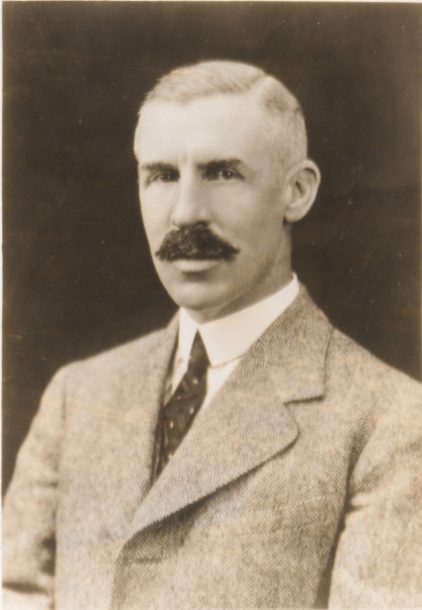
We visited an antiquarian bookfair in Concord, New Hampshire, about twelve years ago and a booth belonging to a dealer from Vermont, who specialized in original artwork, caught our eye. Sorting through piles of miscellaneous materials, we found a few things relating to Greece, and a small (8 by 4 inches; 20 x 10 cm) artist’s sketchbook grabbed our attention. It was displayed on a table opened to a watercolor view that seemed familiar. Surely it was the entrance to the harbor at Herakleion on Crete! And indeed, penciled in one corner was the inscription “Candia,” the older name for the city which both confirmed the identification and provided a clue that the sketchbook, as dealers in antiques like to say, “had some age.” There were other artworks in the sketchbook that are dated to April 1905, and still others with various dates in 1915, and one dated to 1916. The artwork from 1905 was the most interesting for us. Turning the pages of the sketchbook we saw line drawings of dancers at Knossos and a man drawing water from a well in Siteia, pastels of houses labeled Knossos and “Sitia, as well as watercolors and line drawings of Mykonos, Ios, and other Cycladic islands, Sounion, and Athens. The unknown artist was interested particularly in the new Minoan finds from Knossos as is evident from the line drawings of wall paintings and artifacts in the “Candia Museum.”
Although there is no artist’s signature, we guessed that the artist must be someone interesting, perhaps even someone we would recognize. After all, how many Americans or British travelers (the fact that the titles are in English is the reason for assuming the nationality of the artist) were sufficiently interested in Knossos and the Minoans to visit Crete in 1905 at a time when there was much unrest on the island? We bought the sketchbook and took it home to do more research.
The Cretan Diaries of Colonel Émile-Honoré Destelle (1897-1898)
Posted: September 3, 2021 Filed under: Archaeology, Archival Research, Biography, Book Reviews, Crete, Food and Travel, Greek Folklore, History of Archaeology, Mediterranean Studies, Philhellenism | Tags: Émile-Honoré Destelle, Cretan Revolt 1896, Ierapetra, Pacheia Ammos, Siteia 3 CommentsFollowing the Cretan revolt of 1896, six Great Powers (Austria-Hungary, France, Germany, Italy, Russia, and England) sent a squadron of warships to Crete in early 1897 to maintain the fragile peace between the Muslim and the Christian communities. France appointed Admiral Édouard Pottier (1839-1903) to lead her naval forces. The French division included Colonel Émile-Honoré Destelle (1856-1944), who brought previous experience in the colonies of New Calydonia and Madagascar. The Colonel disembarked on Crete in February of 1897 to supervise the administration of the eastern part of the island.

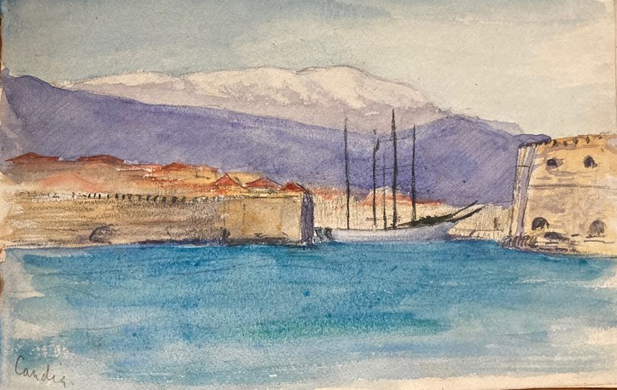
I would not have known about Destelle had I not come across the publication of his military diaries from 1897 and 1898 on a recent visit to the Historical Museum in Herakleion (a must for anyone visiting Crete). Edited by his grandson Jean-Pierre Destelle and translated into Greek by Emmanuela Tzedaki with a thorough commentary by Maria Sorou, and published by the Society of Cretan Historical Studies in 2018-2019, Destelle’s diaries document in great detail his administrative activities, as well as everyday life in East Crete just before the island was declared an autonomous state under the protection of the Great Powers. For me, after excavating and traveling in the regions of Siteia and Ierapetra for the past three decades, Destelle’s descriptions offered unique glimpses into Crete’s pre-industrial past. (The Destelle family maintains an excellent web page.)
Destelle’s diaries became my evening companion during my six weeks on Crete this summer, while participating in the Mochlos excavations. I was digging a Hellenistic fort on the summit of Mochlos, trying to understand how it functioned and which city it served, and Destelle was describing the daily activities of an army camp in the same region more than a hundred years ago. I mined the pair of books for ethnographic information, especially communications, since transportation on Crete before the early 20th century was hardly any different from that of ancient times.
Forgotten Friend of Skyros: Hazel D. Hansen (Part II)
Posted: May 14, 2020 Filed under: Archaeology, Archival Research, Biography, Classics, Greek Folklore, History of Archaeology, Philhellenism, Women's Studies | Tags: Brunilde Sismondo Ridgway, Francis Bertram Welch, Hazel D. Hansen, Oscar Broneer, Stanford University 2 CommentsAs a young woman, Hazel Dorothy Hansen broke several glass ceilings. From a humble background –her father was a foundryman—she was admitted to Stanford University in 1916, at a time when the institution had severely limited the admission of women. In 1904, Mrs. Stanford became afraid of the increasing number of women enrolling at Stanford (by 1899 reaching almost 40% of the student population) and implemented a quota that restricted their numbers at the undergraduate level: for every woman at Stanford, there had to be three men. (See Sam Scott, “Why Jane Stanford Limited Women’s Enrollment to 500,” Stanford Magazine, Aug. 22, 2018.). Fortunately for a girl of modest means, Stanford remained tuition-free until 1920.
She broke the glass ceiling again when she chose a prehistoric topic for her dissertation (“Early Civilization in Thessaly”) that also required extensive surveying for sites on the Greek periphery. In the 1920’s female graduate students at the American School had limited options when it came to field research. Apart from Alice Leslie Walker, who had been entrusted with the publication of its Neolithic pottery, Corinth remained a male domain, with Bert Hodge Hill and Carl W. Blegen controlling access to, and publication of, archaeological material. Hazel would have needed either to finance her own excavation, as Hetty Goldman and Walker had done in the 1910s, or to write an art history thesis based on material in museums. It was not until David R. Robinson began excavations at Olynthus and Edward Capps spearheaded the Athenian Agora Excavations that women were allowed to participate in the publication of (secondary) excavation material.
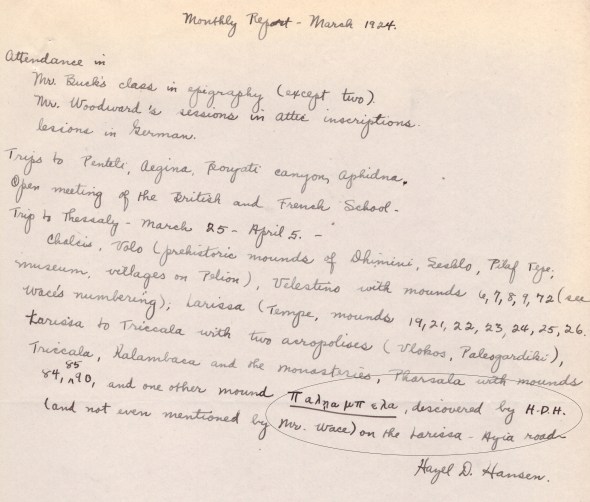
Hansen’s monthly report (March 1924) to the School’s Director, where she lists her trips, and also proudly claims that she discovered the prehistoric site of Μαγούλα Παλιάμπελα (“and not even mentioned by Mr. Wace”). ASCSA Archives, AdmRec 108/1, folder 5.
Forgotten Friend of Skyros: Hazel Dorothy Hansen (Part I)
Posted: April 19, 2020 Filed under: Archaeology, Archival Research, Biography, Classics, Greek Folklore, History of Archaeology, Women's Studies | Tags: American School of Classical Studies at Athens, David M. Robinson, Dorothy Burr Thompson, George Mylonas, Hazel D. Hansen, Natalie Murray Gifford, Stanford University 12 Comments“Her main contribution was not destined to be in the field of excavation, but in discovering in dark cellars a good number of broken vases still covered with earth, discovered by others over the years in the island of Skyros. There she collected, cleaned, patched, and provided with a shelter transforming into a small Museum a room in the City Hall of Skyros. For this service to archaeology and the island she was made Honorary Citizen of Skyros,” wrote archaeologist George Mylonas about Hazel Hansen in early 1963, a few months after her death, in the Annual Report of the American School of Classical Studies at Athens (ASCSA or the School hereafter).
I asked several archaeologists of my generation and slightly older if her name or her association with the island of Skyros rang a bell. It did not, although she was known well enough in Greece, for her death to be noted at length in Kathimerini (December 22, 1962), one of the most respected Greek newspapers. «Ηγγέλθη χθες στην Αθήνα ο θάνατος της φιλέλληνος αρχαιολόγου καθηγητρίας του Πανεπιστημίου Στάνφορδ, Χέιζελ Χάνσεν, η οποία είναι ιδιαιτέρως γνωστή δια το σύγγραμμά της περί του αρχαιοτέρου πολιτισμού της Θεσσαλίας…”. In addition to her work in Thessaly and Skyros, the note referred to her participation in the excavations at Olynthus and on the North Slope of the Acropolis. The author of Hansen’s Greek obituary knew her well and wanted to capture the accomplishments of a friend and able colleague. It must have been (again) George Mylonas, whose friendship with Hazel started in the 1920s when they were both at the American School.

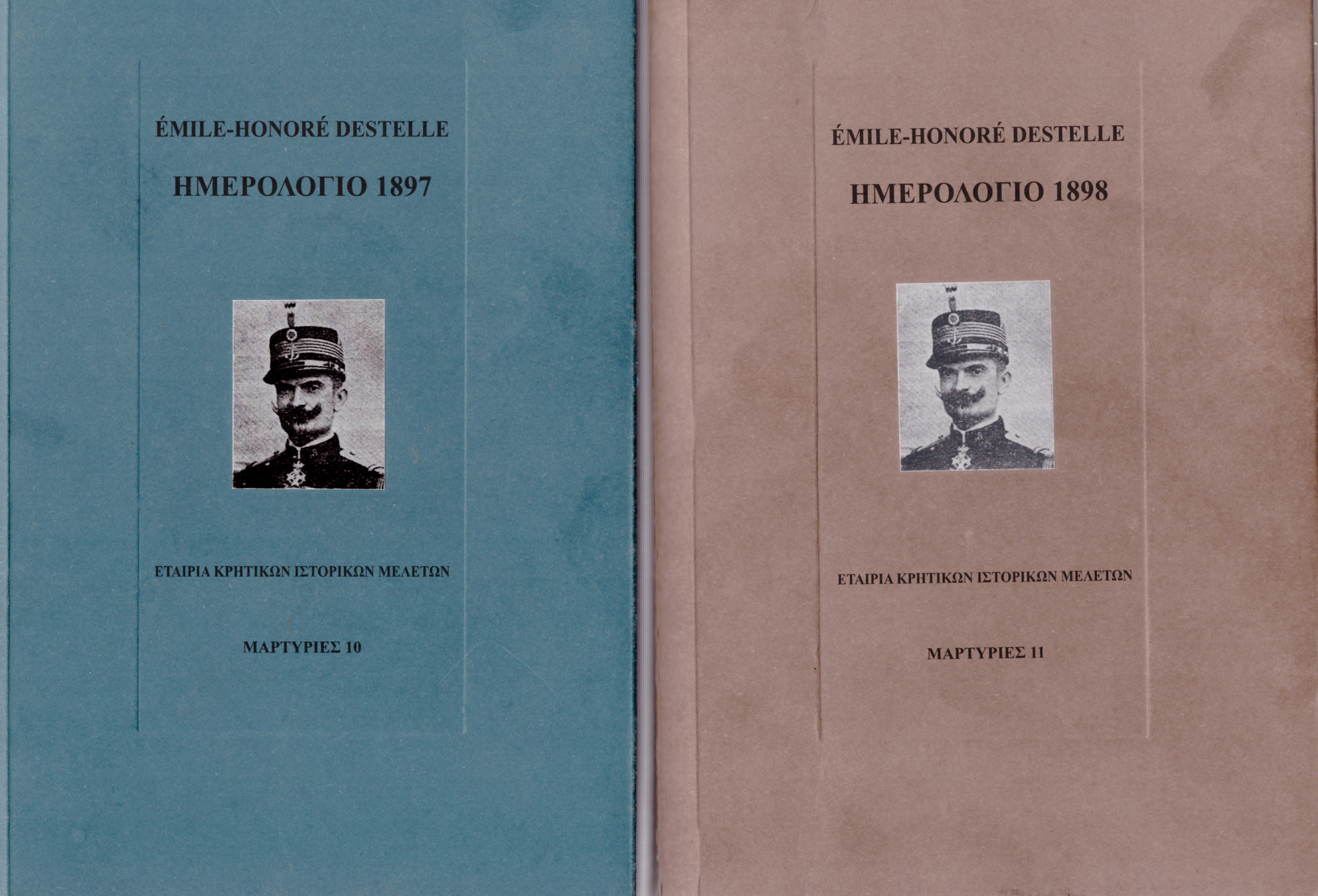
Hazel D. Hansen, 1923. ASCSA Archives, Carl W. Blegen Papers.

 From the Archivist's Notebook