Recalling a Museum Theft
Posted: April 21, 2022 Filed under: Archaeology, Archival Research, Art History, Classics, History of Archaeology, Mediterranean Studies, Philhellenism | Tags: Athenian Agora Excavations, Charles H. Morgan, Christine Alexander, Eugene Vanderpool, Homer A. Thompson, Γιάννης Μηλιάδης, John L. Caskey, John Meliades 4 Comments“Sadly, the best candidate for him, the beautifully carved [head] 3, facing right, was stolen from the Agora’s dig house in 1955, while the Stoa of Attalos was under construction.” This sentence caught my attention while reading “Classical Sculpture from the Athenian Agora, Part 2: The Friezes of the Temple of Ares (Temple of Athena Pallenis),” published in Hesperia 88 (2019) by Andrew Stewart and seven co-authors (E. Driscoll, S. Estrin, N. J. Gleason, E. Lawrence, R. Levitan, S. Lloyd-Knauf, and K. Turbeville). Further below in the catalog entry for the head, the exact date of the theft is also mentioned: August 22, 1955.
Stewart et al. refer to a fragmentary male head of high craftsmanship that was found in the Athenian Agora near the northeast corner of the Temple of Ares in 1933. Carved around 430-425 B.C. and identified as Hermes, the small head (H.: 0.147m) is one of forty-nine half-size marble fragments which once decorated the friezes of the Temple of Ares in the Agora (originally the Temple of Athena Pallenis at Pallene). A plan of the Agora with the findspots of the sculptures is included in the Hesperia article, and is also available at https://ascsa.net.


Thefts occur in even the best guarded museums and libraries. Every institution has its own story (or stories) to share or hide. And at least some thefts are committed by those who have “hands-on” access to the collections. A recent example was the return of two valuable journals of Charles Darwin, which were stolen two decades ago from the library of Cambridge University. Others remain lost–the paintings stolen from the Isabella Gardner Museum in Boston in 1990, or the Telephus head, an original by Skopas, removed from the Tegea Museum in 1992.
But back to the little head of Hermes that was inventoried as S 305. I was curious to discover more about its theft. A search in the Archives of the American School of Classical Studies at Athens (ASCSA or the School hereafter) yielded considerable information about the event and its aftermath.
Read the rest of this entry »Financing the Reconstruction of the Stoa of Attalos
Posted: March 20, 2021 Filed under: Archaeology, Archival Research, Biography, Classics, Education, History of Archaeology, Philhellenism | Tags: Carl W. Blegen, Charles H. Morgan, Homer A. Thompson, John L. Caskey, Stoa of Attalos, Ward Canaday 4 Comments1946 marked the re-opening of the American School of Classical Studies at Athens (ASCSA or School hereafter) in a country that had been devastated by war. In reading the official correspondence between the Greek Ministry of Education and the ASCSA, it becomes obvious that opening museums and the preservation of archaeological sites ranked highly on Greece’s list of priorities. With the launch of the Marshall Plan in 1947, Greece’s chances of success were also tightly connected with the development of tourism, and a large part of U.S. aid was streamlined in this direction.
“It is well known that travelers come to Greece chiefly for the purpose of seeing the ancient sites and visiting the museums of the country. In other words, the antiquities of Greece constitute a productive source of revenue capable of adding to the national treasury some 30 million dollars in the course of three years… No investment in the economy of Greece can match this for returns” wrote Oscar Broneer, Acting Director of the American School, on June 29th of 1948, in a petition of the School to the Industry Division of the Marshall plan for a $1,149,000 grant that would re-establish the Greek Archaeological Service.
ASCSA AdmRec 804/6, folder 4
Carl W. Blegen, the excavator of many prehistoric sites in Greece who succeeded Broneer in the Directorship of the American School (1948-1949) and had served as Cultural Relations Attaché at the U.S. Embassy in Athens in 1945-1946, also thought along the same lines. In an additional memorandum to the U.S. Ambassador in Athens, in August of 1948, Blegen underlined “the lamentable state of disrepair of the Greek museums,” which looked like empty shells (ASCSA AdmRec 804/6, folder 11). Blegen participated actively in meetings between the Economic Cooperation Administration (ECA) representatives and the Archaeological Service and helped with writing proposals. (The ECA was a U.S. government agency set up in 1948 to administer the Marshall Plan.) Since the American School could not receive direct funding from the Marshall plan, the only way to benefit from it was through collaboration with the Greek Government. The School hoped in this way to secure about $100,000 from the ECA through the Greek Government to supplement the cost of the construction of a museum that would store and display the growing number of finds from the Athenian Agora Excavations that had been accumulated since 1931. Before WW II, the School already had secured a grant of $150,000 from the Rockefeller Foundation to build a museum on the west side of the Agora.
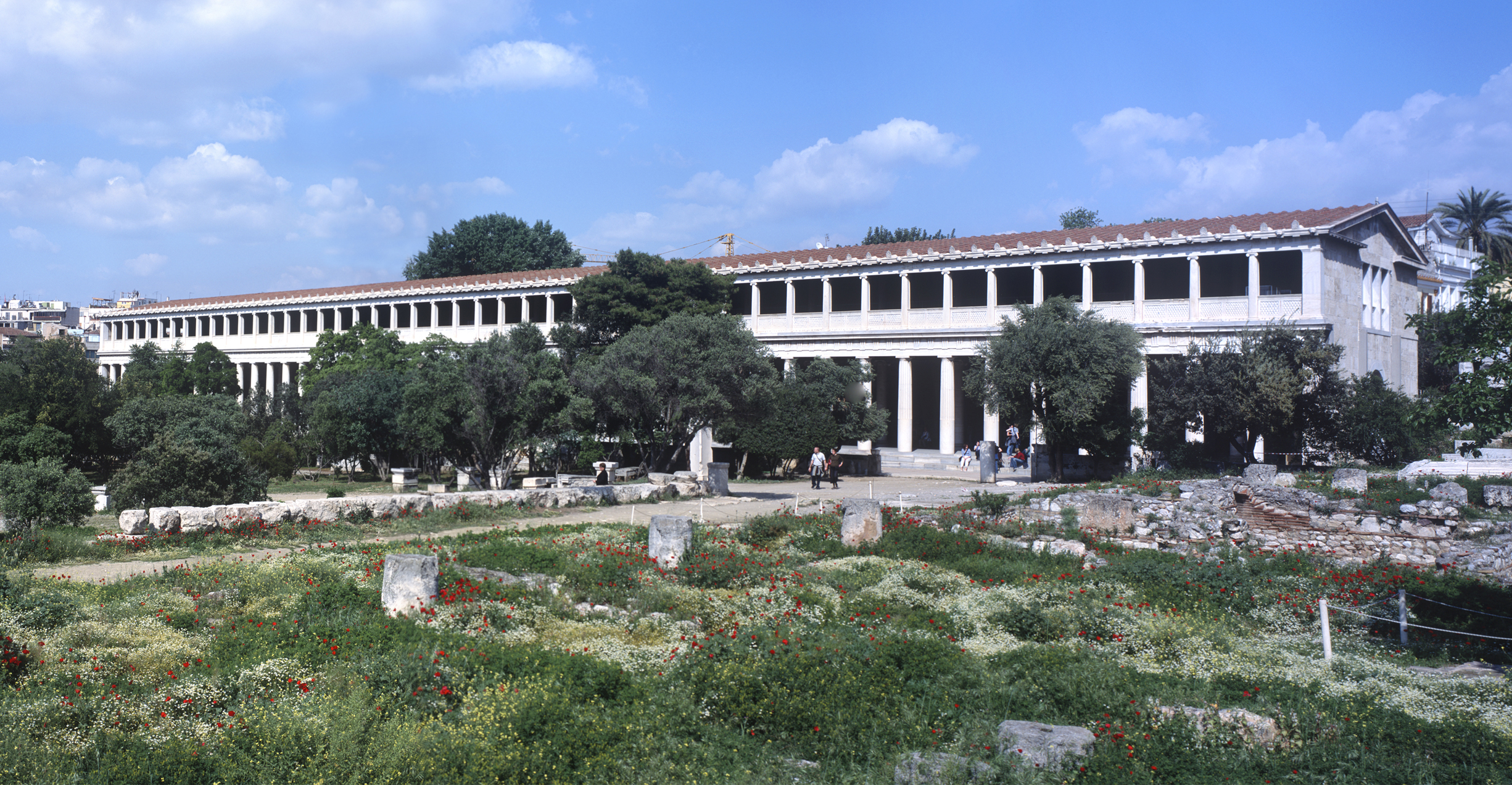
Forced by the War to abandon their plans for an Agora Museum, the Americans resumed work at the Athenian Agora in 1947, conducting excavations at the proposed site, in order to begin construction. The 5th and 4th century B.C. houses and industrial workshops that they found were considered too important to be covered up, and a new site for the museum had to be found. After considering every possible location in the Athenian Agora for the museum, the Americans, following Homer Thompson’s suggestion, came to the conclusion that “another and in many ways preferable alternative would be to restore the Stoa of Attalos and install in it the museum, workrooms, and offices…” (ASCSA Annual Report 1947-1948, p. 29).
The draft of a program agreement between the ECA and the Greek Ministries of Coordination and Education included figures for the preservation of 34 monuments, and the reconstruction of the Stoa of Attalos was first on the list.
Read the rest of this entry »“Anything to restrain the reverend father”: Catholic Clergy at the ASCSA, Pt. II
Posted: March 1, 2018 Filed under: Archaeology, Archival Research, Biography, Classics, History of Archaeology | Tags: Edward Bodnar, Getrude Smith, Homer A. Thompson, John L. Caskey, Raymond Schoder, Thomas Bermingham Leave a commentPosted by Dylan Rogers
Dylan Rogers holds a PhD from the University of Virginia, and he has been Assistant Director of the American School of Classical Studies at Athens since 2015. This essay, the second of two parts, was inspired by recent research in the ASCSA Archives about the Summer Session program.
In my last post, I began an exploration of members of the Catholic clergy at the American School of Classical Studies at Athens (ASCSA or School). My curiosity was piqued by the acerbic comments of Gertrude E. Smith who was not in favor of selecting Fr. Schoder to lead the School’s summer program in 1961. Was the School against admitting Catholic priests and nuns in its programs or was Smith’s dislike of Fr. Schoder personal and exceptional?
Part I examined the figure of Fr. Quinn, an accomplished scholar of Ancient and Modern Greek at the turn of the 20th century. Subsequent to Fr. Quinn ten more priests attended the School’s regular program. In addition, the SS has hosted at least 16 priests and nuns, from 1936 until 1973. The clergy came from a variety of orders, including parish priests, Benedictines (O.S.B.), a De La Salle brother (F.S.C.), a Sister of Mercy (R.S.M.), a Sister of Charity of the Blessed Virgin Mary (B.V.M.), a Sister of Notre Dame de Namur (S.N.D. de Namur), and two Sisters of St. Joseph (C.S.J.). But, by far, most of the priests (nearly 18) came from the Society of Jesus (S.J.), or the Jesuit order. And there were a number of interesting figures in this group, such as Fr. Thomas Bermingham, S.J. (1918-1998), a professor at Georgetown University, who had taught William Peter Blatty, the author of The Exorcist, Latin at Brooklyn Prep in the 1940s. Fr. Bermingham would later advise Blatty on the filming of The Exorcist, and eventually would play Tom, the president of Georgetown, in the film.

Fr. Thomas Bermingham, student at the ASCSA in 1961-62, as President of Georgetown University in The Exorcist.
Communism In and Out of Fashion: The American School of Classical Studies at Athens and the Cold War
Posted: September 1, 2016 Filed under: American Studies, Archaeology, Archival Research, Biography, History of Archaeology, Modern Greek History, Philhellenism, Women's Studies | Tags: American School of Classical Studies at Athens, Emily Grace Kazakevich, Homer A. Thompson, Ida Thallon Hill, Jane Harrison, Kevin Andrews, Robert Oppenheimer, Robert Scranton 4 CommentsPosted by Jack L. Davis
Jack L. Davis, Carl W. Blegen Professor of Greek Archaeology at the University of Cincinnati and a former director of the American School of Classical Studies at Athens (2007-2012), here contributes an essay about attitudes of the ASCSA and its members toward Communists and Communism in the 20th century.
“Feeling they were witnessing the demise of capitalism, many writers moved left, some because their working class origins helped them identify with the dispossessed, others because they saw socialism or Communism as the only serious force for radical change, still others because it was the fashionable thing to do; they went where the action was.”
Morris Dickstein, Dancing in the Dark (2009), pp. 16-17.
 In 1974, when I first arrived at the American School of Classical Studies at Athens (ASCSA or the School hereafter), we youngsters were told that we should not express our political views in public. The ASCSA’s institutional mission might be hurt, were it perceived not to be neutral. In September 1974 that was certainly a reasonable position for the ASCSA to assume. Yet I was curious. In 1974, I was myself radicalized, and had definitely headed left. I could not condone U.S. policy in respect to the Junta, or the suppression of the Left in Greece. Could I say nothing? Had the ASCSA always maintained a position of strict neutrality? Or were its postures more convenient than sincere? Read the rest of this entry »
That Unspeakable Stoa
Posted: May 1, 2014 Filed under: Archaeology, Archival Research, Classics, History, History of Archaeology, Philhellenism, Women's Studies | Tags: American School of Classical Studies at Athens, Athenian Agora, Homer A. Thompson, Nancy Mitford, Stoa of Attalos 4 Comments
Posted by Lizabeth Ward Papageorgiou
Lizabeth Ward Papageorgiou here contributes to the Archivist’s Notebook an essay about Nancy Mitford’s visit to the Athenian Agora during the re-construction of the Stoa of Attalos in 1955. Unhappy with the building, Mitford, one of the famous Mitford sisters, wrote acidic comments about it in the press as well as to the Director of the Agora Excavations, Homer A. Thompson. Lizabeth (Liz), who studied Art History at the Institute of Fine Arts in New York University, found Mitford’s letters when she catalogued Thompson’s vast correspondence for the Archives of the American School of Classical Studies at Athens a few years ago. Her extensive catalogue of Homer Thompson’s papers is available at: http://www.ascsa.edu.gr/index.php/archives/thompson-finding-aid/
Over a decade ago, I archived the papers of Homer A. Thompson. Two of his letters are the subject of this article.
It [Athens] is probably the ugliest capital in Europe . . . [with] formless conglomerations of modern buildings overlooked by an immortal monument . . . . The traffic is noisier, wilder, and more evidently intent on homicide than that of Paris, and consists entirely of enormous pastel-colored American motor-cars.
Nancy Mitford, “Wicked Thoughts in Greece”, The Sunday Times, 24 July 1955.
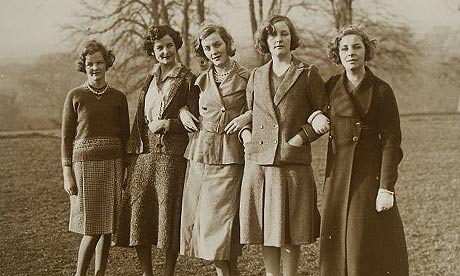
The Mitford sisters
Nancy Mitford (1904–1973), acclaimed author of comedies of English upper class manners (The Pursuit of Love), biographies (Madame de Pompadour), essays and reviews, was the eldest of six intelligent, beautiful and sometimes scandalous daughters of Lord and Lady Redesdale (Ben Macintyre described the sisters as Diana the Fascist, Jessica the Communist, Unity the Hitler-lover; Nancy the Novelist; Deborah the Duchess and Pamela the unobtrusive poultry connoisseur).1 In the summer of 1955, she traveled in Greece. She spent time with Patrick Leigh Fermor, who was living in Nikos Ghikas’s house on Hydra; went to Tatoi, the summer residence of King Paul; and visited friends in Spetses, Crete and the Peloponnese.2
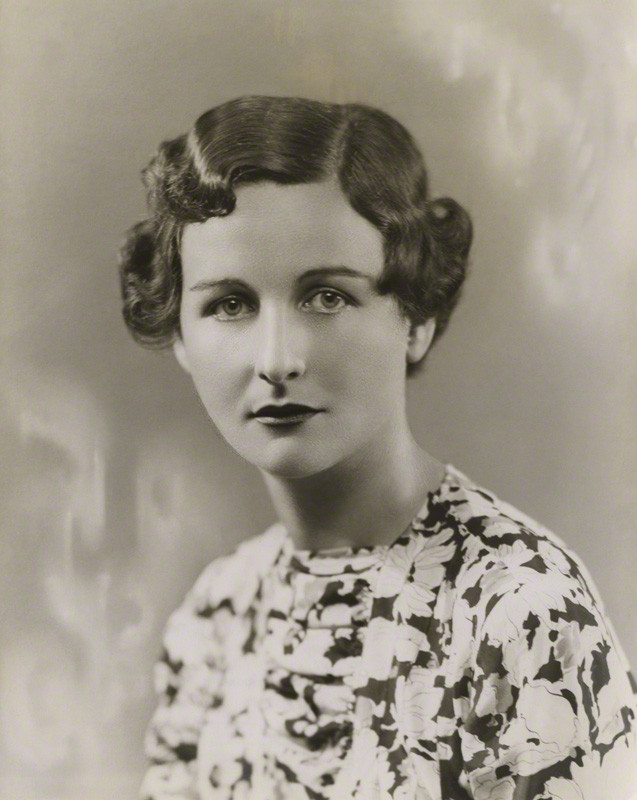
Nancy Mitford, 1932
When she was in Athens, she stayed at the Grand Bretagne and visited the ancient sites. One day she went to the Ancient Agora, but since the reconstruction of the Stoa of Attalos was not finished—it was covered with scaffolding and only the lower storey and colonnades had been reconstructed—Mitford must have needed permission to visit the site and one of the Agora staff to guide her. Homer A. Thompson, director of the Agora excavations from 1945 to 1967 and deeply involved with all aspects of the reconstruction of the Stoa, often mentioned visitors to the Agora in his letters to his wife, Dorothy Burr Thompson; but he made no mention of a visit by Nancy Mitford. Possibly Judith Perlzweig or C. W. J. Eliot, who bore the brunt of conducting visitors through the excavations and museum, served as her guide.3
Shortly after Mitford returned to her home in Paris, she wrote an article about her trip to Greece for The Sunday Times. Published on 24 July 1955, the title, “Wicked Thoughts in Greece”, gave readers a heads up that this was going to be another of her scathing attacks. Opening with the declaration that Athens is probably the ugliest capital in Europe, full of homicidal drivers and enormous pastel-colored American motor-cars, she continued to deplore the hideous newness of Athens, which from the air is a desert of khaki-coloured cement. But she did find an oasis in Plaka, where she delighted in the classical monuments, churches and old houses, until . . .
Alas! After ten minutes of happy wandering the dream is shattered and the dreadful wasteland of the Agora appears. Here the American School of Classical Studies seems to have torn down whole streets in order to search for a few pots. Here the Americans are building, in a ghastly graveyard marble, the Stoa, said to be ‘of Attalos’, but really of Mr. Homer A. Thompson. And here a gracious garden will be planted, complete, no doubt, with floral clock.

The Stoa of Attalos under construction, 1955. Photo: ASCSA, Agora Excavations
A few pages later, describing her visit to Knossos, she again attacked the reconstruction of the Stoa of Attalos:
. . . Knossos, a fraudulent reconstruction like the Stoa, English this time, alas, and built in an art nouveau style reminiscent of Paris metro stations. It is evident that Anglo-Saxons should be kept away from Mediterranean sites . . . . Knossos, however, matters less than the Stoa, because it is out in the country and does not spoil anything else. The Stoa in all its vileness hits the eye from the Acropolis and the Temple of Hephaestus. It is as though the French had allowed Frank Lloyd Wright to build his idea of a Petit Trianon at the bottom of the tapis vert at Versailles. Read the rest of this entry »

 From the Archivist's Notebook