On Communism and Hellenism: An Archaeologist’s Perspective
Posted: March 1, 2016 Filed under: American Studies, Archaeology, Archival Research, Biography, History, History of Archaeology, Intellectual HIstory, Modern Greek History, Philhellenism | Tags: Alison Frantz, American School of Classical Studies at Athens, Carl W. Blegen, Communism, Donald C. McKay, Hellenism 3 CommentsPosted by Despina Lalaki
Despina Lalaki holds a PhD in Historical Sociology from the New School university while she currently teaches at the The New York City College of Technology-CUNY. The essay she contributed to ‘From the Archivist’s Notebook’ is largely an excerpt from her article “On the Social Construction of Hellenism: Cold War Narratives of Modernity, Development, and Democracy for Greece,” in The Journal of Historical Sociology, 25:4, 2012, pp. 552-577. Her essay draws inspiration from an unpublished manuscript by archaeologist Carl W. Blegen, titled “The United States and Greece” and written in 1946-1948.
Carl W. Blegen (1887-1971) is one of the most eminent archaeologists of the Greek Bronze Age. Nevertheless, he intimately knew Modern Greece, too. In 1910, at the age of twenty-three, he first visited the country as a student of the American School of Classical Studies at Athens (hereafter ASCSA), and by the time of his death in 1971 he had made Greece his home and his final resting place, having experienced first hand the land and its people in the most troublesome moments of their modern history. In 1918, for instance, he participated in the Greek Commission of the American Red Cross, assisting with the repatriation and rehabilitation of thousands of refugees who during the war had been held as prisoners in Bulgaria. During WWII, he was recruited by the Office of Strategic Services (OSS) to head the Greek desk of the Foreign Nationalities Branch (FNB) in Washington D.C., which was following European and Mediterranean ethnic groups living in the United States and recording their knowledge of political trends and conditions affecting their native lands.

J. W. Foster (left) and Carl W. Blegen (right) standing at the headquarters of the Allied Mission for Observing the Greek Elections (AMFOGE), 1946. Photo by Nat Farbman. The LIFE Picture Collection/Getty Images/Ideal Image.
“The Best Laid Plans… Often Go Awry”: A Tale of Two Museums
Posted: February 1, 2016 Filed under: Archaeology, Archival Research, History of Archaeology, Modern Greek History | Tags: Ada Small Moore, American School of Classical Studies at Athens, Corinth Museum, Edward Capps, Konstantinos Kourouniotis, Lesvos Museum, Mytilene, Rhys Carpenter, Richard Stillwell, W. Stuart Thomspon 7 CommentsIn the spring of 1934, the construction of two new archaeological museums was completed in Greece, both under the auspices of the American School of Classical Studies at Athens (ASCSA or the School hereafter) and by the same architect, W. Stuart Thompson. Thompson had designed the Gennadius Library a few years earlier. The dedication of the Corinth Museum was grand and attended by most significant officers of the Greek Government. There was no dedication for the Lesvos Museum. Of the two museums, the one in Corinth is still standing and functioning, while the other on the island of Mytilene (Lesvos) collapsed shortly after its erection. Read the rest of this entry »
The End of the Quartet: The Day the Music Stopped at Ploutarchou 9
Posted: November 1, 2015 Filed under: Archaeology, Archival Research, History of Archaeology, Philhellenism | Tags: Bert Hodge Hill, Carl W. Blegen, Elizabeth Pierce Blegen, Ida Thallon Hill, Marion Rawson, Poutarchou 9, Pylos Excavations 13 CommentsJack L. Davis, Carl W. Blegen Professor of Greek Archaeology at the University of Cincinnati and a former director of the American School of Classical Studies at Athens (2007-2012), here contributes an essay about the last days of Carl W. Blegen, Elizabeth Pierce Blegen, Bert Hodge Hill, and Ida Thallon Hill, the archaeological “Quartet” of Ploutarchou 9.
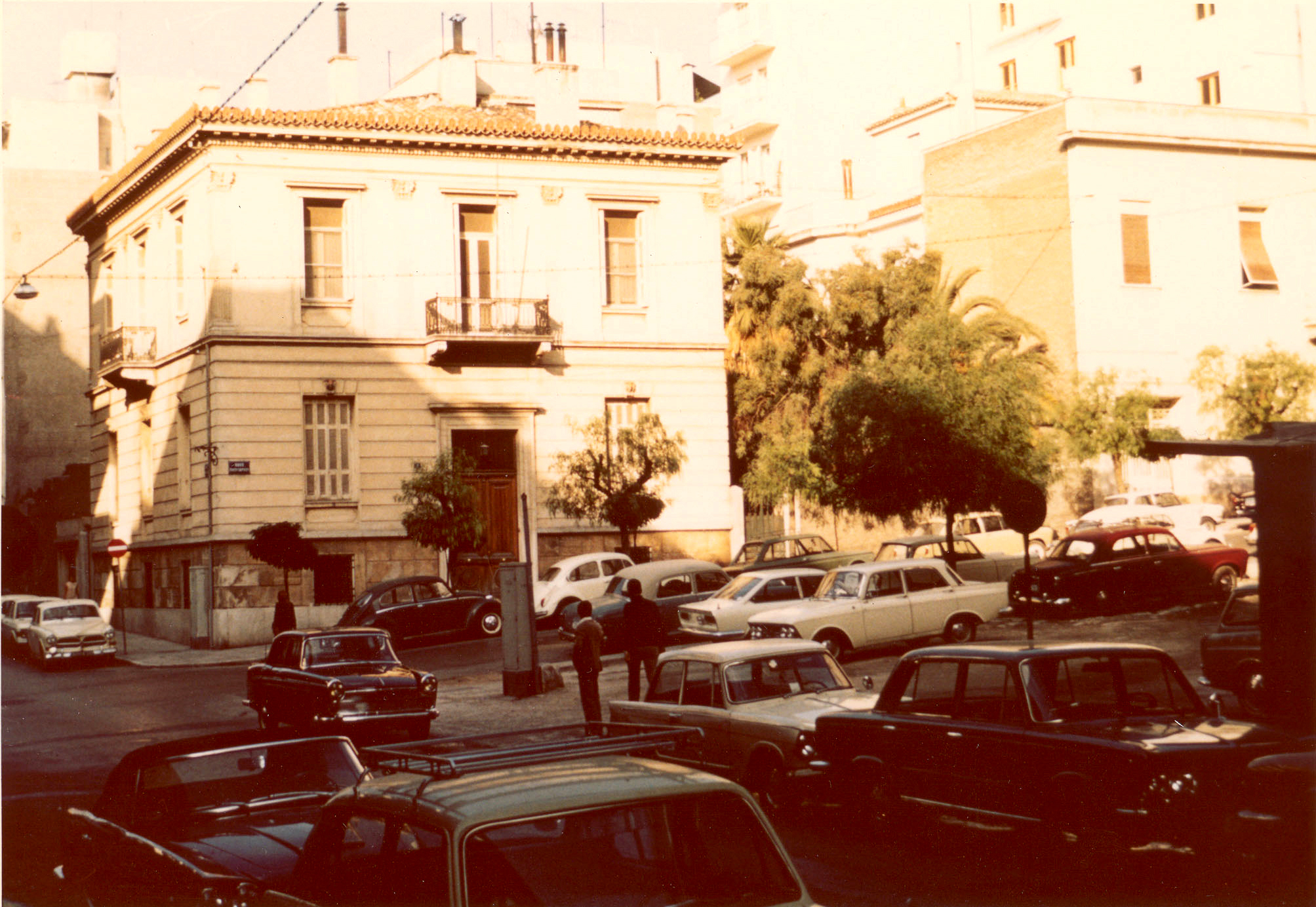
The Blegen house at Ploutarchou 9 in the early 1960s. Saved from the demolitions of the 1970s, today the “Blegen house” is the seat of the J.F. Costopoulos Foundation.
This short essay was composed to satisfy my own curiosity. Having recently edited Carl W. Blegen: Personal and Archaeological Narratives (Atlanta 2015) with Natalia Vogeikoff-Brogan and Vivian Florou, it occurred to me that virtually the only aspect of Blegen’s life that had received no attention was its end. Nor had we, or indeed any of the authors who contributed to that volume, written of the later lives of the four amazing individuals who formed “The Quartet” that resided at 9 Ploutarchou St. in Athens: Blegen, Elizabeth Blegen, Ida Thallon Hill, and Bert Hodge Hill.
The start of that Quartet was tumultuous, as Bob Pounder has described it, but once ground rules were established in 1927, the Hills and the Blegens lived in perfect harmony, an arrangement that persisted for four decades until Blegen died in 1971 (Pounder 2015). Their relationships, although of an uncommon character, were no less significant for being unusual. The four loved each other and were totally devoted to their common cause. At the same time they left sufficient space in their marriages for each to address his or her individual needs. Read the rest of this entry »
Tales of Olynthus: Spoken and Unspoken
Posted: October 1, 2015 Filed under: Archaeology, Archival Research, Classics, History of Archaeology, Women's Studies | Tags: Alan Kaiser, Charles H. Morgan, David M. Robinson, Eunice Stebbins, George Mylonas, Gladys Davidson Weinberg, Mary Ross Ellingson, Olynthus or Olynthos, plagiarism, Raymond Dessy, Rhys Carpenter, Richard Stillwell, Sexism, Walter Graham, Wilhelmina Van Ingen 7 Comments
In memory of Barbara McManus (1942-2015)
In early March of 1928, David Moore Robinson (1880-1958), professor of archaeology at Johns Hopkins University, began large-scale excavations in Chalkidiki. His goal was to discover and investigate ancient Olynthus, the city that King Philip of Macedon had completely destroyed in 348 B.C. Since Olynthus had been abandoned after its destruction, Robinson was hoping to find temples, stoas, and other public buildings of the Late Classical period, without “any boring Roman stuff,” as one of the excavation participants observed. Until Robinson excavated Olynthus, the research focus of classical archaeology in Greece had been centered on the discovery of monumental public architecture and inscriptions. (For a biographical sketch of Robinson’s rich life, see https://dictionaryofarthistorians.org/robinsond.htm) Read the rest of this entry »
Living Like Kings: When the Palace of Prince George Was the Annex of the American School of Classical Studies at Athens
Posted: September 1, 2015 Filed under: Archaeology, Archival Research, History of Archaeology, Modern Greek History, Women's Studies | Tags: Academy Street, American School of Classical Studies at Athens, Caroline Morris Galt, George Mylonas, Marie Bonaparte, Oscar Broneer, Palace of Prince George, Prince George, Priscilla Capps 8 CommentsImmediately after the destruction of Smyrna in 1922, a sudden influx of hundreds of thousands of Asia Minor refugees created severe housing problems for all those arriving in Athens, including the incoming students of the American School of Classical Studies at Athens (hereafter ASCSA or the School). Its female members could not find any accommodations, whether rooms in a boarding house or a hotel. Until then, only the male students were allowed to board in the School’s facilities. Plans for a female dormitory on a plot of land on the other side of Speusippou Street had been in place since 1916, but construction delays sprang up after communication problems between the School’s Managing Committee, headed by the mighty Edward Capps, and the Women’s Hostel Committee, led by M. Carey Thomas, the dynamic president of Bryn Mawr College.
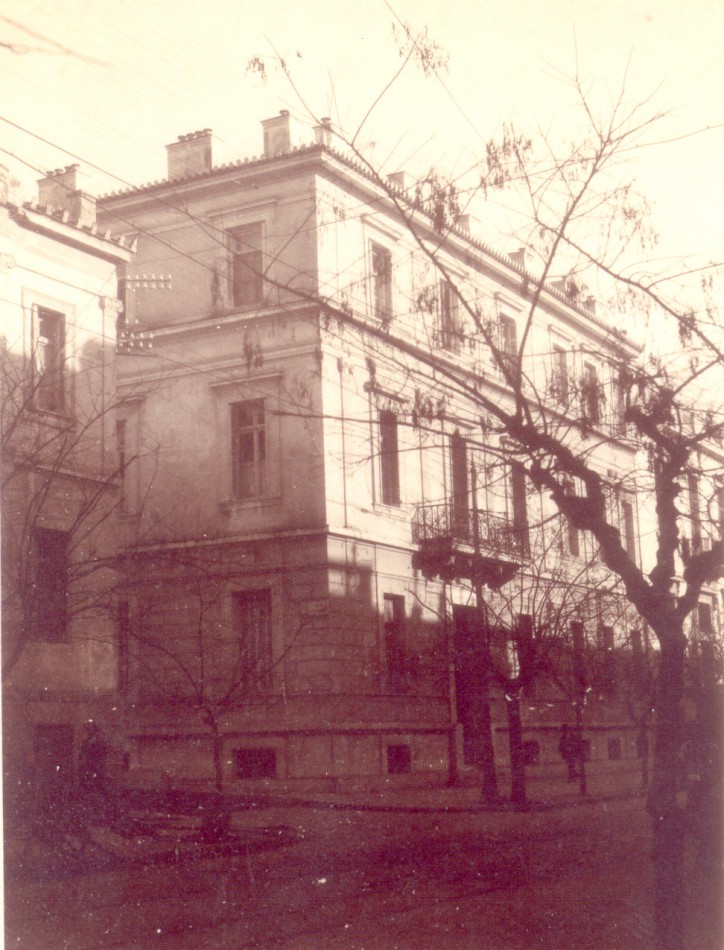
The palace of Prince George on Academias Street as Annex of the ASCSA, 1926 (American School of Classical Studies at Athens)
To cope with the situation, the School allowed women to live “on campus” for the first time since its establishment in 1881. Elizabeth Pierce (Blegen), Natalie Gifford (Wyatt), and Dorothy Cox were among the female students to stay in the School’s bedrooms in 1922-23 and share bathroom facilities with the male occupants of the building. Not surprisingly, the Managing Committee, unhappy with the solution, expressed its “earnest hope that the emergency arrangements of the year 1922-1923 might not recur….” It was suggested “that an annex might be rented which could be used for the accommodation of the women” (Louis Lord, History of the American School of Classical Studies at Athens, Cambridge, Mass. 1947, 163). Read the rest of this entry »

 From the Archivist's Notebook